Trump Displays Image of $100 Bill with His Signature
Historic Move to Feature Presidential Signature
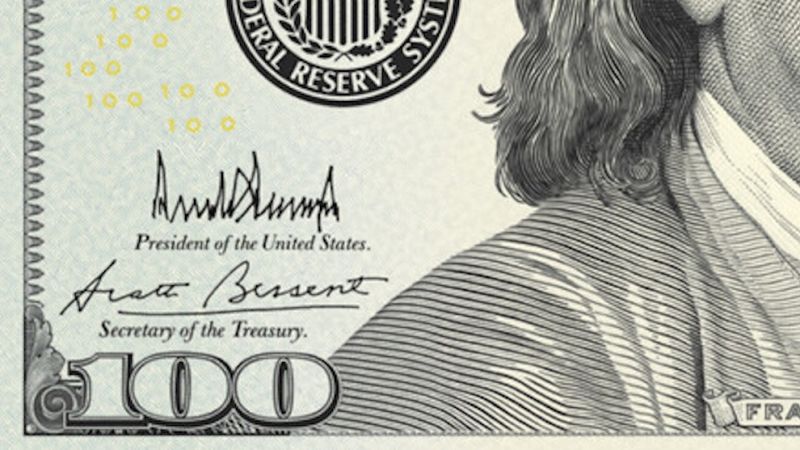
Sandego.net – President Donald Trump shared a fresh image of a $100 bill bearing his signature on Friday, sparking renewed interest in the idea of featuring a sitting leader on U.S. paper currency. This development follows the Treasury Department’s announcement earlier this year that a president’s signature would appear on currency for the first time in history, coinciding with the 250th anniversary of the United States. The decision marks a significant shift from traditional designs, which had long omitted current presidents from the bill’s official elements. Treasury Secretary Scott Bessent, who announced the plan in March, emphasized that the move was a tribute to Trump’s role in shaping America’s economic resurgence during his tenure. “The President’s mark on history as the architect of America’s Golden Age economic revival is undeniable,” Bessent stated during a press briefing, underscoring the symbolic importance of the change. However, the decision to include the sitting president’s signature has raised questions about the timeline and execution of the initiative.
Revisiting the $100 Bill’s Design
The $100 bill, a staple of American currency, has historically displayed the signatures of the Treasury secretary and the Treasurer of the United States. These positions, while crucial to the financial system, have never included the name of a current president. Trump’s signature, however, now takes center stage in the updated design, positioned prominently above Bessent’s name. This alteration has led to inquiries from media outlets, including CNN, which sought clarification from the Treasury Department about the production status of the new bills. While the agency confirmed the plan, the exact timeline for printing remains uncertain. Bessent’s comments during a May press briefing suggested confidence in the process, stating, “I don’t think there’s anything untoward about having the President of the United States on the 250th anniversary bill.” He also noted that political appointees were integral to the planning, but the Bureau of Engraving and Printing was prepared to handle any necessary adjustments.
The $250 Bill Proposal and Legislative Hurdles
In addition to the $100 bill, there has been a separate effort to create a $250 commemorative bill that would showcase Trump’s likeness. This initiative, championed by some members of Congress, aims to honor his presidency with a unique denomination. However, the path to approval has proven more complex. The U.S. code currently restricts the use of presidential portraits on currency to deceased individuals, requiring a legislative amendment to allow a living president’s image. A House bill introduced earlier this year proposed an exception for former and current presidents, enabling their portraits to appear on currency. Despite this, the likelihood of the $250 bill being finalized remains low, as it would need bipartisan support, particularly from Democratic senators. The Treasury Department has not yet confirmed whether the bill will pass, though staff at the Bureau of Engraving and Printing were actively developing prototypes for the new design.
Broader Ambitions to Feature Trump on National Symbols
Beyond the $100 and $250 bills, Trump has pursued multiple initiatives to immortalize his legacy on American institutions. His administration has incorporated his image, name, or both into various projects, such as commemorative passports, national parks passes, and banners at federal agencies in Washington, D.C. Cultural organizations, including the U.S. Institute of Peace, have also displayed his likeness in their facilities. One of the most visible efforts came in Florida, where the state legislature renamed the Palm Beach International Airport in his honor. This move highlighted the growing influence of Trump’s brand, both politically and culturally. The president has consistently framed these actions as a way to celebrate his contributions to the nation’s prosperity, particularly during the economic boom of his presidency.
Historical Context and Controversy
The inclusion of a sitting president’s signature on currency is a departure from long-standing conventions. Until now, the Treasury Department had reserved the honor for deceased leaders, ensuring a sense of historical detachment. Trump’s signature on the $100 bill, however, represents a bold assertion of his place in history. This change has sparked debate about the balance between commemoration and political influence. While supporters argue that Trump’s achievements merit recognition, critics question whether his presence on currency could be seen as an attempt to sway public perception. The Treasury Department’s decision to feature his signature reflects a broader strategy to align national symbols with his administration’s legacy, a move that has been both praised and scrutinized.
Expert Opinions and Public Reaction
In response to the announcement, U.S. Treasurer Brandon Beach reiterated the significance of the initiative, stating, “Printing his signature on the American currency is not only appropriate, but also well deserved.” Beach’s remarks highlight the administration’s belief that Trump’s impact on the economy and society warrants such a tribute. Public reaction has been mixed. Some view the move as a celebration of leadership and innovation, while others see it as a self-promotional campaign. The controversy is further amplified by the fact that the $100 bill with Trump’s signature is still in the early stages of production, leaving room for speculation about its eventual adoption.
Implications for Future Currency Designs
The decision to include a sitting president’s signature on the $100 bill may set a precedent for future designs. If successful, it could pave the way for other leaders to be honored in a similar fashion, potentially reshaping the visual identity of U.S. currency. However, the $250 bill proposal adds another layer of complexity, as it would require a formal legislative change. The Treasury Department’s approach to this project demonstrates a willingness to experiment with traditional formats. By featuring Trump’s signature on the $100 bill, they have taken a step toward modernizing the currency while acknowledging the political climate. As the nation marks its 250th anniversary, the question remains whether these symbolic gestures will be seen as a tribute to history or a reflection of contemporary influence.
Legacy and Long-Term Impact
Trump’s campaign to feature his name and image on national symbols underscores his vision of legacy-building. From the $100 bill to the Palm Beach airport, each effort aims to cement his place in the American narrative. While the Treasury Department’s action is a tangible step, the long-term impact of these decisions will depend on public acceptance and the continued relevance of the president’s policies. The integration of Trump’s signature into the $100 bill also raises questions about the role of current leaders in shaping national identity. As the nation celebrates its 250th anniversary, the decision to honor a sitting president in this way may be seen as both a historic milestone and a reflection of the era’s political dynamics. Whether these changes are viewed as appropriate or controversial, they signal a new chapter in the evolution of U.S. currency and presidential legacy.
“The President’s mark on history as the architect of America’s Golden Age economic revival is undeniable. Printing his signature on the American currency is not only appropriate, but also well deserved.”
“I don’t think there’s anything untoward about having the President of the United States on the 250th anniversary bill. We prepare for everything if it gets passed.”
This unique approach to currency design highlights the intersection of politics, history, and national symbolism. As the $100 bill with Trump’s signature gains traction, it will be fascinating to observe how this decision influences perceptions of presidential authority and the evolving face of American iconography.