US Air Force Officer Detained at Capitol Following Call for Trump’s Impeachment
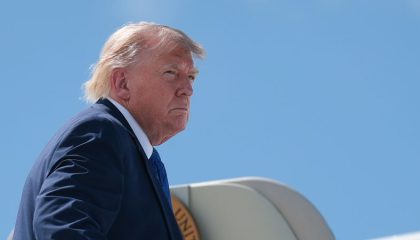
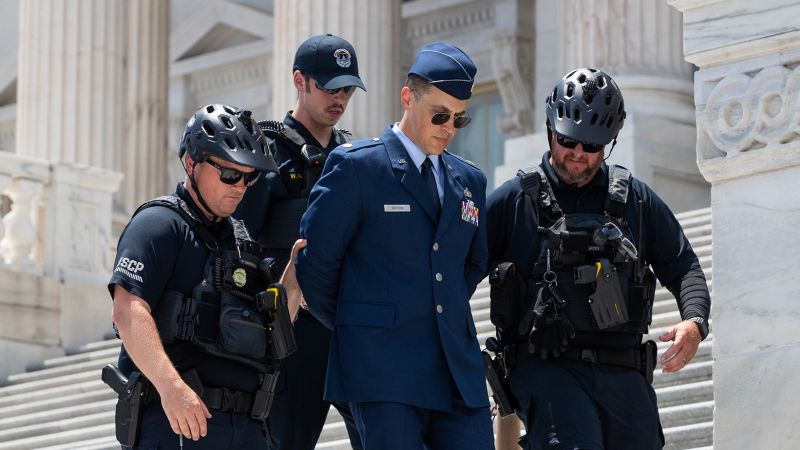
Sandego.net – On Wednesday, a U.S. Air Force major was detained by Capitol Police after addressing a gathering at the nation’s capital, advocating for the impeachment and removal of President Donald Trump and Vice President JD Vance. The incident, which occurred during a press event organized by the grassroots group Removal Coalition, has sparked discussions about the intersection of military service and political activism. Jason Watson, the individual at the center of the event, identified himself as an active-duty service member and was seen wearing a military uniform throughout the proceedings.
Arrest Context and Procedural Background
According to Capitol Police, Watson was escorted to the steps of the House by a member of Congress before the demonstration began. The police later stated that they had issued lawful orders to halt the protest, citing the legal requirement that public displays of dissent on the Capitol grounds must be accompanied by a congressional representative. When Watson continued his speech, he was apprehended under Section 22-1307 of the law, which addresses crowding, obstructing, and incommoding. The agency emphasized that alternative spaces for protests are available within the Capitol complex.
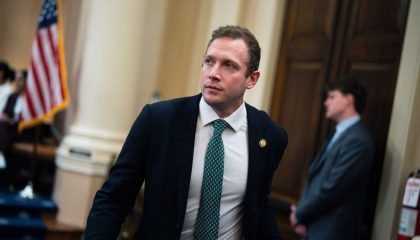
Democratic Representative Al Green of Texas attended the event, later expressing support for Watson’s actions on social media. Green described the moment as a “significant step in the fight for justice,” highlighting Watson’s role in pushing for impeachment. The congressman’s presence added a political dimension to the incident, which was documented by Removal Coalition and shared widely online.
Watson’s Arguments and Political Rhetoric
Watson’s speech, which was recorded and distributed by the Removal Coalition, criticized recent military actions under the Trump administration in Venezuela and Iran. He also condemned the administration’s strict immigration enforcement policies, asserting that these measures breached constitutional principles. “For this, the president and vice president must be impeached, convicted, and removed,” he declared, as captured in the group’s video footage.
“I just left the Capitol grounds, and I was there to witness a major in the United States military bend the arc of the moral universe toward justice,” said Rep. Al Green in a post. “He had already stood for impeachment of the president before being taken away.”
The speech underscored Watson’s belief that the executive branch’s policies were undermining democratic norms. His participation in the event, however, raised questions about the extent to which service members can engage in public dissent while adhering to their duties. The Uniform Code of Military Justice (UCMJ) prohibits soldiers from speaking contemptuously about the president, vice president, Congress, or other officials under Article 88. Yet, Watson’s actions suggest a willingness to challenge authority, even as he wore his uniform during the demonstration.
Legal Proceedings and Institutional Reactions
Following the arrest, a DC Superior Court official informed CNN that Watson is expected to be released, with no immediate plans to file charges against him. The decision to proceed or not with legal action rested with the DC attorney general, who has yet to comment on the matter. CNN has also sought clarification from the US Air Force regarding Watson’s current status as an active-duty personnel, though a response has not been received.
Air Force Secretary Troy Meink addressed the incident on Thursday, stating that service members are expected to uphold laws and policies governing their conduct. “Commanders will ensure appropriate accountability in accordance with military law and due process,” Meink noted, while emphasizing that an investigation into the event will continue without obstruction. His remarks reflect the Air Force’s stance on balancing political expression with adherence to military regulations.
Grassroots Mobilization and Public Support
The Removal Coalition, the group responsible for organizing the event, described Watson’s involvement as a deliberate act of courage. Jessica Denson, the founder of the coalition, revealed that Watson had reached out to them via email and was aware of the potential consequences of his actions. “We took his desire to speak seriously and aimed to make his voice impactful,” she said, adding that the group believed the protest was a meaningful contribution to the political discourse.
Watson’s arrest has also drawn attention to the role of grassroots organizations in amplifying voices within the military. While such public dissent is uncommon, the incident highlights the growing interest among service members in engaging with political issues. Denson noted that the coalition had planned the event to provide a platform for those who felt compelled to challenge the administration’s policies.
Implications for Military Conduct and Civil Liberties
Watson’s case has ignited debates about the boundaries of free speech for active-duty personnel. While the UCMJ mandates that service members follow orders and avoid disparaging top officials, the incident raises questions about the scope of their political rights. Critics argue that the arrest was an overreach, while supporters claim it reinforced the need for discipline in public spaces.
Capitol Police emphasized that the steps of the House are a restricted area, requiring congressional oversight for demonstrations. This rule, they stated, is designed to maintain order during high-profile events. However, Watson’s actions have sparked questions about whether the policy is too rigid or if it allows for sufficient flexibility in expressing political views.
The broader implications of the arrest extend beyond this single event. It serves as a reminder of the unique position service members hold in American society—expected to serve as both enforcers of policy and advocates for it. As Watson’s case unfolds, it may set a precedent for how the military handles political activism in public settings.
This story has been updated with additional details. Lauren Chadwick and Katelyn Polantz of CNN contributed to the report.