As Venezuelan Morgues Overflow, Doubts Linger Over Earthquake Death Toll
Sandego.net – One week following a series of devastating earthquakes that struck Venezuela, the government’s reported death toll continues to spark debate among locals and international experts. Acting President Delcy Rodríguez announced on Thursday that at least 2,595 individuals had perished in the disasters, marking an increase of 300 from the prior day’s tally. Yet, this figure appears inconsistent with the ground reality, as bodies accumulate faster than the official count suggests. A forensic pathologist, who wished to remain unnamed due to fears of retaliation, told CNN that the government’s numbers likely represent only a fraction of the actual fatalities, estimating they may be “not even a third of what is actually there.”
Survivors Carry the Weight of Loss
In the port city of La Guaira, where the earthquakes left their most visible mark, makeshift morgues are struggling to keep up with the influx of victims. The pathologist described the scene as chaotic, noting that the facility processes approximately 400 corpses daily, many of which are unrecognizable or in advanced stages of decomposition. With refrigerated trucks full to capacity, some bodies are stored in body bags exposed to the sun, accelerating the process of decay. This has raised concerns about the accuracy of the official death toll, as the physical evidence of loss seems to contradict the numbers being shared.
“La Guaira is indescribable. There are so many cases, so many families. The earthquakes hit the lower-income families the hardest—they are the most affected,” the pathologist said. This sentiment echoes the broader frustration of Venezuelans, who feel the government is not fully capturing the scale of devastation. Many residents report that cemeteries are overwhelmed, with makeshift burial sites emerging in neighborhoods already reeling from the disaster.
Opposition Challenges Government Transparency
María Corina Machado, a prominent opposition leader, has been vocal in her criticism of the administration’s handling of the crisis. In an Instagram video from her exile, she accused officials of deliberately obscuring the extent of destruction, claiming that communication channels were blocked to prevent accurate information from reaching the public. Similar concerns have been voiced by Venezuelans abroad, who have created informal networks to report missing persons, citing the government’s failure to release a consistent tally. These efforts highlight the growing mistrust in official figures, particularly as the morgues and emergency services remain stretched thin.
USGS Data Points to a Larger Tragedy
Initial assessments from the US Geological Survey indicated that the back-to-back 7.2 and 7.5 magnitude quakes could have claimed thousands of lives. However, the Venezuelan government has not yet issued a final estimate, relying instead on daily updates that have not accounted for the full picture. Gianluca Rampolla del Tindaro, the United Nations’ Venezuela coordinator, emphasized that the toll is likely to rise significantly. “We are definitely looking at a number higher than the one already reported,” he stated during a Tuesday press conference, underscoring the need for more comprehensive data collection.
Historical Patterns of Undercounting
Skepticism toward the current figures is not new. In 1999, after catastrophic landslides and flooding in La Guaira, the government under late President Hugo Chávez failed to release an official death toll for weeks. This history has led some to question whether the current undercounting is a recurring pattern or a deliberate strategy. Critics argue that the government may be inflating the number of recoverable bodies to downplay the true impact of the quakes, particularly in areas with limited resources and infrastructure.
Political Barriers to Relief Efforts
Machado’s attempts to return to Venezuela this week were reportedly blocked by authorities, who she claims are hindering her ability to support relief efforts. Her exile has allowed her to voice concerns from a distance, but the lack of access to the country has compounded the challenges of verifying the data. A U.S. State Department spokesperson noted that introducing political factors into the crisis could slow down the response, stating, “Adding sensitive political issues to the mix at this time is counterproductive to our response efforts following this tragedy.”
Experts Debate the Motivation Behind the Numbers
Despite the mounting evidence of underreporting, some experts remain cautious about attributing the discrepancy solely to government manipulation. David Smilde, a sociologist at Tulane University and a leading Venezuela analyst, suggested that the administration may not have a strong incentive to reduce the death toll. “The government could use the figure to secure additional foreign aid,” Smilde told CNN, pointing out that the tragedy’s scale has already drawn international attention. He argued that more research is needed before concluding that the government is actively withholding information.
“We’re going to need more studies and more actual research and understanding to really know before speculating that the government is withholding a number of deaths,” Smilde added. His perspective contrasts with organizations like Provea, a human rights group, which has criticized the official figures as “raising more doubts than they provide answers.” Provea called for transparency, stating that “zero opacity” is essential in addressing the national crisis.
Unseen Victims Beneath the Rubble
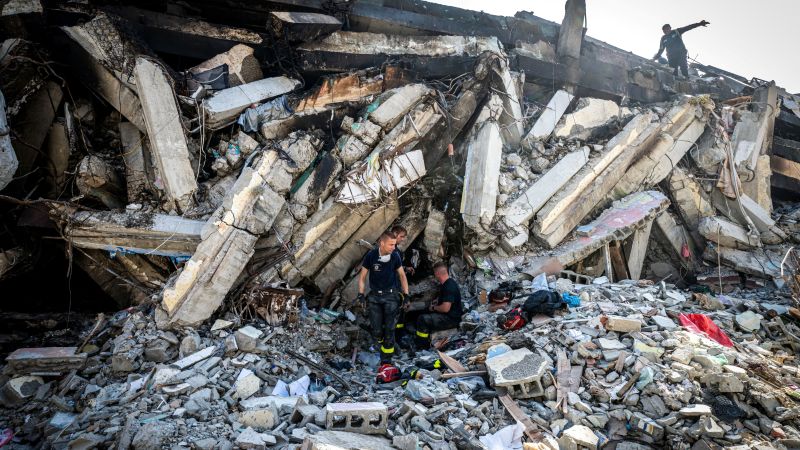
Even as the morgues and emergency teams work tirelessly, many victims remain entombed in the rubble of collapsed buildings. The pathologist noted that families are increasingly taking matters into their own hands, bringing corpses from the wreckage to makeshift morgues. This has placed additional strain on the system, as rescue operations struggle to keep pace with the demand. “They themselves bring their own dead because civil protection, the firefighters, even the emergency services cannot keep up with rescuing those bodies,” the pathologist explained.
International Pressure and Local Resilience
The discrepancy between the reported death toll and the visible devastation has drawn international scrutiny. CNN has sought comment from the Venezuelan government, asking about its methodology for counting casualties and its estimates of the number of missing persons. While the government has not yet provided a final figure, the situation on the ground suggests that the true number of fatalities could be far higher than currently acknowledged. As the weeks pass, the challenge remains to reconcile the official data with the lived experiences of Venezuelans navigating the aftermath of one of the country’s most severe natural disasters.
With the death toll continuing to climb and the morgues operating at near capacity, the question of accuracy remains unresolved. While the government insists on its figures, the physical evidence and testimonies from those on the front lines indicate a more complex reality. As the crisis unfolds, the international community will be watching closely to determine whether the numbers reflect the full scope of the tragedy or if they are the result of deliberate understatement. For now, the bodies in La Guaira serve as a stark reminder of the challenges facing the nation in the wake of disaster.