
Iran war: Why is Russia not coming to Tehran’s aid?
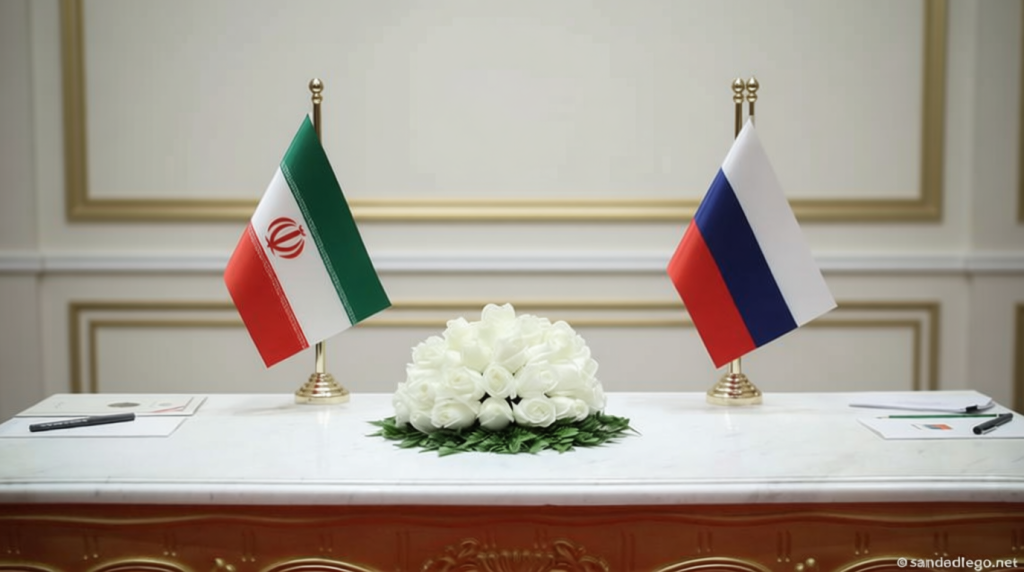
Iran War: Why Is Russia Not Coming to Tehran’s Aid?
Iran’s struggling government, with few global allies, has placed hope in Moscow’s backing during recent U.S.-Israeli strikes. Yet, this support has not materialized as anticipated, leaving Tehran in disappointment. Just hours after attacks began on Saturday, Russia issued a sharp response, with its UN envoy, Vassily Nebenzia, labeling the actions as “an unprovoked act of armed aggression against a sovereign UN member state.”
Russia and Iran have long shared strategic interests, and a potential collapse in Tehran could impact Moscow’s geopolitical and economic goals. But why is Moscow hesitating to intervene? According to Nikita Smagin, an Azerbaijan-based analyst of Russia and the Middle East, their collaboration extends to key economic ventures, such as the North-South transport corridor. This 7,200-kilometer (4,473-mile) multimodal system, signed in 2000 by Russia, India, and Iran, traverses through Azerbaijan. Gulf Research Center estimates 75% of the project is complete, highlighting its significance for Russia’s transit routes, which were disrupted by the Ukraine invasion in February 2022.
Russia has also relied on Iran’s military contributions, particularly since 2023. Shahed drones, supplied by Tehran, have transformed the Ukraine conflict, noted Julian Waller, a researcher at the Center for Naval Analyses. “Iran played a critical role in Russia’s war effort, even as production shifted to Moscow, which enhanced the drones’ design,” Waller said. Intelligence sharing and weapon shipments further solidify their alliance, though the relationship is pragmatic rather than ideological.
Gregoire Roos, from Chatham House, suggests that Tehran has even acted as Moscow’s mentor. “Iran’s experience in evading sanctions offers Russia valuable insights,” he explained. However, the lack of active intervention in the current conflict has puzzled analysts. “Russia and China face more pressing challenges, providing Iran with consistent arms and control tools,” said Mojtaba Hashemi, an international relations expert. Despite this, Mohammad Ghaedi, a George Washington University lecturer, believes Iranian leaders anticipated Russia’s reluctance. “Tehran has long doubted Moscow’s reliability, as former President Mahmoud Ahmadinejad once remarked, ‘Russia has always sold out the Iranian nation.'”
Some experts argue Russia’s inaction might serve its own interests. Roos highlighted that a prolonged Iran war could limit Western focus on Ukraine. “With media attention shifting to Iran, President Zelenskyy’s narrative weakens,” he said. Meanwhile, the possibility of escalation remains a key factor in Moscow’s calculated stance. Tehran, however, continues to seek more than symbolic support, including tangible military aid and a stronger deterrent against Western allies.
“The two countries are not defensive allies,” said Julian Waller. “Russia’s support has been limited to what’s already been provided, and its hesitation reflects broader strategic priorities.”
“Countries we considered friends did not help us during the war,” added President Masoud Pezeshkian, underscoring the gap between expectations and reality.
To view this video, enable JavaScript and upgrade to a web browser that supports HTML5 video. Experts remain divided on whether this lack of support signals a deeper shift in Russia’s foreign policy or a temporary tactical decision. Regardless, the dynamics between Iran and its key ally are under renewed scrutiny as the conflict unfolds.
