
Iranian drones cost a fraction of air defences. How long can Gulf states last?
Iranian Drones Cost a Fraction of Air Defences. How Long Can Gulf States Last?
In response to the US and Israel’s military actions, Iran has launched widespread attacks, targeting both regional adversaries and allied nations. The strikes encompass military installations in Israel and the United States, as well as critical infrastructure across the Gulf Cooperation Council (GCC) states.
Iran’s Multi-Pronged Assault
Tehran’s campaign has included direct attacks on US and Israeli bases, as anticipated by analysts. However, the focus has also expanded to include energy infrastructure in Saudi Arabia and Qatar, signaling a broader economic strategy. These strikes aim to weaken the defenses of nations perceived as supporting Western interests.
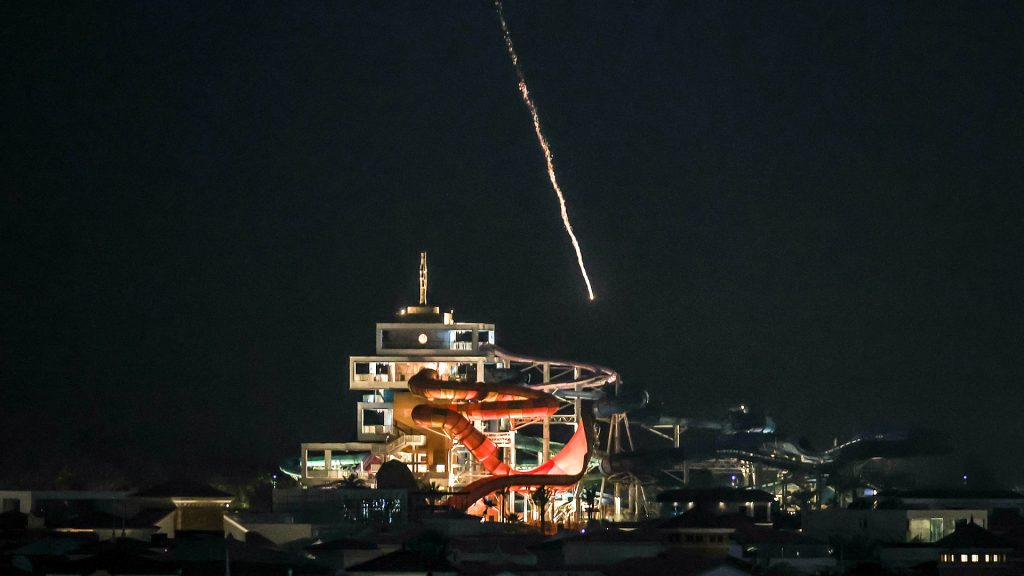
Iran’s approach involves both direct and indirect methods. By deploying drones, it exploits the low cost of these weapons to overwhelm air defense systems, forcing target nations to allocate more resources to interception. This tactic has been particularly effective in depleting the financial capacity of Gulf states.
Cost Analysis
Experts highlight the economic disparity in this conflict. Ballistic missiles cost approximately $1-2 million each, while Iranian Shahed drones range from $20,000 to $50,000. This creates a significant cost advantage for Tehran.
“For every $1 Iran spent on drones, the UAE spent roughly $20-28 shooting them down,” said Kelly Grieco, a senior fellow at the Stimson Center.
The UAE’s defense ministry reported intercepting 152 missiles and 506 drones out of 165 ballistic missiles and 541 drones launched by Iran. This yields a 92% interception rate, which Grieco called “extraordinary.” Yet the financial burden on the UAE is immense, with estimates placing the cost of interception between $1.45bn and $2.28bn.
Qatar, meanwhile, confirmed 65 missiles and 12 drones were deployed in the early stages of the conflict, of which 63 and 11 were intercepted, respectively. This results in a 96% success rate, underscoring the effectiveness of regional air defenses.
Economic Asymmetry
Gregg Carlstrom of the Economist drew a striking analogy between Iran’s drone strategy and a “Ferrari chasing an e-bike.” He emphasized the imbalance in expenditures, where Iran’s affordable drones create a challenge for expensive defense systems. This dynamic mirrors Russia’s use of similar tactics in Ukraine, where Shahed drones, mass-produced in Russia with Chinese parts, have saturated air defense networks.
Russia’s strategy of financial attrition has been in place for months, with Ukrainian forces adapting by employing innovative methods. These include retrofitting An-28 transport planes with Miniguns and utilizing electronic warfare to disrupt drone communications. Grieco noted that initially, Ukraine relied on high-end systems like the Patriot, but the expense and limited numbers made this unsustainable.
Implications for the Future
The question remains: how long can Gulf states and allies like Israel maintain such high interception rates? Israel, for example, often permits drone impacts in open zones to reduce costs and preserve reserves. The US, meanwhile, is racing to neutralize Iran’s missile and drone capabilities before its interceptor stocks are exhausted.
