Investigators Pinpoint Haunting Echoes Between Texas Child Disasters
Sandego.net – Two years after the Uvalde school shooting left 19 children and two teachers dead, Texas investigators found themselves revisiting a similar tragedy at Camp Mystic, where 27 young lives were lost in a sudden flood. The state turned to the same team of investigators, Casey Garrett and Michael Massengale, to analyze the systemic failures that contributed to both disasters. Their work, though separated by a year and a different kind of disaster, revealed striking parallels in how institutions responded to crises involving children.
A Dual Mission of Accountability
In May 2022, a gunman took over Robb Elementary School in Uvalde, Texas, and held 19 students and two educators hostage for more than an hour. The incident, which became a national symbol of gun violence in schools, prompted a rapid legislative response. Texas lawmakers, eager for answers, assigned Garrett and Massengale to investigate the law enforcement response. The pair, with no prior connection, began their work by analyzing video footage, police calls, and testimonies from survivors and witnesses.
“It was a painful investigation, a deeply painful event,” Garrett told CNN during a joint interview. “You’re not just looking at a sequence of actions—you’re tracing the emotional toll on families, the confusion among first responders, and the questions that linger long after the bullets stop.”
Garrett, who had previously worked as a prosecutor and later transitioned to defense law, approached the inquiry with a blend of empathy and analytical rigor. Massengale, a seasoned appellate judge and former international law firm associate, focused on the technical details, poring over hours of data to build a comprehensive narrative. Their contrasting methods proved complementary, as they navigated the complexities of the Uvalde case together.
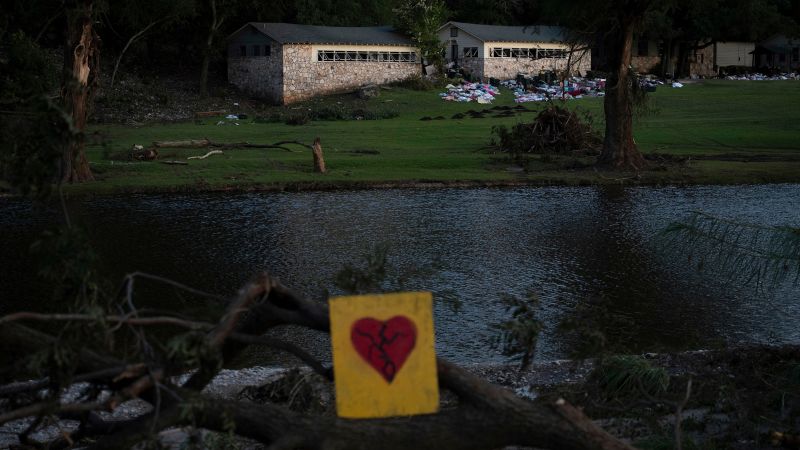
However, their work was far from over. Just a year later, in July 2025, a different kind of disaster struck. Flash floods devastated Camp Mystic, a summer retreat in the Texas Hill Country, 60 miles north of Uvalde. The tragedy claimed 25 preteen campers, two teenage counselors, and the camp’s patriarch. Unlike the Uvalde incident, where the perpetrator was human, the Camp Mystic disaster was a natural force that overwhelmed preparedness measures. Yet, the similarities were undeniable.
“I was hearing echoes of Uvalde in the way public officials rushed to the scene and issued statements before fully understanding the situation,” Massengale said. “It was as if the same pattern of urgency without clarity repeated itself.”
Garrett, who had not anticipated another investigation so soon, acknowledged the need to reassess the state’s oversight. “When you lose 27 children, it’s not just a local concern—it becomes a national conversation about how we protect vulnerable populations,” she noted. The pair’s second report, like their first, aimed to uncover the root causes of institutional negligence, this time in a context of weather-related emergencies.
Contrasting Approaches, Unified Purpose
Garrett and Massengale’s collaboration was shaped by their distinct professional paths. Garrett’s background in criminal law instilled a deep sense of justice, while Massengale’s experience in appellate work emphasized meticulous documentation. Their dynamic, often described as a “yin and yang” partnership, became a focal point of the investigation process. During hearings on Camp Mystic, Garrett’s emotional engagement with the families of the victims contrasted with Massengale’s methodical analysis of data.
“Casey brings a raw, human perspective to the table,” Massengale said. “She’s the one who connects with the stories, the tears, the lingering questions. I, on the other hand, get lost in the numbers and the legal frameworks.” This duality allowed them to present a holistic view of each disaster, blending personal narratives with technical evidence to hold the state accountable.
Garrett, in particular, became a central figure in the Camp Mystic inquiry. Her testimony during hearings was marked by emotional intensity, with her voice wavering as she recounted the moments of chaos and the failures that led to the loss of life. “You can’t predict another tragedy with the same skill set if you don’t learn from the past,” she said, reflecting on the urgency of their mission. Massengale, meanwhile, relied on his analytical precision to ensure that the findings were both thorough and defensible.
The Weight of Responsibility
The Uvalde report had already set a precedent for institutional critique. It highlighted a “lackadaisical approach” to emergency protocols, emphasizing how delays and miscommunication cost lives. For lawmakers, the findings were a wake-up call, prompting special sessions to address broader systemic issues. The Camp Mystic disaster, while not involving firearms, echoed the same themes of preparedness and response.
Massengale noted that the state’s reaction to Camp Mystic mirrored that of Uvalde. “The first response was to provide immediate relief, but the deeper inquiry took time,” he explained. “It’s easy to react quickly, but difficult to fix the underlying problems that led to the disaster.” This pattern of swift action followed by delayed reflection became a central critique in both investigations.
Garrett, who had not anticipated another probe, described the process as a continuation of their shared mission. “We didn’t just want to find fault—we wanted to understand how the system failed and how it could be improved,” she said. Their second report, though less dramatic in its immediate context, carried the same weight of accountability, urging state officials to reevaluate safety standards and communication strategies.
The tragic loss of “Heaven’s 27” galvanized public opinion, with parents and advocates demanding transparency. The names, given to the 27 children who died, became a symbol of grief and a rallying point for reform. Garrett and Massengale’s work was seen as a critical step in addressing the broader implications of these disasters, particularly in how Texas regulates facilities that cater to children.
Building a Legacy of Learning
Despite the emotional toll of their investigations, Garrett and Massengale maintained a professional commitment to uncovering the truth. “The hardest part is not just the evidence you find, but the stories that tie everything together,” Garrett admitted. “Each case is a mosaic of human experiences, and it’s our job to piece them into a coherent picture.”
Massengale emphasized the importance of neutrality in their work. “I don’t want to be seen as biased, but I also know that passion is necessary to drive change,” he said. His approach, grounded in legal precision, helped ensure that their findings were both objective and impactful. Garrett, however, argued that compassion was essential to understanding the human impact of institutional failures.
Together, their reports became a cornerstone for reform. Texas legislators used their findings to propose new safety measures, including better training for emergency responders and stricter oversight of child-focused facilities. While the immediate results of these changes remain to be seen, the pair’s work has already sparked a national dialogue about child safety and institutional accountability.
As the two investigators reflected on their dual roles, they recognized the power of their combined efforts. “We’ve been through two of the most painful events in recent Texas history, and it’s been humbling to see how deeply they affect everyone involved,” Garrett said. Massengale added, “The lessons from both disasters are clear: when we fail to act with urgency and clarity, the consequences can be devastating.”
Their partnership, once an accidental collaboration, now stands as a testament to the value of diverse perspectives in crisis management. While their methods differ, their shared goal of protecting children has created a unique synergy. As the state continues to grapple with the aftermath of these tragedies, their reports remain a vital resource for policymakers and communities seeking to prevent future disasters.
In the end, Garrett and Massengale’s work underscores a simple truth: the same mistakes can repeat themselves, and the same voices must be heard to ensure that they don’t. Whether in the aftermath of a school shooting or a flood, their investigations have become a bridge between tragedy and transformation, offering hope that learning from the past can save lives in the future.