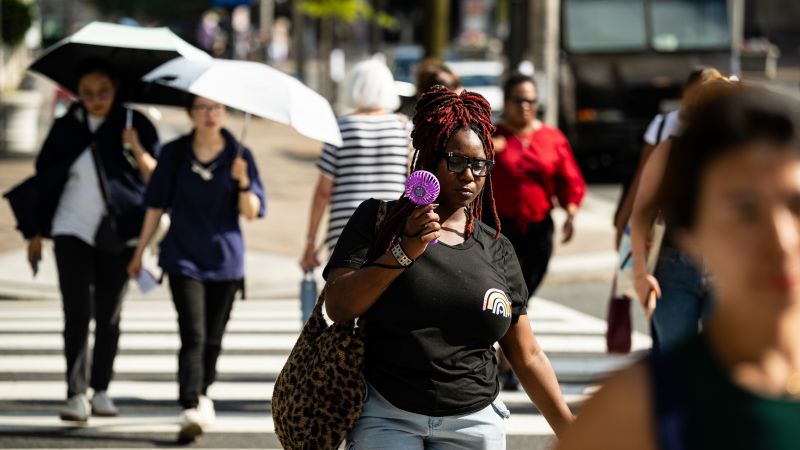
Punishing Heat Wave Peaks as East Coast Readies for Sweltering July 4 Weekend
Sandego.net – The East Coast is facing a severe heat wave that’s intensifying, with the most extreme conditions set to coincide with the peak of the Fourth of July holiday. Millions of people are preparing for outdoor festivities, but the timing of the heat is proving to be a challenge. As the heat index surges past 110 degrees in key areas, cities are taking proactive steps to protect residents from the rising temperatures. This trend underscores a growing concern: how the nation’s capital and surrounding regions are preparing for a weekend of record-breaking heat amid a climate crisis.
While the Midwest endured blistering temperatures on Wednesday, the focus is now shifting to the Interstate 95 corridor. Forecasters predict temperatures will climb into the upper 90s and low 100s, stretching from Washington, DC, to Boston. Humidity levels are expected to further elevate the heat index, creating a dangerous mix for the human body.
Get your heat forecast on CNN Weather for iPhone
—a reminder that real-time updates are crucial for planning.
Health Risks Amplified by Persistent Heat
The National Weather Service has issued alerts indicating over 160 million people are under major or extreme heat risk through the end of the week. These categories signal a heightened threat of heat-related illnesses, particularly when temperatures remain high for extended periods. High humidity not only makes the air feel hotter but also hinders the body’s ability to cool itself through sweat evaporation. As a result, the combination of heat and humidity is creating a perilous environment, especially for vulnerable populations.
Experts attribute the intensity of this heat wave to a heat dome—a stagnant mass of high pressure that traps warm air. This phenomenon, once rare, is now more frequent due to global warming. The National Weather Service notes that the heat dome is exacerbating conditions, leading to prolonged periods of sweltering. In places like Washington, DC, where temperatures are projected to hit 103 degrees on Thursday and Friday, the heat index could surpass 110 degrees, matching only three other days since 1943 with such extreme readings.
Cities Respond with Cooling Measures
Amid the rising temperatures, cities are deploying cooling centers and other resources to ease the burden. Philadelphia, for instance, has declared a Heat Health Emergency through Saturday evening, prompting the shortening of its July 4 parade route. Similarly, New York City is opening hundreds of cooling centers and using mobile medical units to provide water, sunscreen, and wellness checks. Over 2,200 LinkNYC kiosks will serve as guides for finding these facilities, ensuring accessibility for all.
In Washington, DC, emergency services are expanding hydration stations and medical response capabilities as hundreds of thousands of visitors arrive for the weekend. The city’s National Mall events are incorporating water stations and air-conditioned buses to support attendees. Meanwhile, Boston and Raleigh, North Carolina, are also activating cooling centers, reflecting a coordinated effort across the region. These measures are part of a broader strategy to manage the health risks associated with the heat wave.
Federal and Local Actions to Mitigate Impact
The federal government is addressing the crisis with targeted interventions. The Department of Energy has issued emergency orders to bolster electricity generation in the PJM Interconnection grid, which serves much of the Mid-Atlantic. This move aims to prevent power outages that could compound the heat’s effects. Additionally, local organizers are adjusting plans for events. A ceremony with a live virtual address from the pope has been moved indoors, and the World Cup Fan Festival in DC is reducing its hours to prioritize public safety.
Delta Air Lines has also issued a high heat advisory for LaGuardia Airport in New York, citing operational constraints that could affect flight schedules. The airline’s warning highlights how the heat wave is disrupting not just public gatherings but also essential services. With temperatures expected to climb into triple digits in several cities, the need for such precautions is becoming increasingly urgent.
Historic Temperature Records in Jeopardy
This heat wave could break multiple temperature records, setting the stage for a historic three-day stretch of extreme weather. In Washington, DC, the Fourth of July is forecast to be the hottest on record at 102 degrees, surpassing the previous record of 100 set in 1919. The National Weather Service notes that this would mark the first time the capital experiences consecutive triple-digit temperatures since 2011.
Philadelphia’s temperatures may reach near 103 degrees on Thursday and 104 on Friday, while Boston could exceed 100 degrees on Thursday and stay close to that mark through Friday. These projections are part of a broader pattern: the heat wave is anticipated to be the most significant in eastern Virginia since 2012, a period that saw 12 heat-related deaths in the state. Across four states, the 2012 event caused more than 30 fatalities, illustrating the potential severity of the current situation.
Nighttime Heat Intensifies Climate Challenges
One of the most alarming aspects of the heat wave is how rapidly nighttime temperatures are rising. The National Weather Service reports that nights are warming faster than days, a trend linked to climate change. This phenomenon means that even after the sun sets, residents may not find relief, compounding the health risks for those without access to air conditioning or cooling centers. As the East Coast braces for the worst, the challenge of adapting to these extreme conditions becomes more pronounced.
The heat wave serves as a stark example of how climate change is altering weather patterns. With global warming intensifying heat domes, the likelihood of prolonged, intense heat events is increasing. This means that the region’s infrastructure, emergency services, and public health systems must prepare for more frequent and severe heat stress. The Fourth of July, a time for celebration, is now a test of resilience against a climate-driven crisis that threatens to redefine summer weather in the region.