Justice Department Threatens Lawsuits Over State Gun Laws
Sandego.net – Following the Supreme Court’s recent decision that invalidated Hawaii’s restrictive gun law, the Justice Department has declared its intent to sue states that impose similar regulations. The federal agency, led by Acting Attorney General Todd Blanche, announced plans to target four states—California, Maryland, New York, and New Jersey—for their laws mirroring Hawaii’s approach. This move reflects the Trump administration’s ongoing efforts to roll back state-level firearm restrictions, leveraging the Court’s ruling to justify broader legal actions. The lawsuits aim to challenge state laws that restrict gun ownership, emphasizing the Supreme Court’s interpretation of the Second Amendment.
Supreme Court Ruling and Federal Legal Strategy
The Supreme Court’s 6-3 ruling overturned Hawaii’s law, which automatically prohibited firearms on private property open to the public unless explicitly allowed. This “default ban” was deemed unconstitutional, as justices ruled it violated the right to bear arms. The decision has galvanized federal officials to take a more assertive stance against state laws they view as encroaching on Second Amendment freedoms. Blanche highlighted the need for states to align their regulations with the Court’s new interpretation, warning that failure to do so could result in legal consequences.
“The Justice Department will not hesitate to take legal action against states that fail to comply with the Supreme Court’s clear directive on gun rights,” Blanche emphasized during a press conference. “These laws should not stand if they contradict the Constitution’s protections.”
Targeting Specific State Regulations
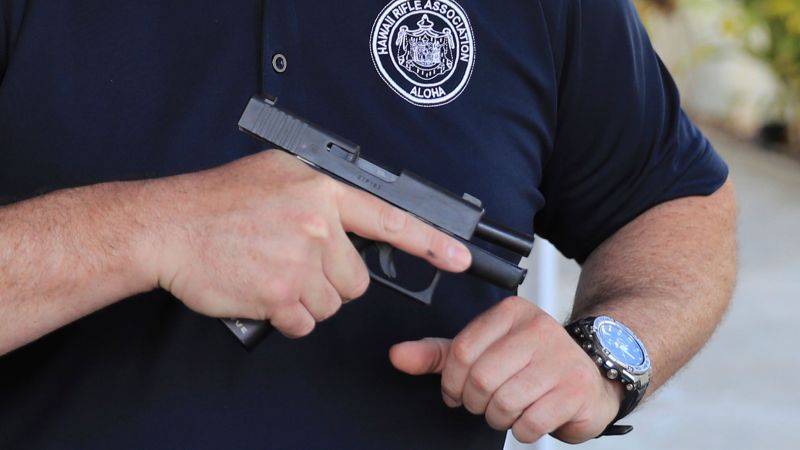
Virginia’s assault weapons ban and California’s restrictions on semiautomatic machinegun convertible pistols have become focal points of the federal campaign. The Justice Department is challenging these laws to establish a precedent that could weaken other state-level firearm controls. In Virginia, the lawsuit targets a law that bans specific types of firearms, while California’s case centers on regulations that limit the use of Glocks. Both states had previously argued their laws balanced safety and rights, but federal officials claim they now face constitutional scrutiny.
These legal challenges are part of a strategic push to redefine gun policy across the nation. By emphasizing the Supreme Court’s decision, the administration seeks to rally support for its position that state laws imposing broad restrictions are inconsistent with the Constitution. The Justice Department’s focus on these cases aims to test the limits of existing court rulings and create a legal framework favoring gun owners.
Broader Impact on State and Federal Laws
The Supreme Court’s ruling has prompted a nationwide reassessment of gun regulations. Hawaii’s law, which required property owners to permit firearms unless they opted out, was cited as a model by other states. However, the decision now casts doubt on such measures, with the Justice Department leading the charge to dismantle them. This legal strategy is expected to influence future legislation, as states may revise their laws to avoid federal challenges. The focus keyword “Justice Department threatens lawsuits over” is central to this shift, as it underscores the administration’s determination to enforce constitutional interpretations.
As the lawsuits progress, the legal battle over gun rights is likely to intensify. The Justice Department’s actions could set a precedent that reshapes how states regulate firearms, potentially expanding the scope of the Second Amendment. While supporters of state laws argue they enhance public safety, the federal campaign positions the Constitution as the ultimate arbiter of gun ownership rights. This dynamic highlights the ongoing tension between state and federal authorities in the realm of gun policy.