John Roberts’ Campaign to Expand Presidential Authority
Sandego.net – Chief Justice John Roberts has spent over four decades advocating for a robust presidential authority, one that allows the leader of the United States to dismiss heads of independent agencies without restriction. His efforts gained momentum during his tenure as a Reagan-era attorney, where he first expressed concerns about the limitations placed on executive power. This ideological push culminated in a significant shift during the Supreme Court’s 2026 decision, which overturned the 1935 precedent set in *Humphrey’s Executor v. United States*, a case that had long shielded regulatory agencies from arbitrary removal by the president.
A Lifelong Pursuit of Executive Power
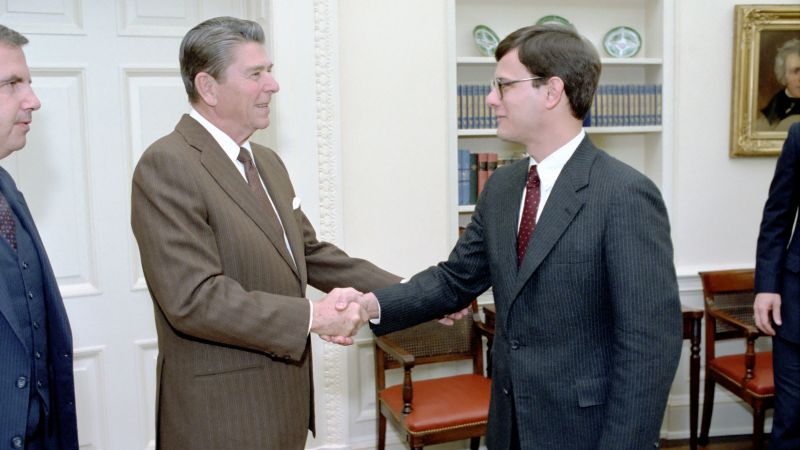
Roberts’ campaign to redefine presidential authority began in earnest during the 1980s. In a 1983 memo to White House counsel, he highlighted what he deemed a “constitutional peculiarity” of independent agencies, arguing that their autonomy should be challenged. He contended that the president’s ability to appoint and remove agency leaders was essential for accountability, stating that “the President could not be held fully accountable for discharging his own responsibilities” without such power. This sentiment echoed in his 2010 opinion, where he emphasized that the executive’s authority should not be constrained by legislative limits on firing power.
When Roberts ascended to the Supreme Court in 2005, he brought his vision of expanded executive control with him. Over time, he and his conservative allies systematically dismantled legal barriers that had historically protected independent agencies. This approach was not limited to regulatory oversight; it also influenced rulings on the Voting Rights Act and other legislative frameworks. By 2026, his strategy had reached a critical juncture, with the reversal of *Humphrey’s Executor* marking a pivotal moment in the consolidation of presidential power.
The 2026 Turning Point
Monday’s Supreme Court ruling represented the culmination of Roberts’ long-term efforts to reshape the balance of power between the executive and legislative branches. The decision overturned the 1935 precedent that had allowed Congress to impose restrictions on the president’s authority to remove agency heads. Roberts argued that this ruling would restore the original intent of the Constitution, which he believed granted the president a more direct role in governing. “If anything more is left of Humphrey’s, we overrule it,” he declared, signaling the court’s willingness to strip agencies of their independence.
Roberts’ argument centered on the idea that the president, as the sole executor of the nation’s laws, should have unfettered authority to manage administrative functions. In his 36-page opinion, he asserted that the Constitution creates three branches of government but “only one President,” who is “not all powerful – not by any means. But he is not impotent either.” This perspective framed the reversal as a necessary correction to a perceived flaw in the separation of powers. The ruling, however, sparked debate over its implications for regulatory stability and democratic checks on executive action.
Impact on Regulatory Oversight
While the Supreme Court’s focus on issues like the Second Amendment and abortion rights often dominates headlines, the reversal of *Humphrey’s Executor* has profound consequences for the functioning of independent agencies. These entities, including the Federal Trade Commission (FTC), the Environmental Protection Agency (EPA), and the Securities and Exchange Commission (SEC), play a critical role in shaping policies that affect everyday life. From consumer protections to workplace safety standards, their decisions impact millions. Roberts’ ruling, by removing congressional safeguards, allows the president to exert greater control over these bodies, potentially altering the landscape of public regulation.
Justice Sonia Sotomayor, representing the dissenting side, criticized the decision as a dramatic expansion of executive power. In her oral dissent, she warned that the ruling would enable the president to override laws in areas such as fair trade, nuclear energy, and chemical safety. “The Court gives the President a power unknown even to the English Crown,” she wrote, noting that the Founders had designed a system where the executive branch was “coequal” with the legislature. By transforming the duty to “take care that the laws be faithfully executed” into a license to “act in defiance of those very laws,” Sotomayor argued, the ruling undermines the checks and balances envisioned by the Constitution.
Broader Implications for Governance
Roberts’ approach to presidential authority has been consistent across multiple rulings. His 2024 decision, which granted Trump significant immunity from criminal prosecution, exemplified this philosophy. The chief justice and other conservative justices framed the ruling as a defense of executive discretion, arguing that the president’s power to act decisively should not be subject to excessive judicial scrutiny. This pattern mirrors his earlier efforts to curtail the Voting Rights Act, where the court’s decisions weakened federal protections for minority voters.
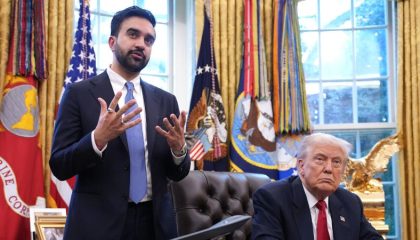
The FTC, a central figure in Monday’s ruling, has been at the heart of Roberts’ campaign. Established in 1914 to safeguard consumers from deceptive business practices, the commission has historically operated with a degree of independence. However, under the new framework, the president can now remove its leaders without cause, as long as they are deemed “inefficient, neglectful, or engaged in wrongdoing.” This change has raised concerns about the potential politicization of regulatory agencies. For instance, during Trump’s second term, he targeted Democratic-appointed commissioners, including Rebecca Slaughter, who was serving a seven-year term at the FTC. Her removal, facilitated by the new precedent, symbolizes the broader shift in power dynamics.
Roberts’ strategic patience has paid off. With a 6-3 conservative majority, the court has been able to overturn long-standing precedents, ensuring that the president holds the reins of authority. The dissenting justices, while vocal in their opposition, have found themselves increasingly isolated in their efforts to preserve checks on executive power. As the ruling stands, independent agencies face a future where their independence is contingent on the president’s approval, reshaping the American governance system in ways that will likely be felt for years to come.
Conclusion: A Presidential Reckoning
John Roberts’ reversal of *Humphrey’s Executor* marks a decisive step in his quest to elevate the presidency as the dominant force in American governance. By dismantling the 1935 precedent, the court has granted the executive branch greater flexibility in managing regulatory agencies, potentially opening the door to more direct control over policy implementation. While this shift aligns with Roberts’ vision of a powerful president, it also raises questions about the long-term effects on democratic accountability and the independence of the regulatory state. As the debate continues, the balance of power between the branches remains a central issue in the nation’s political landscape.