Small Aircraft Collides with Beijing’s Iconic Skyscraper
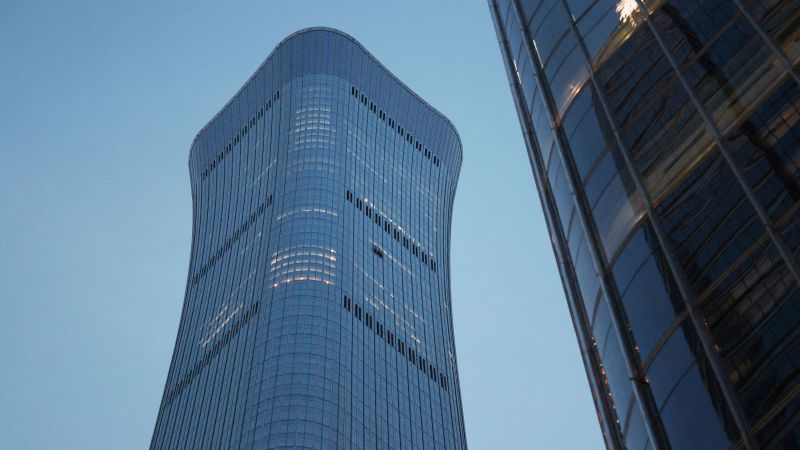
Sandego.net – On Friday afternoon, a small aircraft reportedly collided with the CITIC Tower, the tallest building in Beijing, triggering a dramatic event in a city renowned for its stringent security measures. The incident, which has already sparked widespread concern, was captured on video and shared across social media platforms, showcasing debris cascading from the 109-story structure as well as remnants of the plane’s tail section. Among the visuals, a shattered windshield of a nearby taxi was also seen, underscoring the immediate impact of the crash on the surrounding area.
Witnesses, including CNN journalists, described the scene as chaotic, with evacuees converging near the tower’s entrance and emergency vehicles—fire engines, police cars, and an ambulance—swarming the vicinity. The footage provided a stark contrast between the skyward height of the skyscraper and the sudden disruption caused by the aircraft’s impact. While the video captures the immediate aftermath, the exact cause of the collision remains under investigation. CNN has yet to obtain an official statement from the authorities, leaving questions about the incident unanswered.
“We’re not familiar with the situation,” a representative from the Beijing Public Security Bureau’s relevant district branch told CNN when contacted. The individual then directed the media to another contact number, though the call went unconnected. This delay in communication has fueled speculation about the circumstances surrounding the crash.
Further inquiries by CNN revealed that the aircraft’s registration number, visible in online images, points to a domestically produced light sport model, the Sunward SA 60L Aurora. This type of aircraft, commonly used for pilot training, recreational flights, and aerial photography, is owned by a local general aviation company. The company, which operates within Beijing’s airspace, is currently under scrutiny as officials attempt to determine what led to the deviation in the plane’s trajectory.
Unverified flight data from Flightradar24, a popular aviation tracking service, indicated a severely off-course flight path for the aircraft. The data suggests the plane may have strayed from its intended route, raising questions about pilot error, mechanical failure, or external factors. As the investigation unfolds, analysts are examining the potential role of the city’s recent drone regulations, which have enforced a drone-free zone since May 1. Under these rules, residents must secure government approval to operate drones, adding an extra layer of oversight to air traffic within Beijing’s jurisdiction.
The implementation of these sweeping drone restrictions has already reshaped the city’s airspace management, reducing the number of unmanned aerial vehicles in the area. However, the incident involving the small aircraft highlights the challenges of integrating both manned and unmanned aircraft into a highly regulated environment. While drones are now tightly controlled, the presence of a manned plane crashing into a skyscraper underscores the complexities of maintaining safety in one of the world’s most densely populated and technologically advanced urban centers.
Authorities have been contacted by CNN to provide further details, but responses have been limited. The Beijing Municipality Government, along with the aircraft owner’s contact number, has been reached out to for clarification. As of now, no definitive information has been released regarding the number of casualties, the extent of damage, or the cause of the crash. The lack of immediate updates has left the public in suspense, with many expressing shock and concern over the event.
The CITIC Tower, a symbol of Beijing’s modern architectural ambition, stands as a testament to the city’s rapid development. Located at the heart of the urban landscape, it has become a focal point for both residents and visitors, offering panoramic views of the capital. The collision has raised questions about the safety protocols in place, particularly given the tower’s status as a critical landmark. Engineers and aviation experts are now analyzing the structural integrity of the building to assess whether the incident poses any long-term risks to the city’s infrastructure.
Meanwhile, the aviation community is discussing the implications of the crash for general aviation operations in Beijing. The Sunward SA 60L Aurora, though a smaller aircraft, has a history of being used in both commercial and private capacities. The incident could serve as a catalyst for revisiting safety standards and flight regulations, especially in light of the city’s drone restrictions. As the investigation continues, the focus remains on understanding how such a collision could occur in a city with such advanced air traffic controls.
Residents and local officials have expressed mixed reactions to the event. While some emphasize the need for stricter regulations, others highlight the importance of maintaining open skies for recreational and professional use. The city’s efforts to balance security with accessibility may now face renewed scrutiny. As the story develops, it is clear that the collision has left a lasting impression on Beijing’s skyline and its residents.