Supreme Court Tosses $1.25M Roundup Cancer Verdict
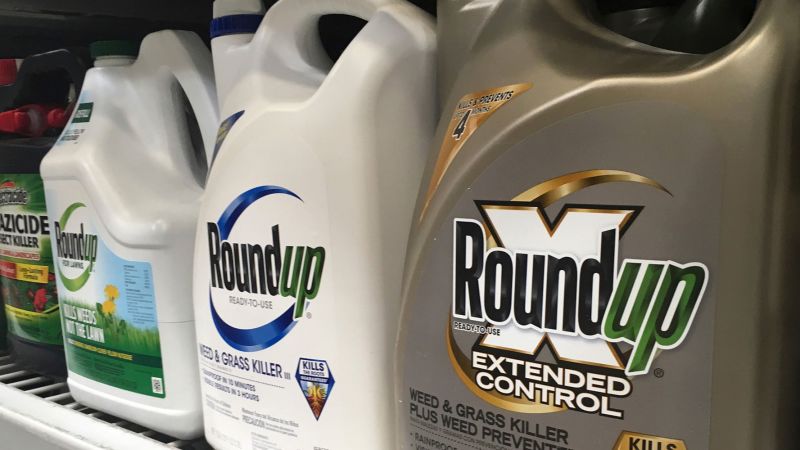
Sandego.net – The U.S. Supreme Court has overturned a $1.25 million award given to a Missouri man who claimed Roundup caused his cancer, marking a significant shift in the legal landscape surrounding the herbicide. The decision, authored by Justice Brett Kavanaugh and joined by a 7-2 majority, ruled that federal preemption under the Federal Insecticide, Fungicide, and Rodenticide Act (FIFRA) prevents states from mandating cancer warnings on Roundup. This ruling directly impacts the $1.25 million verdict and has sparked debates about the balance between state laws and federal regulations in pesticide safety. Critics argue that the decision weakens consumer protections, while supporters see it as a victory for industry oversight.
A Landmark Legal Battle
The case, which has drawn national attention, centers on John Durnell, a man nicknamed “spray man” for his frequent use of Roundup in St. Louis parks. After being diagnosed with non-Hodgkin lymphoma, Durnell sued Monsanto, claiming the pesticide contributed to his illness. A jury initially sided with him, awarding $1.25 million in damages. However, the Supreme Court’s intervention has now invalidated that verdict, raising questions about the role of state laws in holding companies accountable for health risks. The ruling has also reignited discussions about the EPA’s authority over chemical safety.
At the heart of the dispute is the argument that federal regulations, specifically FIFRA, grant the Environmental Protection Agency (EPA) sole authority to oversee weedkillers like glyphosate. Monsanto contends that state laws requiring cancer warnings on Roundup are redundant and contradict federal standards. The court’s majority echoed this reasoning, emphasizing that the EPA has not mandated such warnings for glyphosate. This interpretation could set a precedent, potentially limiting the ability of states to enforce their own safety requirements in similar cases.
Political and Health Implications
The ruling has drawn strong reactions from health advocates and political figures. Supporters of President Donald Trump’s “Make America Healthy Again” (MAHA) movement, including Health and Human Services Secretary Robert F. Kennedy Jr., see it as a win for regulatory consistency. Kennedy, who previously represented DeWayne “Lee” Johnson in a landmark Roundup case, has used the decision to bolster his push for rolling back environmental regulations. Meanwhile, critics argue that the ruling prioritizes corporate interests over public health, particularly for cancer victims seeking compensation.
While Kennedy’s involvement highlights the political dimension of the case, the legal battle remains rooted in scientific and regulatory arguments. The Supreme Court’s decision underscores the tension between federal and state powers, with implications for future lawsuits involving Roundup and other pesticides. Advocacy groups warn that this ruling could embolden industries to challenge state-level health safeguards, potentially delaying justice for affected individuals. The case also reflects broader concerns about the safety of widely used chemicals and their long-term health effects.
The verdict’s reversal has significant consequences for thousands of similar lawsuits against Monsanto. With the Supreme Court’s support for federal preemption, many cases may face dismissal or reduced damages. This outcome aligns with the company’s strategy to limit liability by leveraging the EPA’s approval of glyphosate. Despite removing the chemical from consumer products, Monsanto continues to use it in industrial formulations, maintaining its market presence while facing legal challenges. The ruling reinforces the company’s position and may pave the way for further settlements, such as the $7.25 billion agreement negotiated with Bayer.
Christopher Seeger, a lawyer representing the $7.25 billion settlement, criticized the Supreme Court’s decision, stating that it “wrongly slams the courthouse door on Americans sickened by pesticides.” He argued that the verdict undermines the ability of cancer victims to secure compensation, especially after years of litigation delays. The settlement, pending approval in Missouri state court, offers annual payments to eligible plaintiffs for up to 21 years. While the ruling doesn’t directly affect this agreement, it provides a financial buffer for those affected by Roundup, even as legal battles continue.