Rubio’s spin on the Iran MOU sounds different from Trump and Vance
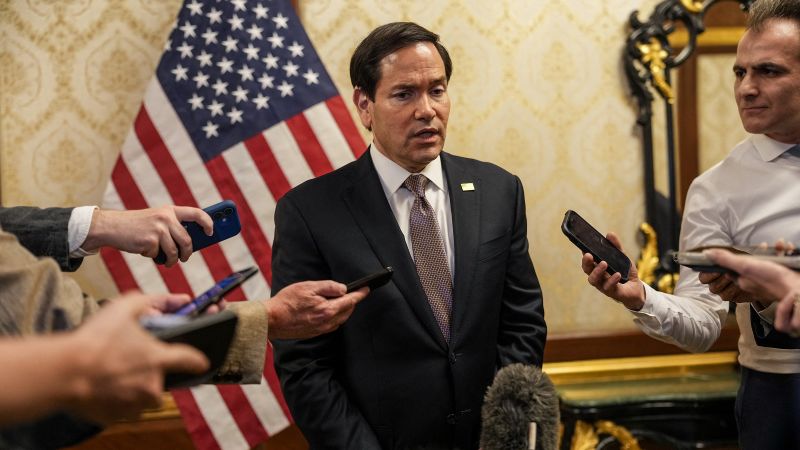
Sandego.net – Over the past week, the nation’s leading diplomat remained notably silent on a developing agreement with Iran, a topic traditionally within his expertise. This quietness sparked speculation among analysts and political observers, many of whom assumed Secretary of State Marco Rubio, like other conservative foreign policy advocates, might harbor reservations about the deal. However, recent statements from Rubio have revealed a shift in tone, offering a perspective that diverges significantly from that of President Donald Trump and Vice President JD Vance. During engagements with Middle Eastern allies, Rubio has not only softened his previous criticisms of the agreement but also emphasized its strategic importance in a manner that contrasts with the more forceful rhetoric of his predecessors.
Rubio’s Evolving Stance
Rubio’s recent remarks have signaled a more measured approach toward the Iran Memorandum of Understanding (MOU). While he once characterized Iranian leaders as “religious lunatics,” his current language suggests a willingness to engage with the regime on a broader scale. During a visit to Bahrain, he reiterated that Iran’s leadership is “led by clerics—radical clerics,” a statement that underscores his belief in the system’s inherent rigidity. Yet, this framing appears to align more closely with the nation’s long-standing foreign policy objectives than the more optimistic outlook of Trump and Vance.
“The Iranian system is led by clerics—radical clerics,” Rubio said during a visit to Bahrain. “That’s what it’s always been led by. And that’s what it continues to be led by.”
Rubio’s comments highlight a nuanced understanding of Iran’s political structure, acknowledging its fundamentalist roots while framing the MOU as a pragmatic step toward regional stability. In contrast, Trump and Vance had previously portrayed Iran’s leadership as potentially open to reform, with Trump dismissing the idea that its leaders were “radicalized.” During a June 16 speech at the G7 summit in France, Trump asserted that “we’re dealing with people that I think are very rational people. They were nice to deal with. They were strong people, smart people. … But they’re not radicalized, and they’re, you know, looking to help their country.” This perspective, while more conciliatory, has drawn criticism from hardliners who view it as underestimating Iran’s ambitions.
Vice President JD Vance, who has taken a prominent role in promoting the agreement, echoed Trump’s more flexible stance. In an interview with CNN’s Jake Tapper, Vance suggested that the MOU represented a pivotal moment in Iran’s foreign policy, with both hardliners and reformists recognizing the need for a “new leaf” in U.S.-Iran relations. “This is a very interesting thing about these negotiations—is you see people, both the hard-liners, but also the more political people, saying our relationship with the United States over the past 47 years has been a mistake,” Vance said. “Let’s turn over a new leaf.”
Despite their differences, both Vance and Rubio have acknowledged the MOU’s potential to evolve. They emphasized that the agreement’s success will depend on Iran’s actions over time, with Rubio suggesting that the document’s language might be stronger in addressing key concerns. This approach has drawn attention to the MOU’s wording, particularly its implications for Iran’s regional influence and military activities.
The Trump Administration’s Original Goals
One of the most curious omissions from the MOU was any mention of ending Iran’s missile program. This had been a central objective of the Trump administration from the outset of the conflict, yet the agreement left the issue unaddressed. Even more striking was Trump’s recent shift in position, as he appeared to scale back his earlier demands. In a recent address, Trump stated that “Iran should be allowed to have at least some missiles” and argued that “missiles aren’t the problem” because they “don’t blow up the planet.” He later remarked, “In relative proportion, I think it’s OK,” suggesting that the missile program might be a secondary concern in the broader negotiations.
“Missiles aren’t the problem,” Trump said. “They don’t blow up the planet.”
Rubio, however, has shown a more resolute stance on this issue. During a meeting in Kuwait, he assured allies that the administration would not tolerate actions that threaten their security. “We’re not going to do anything that undermines the security of our allies—our longstanding allies in the region,” Rubio stated. This commitment to containing Iran’s missile capabilities has reassured Gulf nations, many of whom have expressed fears about the regime’s use of drones and ballistic weapons.
The MOU also failed to explicitly address Iran’s support for proxy groups such as Hezbollah and Hamas. Rubio has argued that the agreement’s stipulation to “avoid hostile action against each other and refrain from the threat or use of force” implicitly covers this issue. “You can’t have the end of hostilities and conflicts in the region as long as Iranian proxies are launching missiles and drones from Iraq and are participating in terrorism like Hamas did and like Hezbollah did,” he said in Abu Dhabi. “So I do think it’s covered by the MOU.”
“You can’t have the end of hostilities and conflicts in the region as long as Iranian proxies are launching missiles and drones from Iraq and are participating in terrorism like Hamas did and like Hezbollah did,” Rubio said in Abu Dhabi.
Vance, in a separate interview, made a similar argument, stating that the MOU’s language “means that Iranians have to stop funding violent terrorist organizations, they have to stop funding regional instability.” While this aligns with Rubio’s interpretation, it contrasts with Trump’s more relaxed view of Iran’s role in proxy conflicts. The divergence in how these officials frame the agreement reflects broader differences in their strategies for engaging with Tehran.
The Path Forward
Rubio’s emphasis on the MOU’s security guarantees has positioned him as a bridge between the administration’s hardline objectives and the diplomatic outreach needed to secure international backing. His comments during meetings with regional allies suggest a focus on maintaining the balance between concession and firmness. “We’re aligned with those allies and won’t allow Iran to threaten them,” he reiterated in Kuwait. This alignment with Middle Eastern partners could bolster the agreement’s credibility, particularly as tensions in the region remain high.
Meanwhile, Trump’s continued advocacy for a more lenient approach has raised questions about the MOU’s long-term viability. His remarks imply that Iran’s leadership might be more malleable than previously thought, a view that has both supporters and detractors. Vance, who has been instrumental in framing the agreement as a turning point, has also tempered expectations by acknowledging the need for patience and observation. “Time will tell what the Iranians’ true intentions are,” he said, a statement that underscores the administration’s cautious optimism.
The MOU’s language and its implications have become a focal point of debate within the Trump administration. While the original goal of dismantling Iran’s missile program has been downplayed, the agreement’s emphasis on reducing hostile actions could still serve as a foundation for future negotiations. For Rubio, the MOU represents a strategic tool to address Iran’s security threats without sacrificing diplomatic flexibility. His approach, however, has not gone unchallenged, with some critics arguing that the document’s ambiguity risks undermining its effectiveness.
As the 2028 election cycle looms, the differing perspectives of Trump and Rubio on the Iran MOU reveal a broader ideological divide. Trump’s emphasis on a more forgiving stance may resonate with voters seeking a pragmatic foreign policy, while Rubio’s assertive tone could appeal to those prioritizing regional security. Whether these divergent views will shape the administration’s approach to the agreement remains to be seen, but one thing is clear: the MOU has become a canvas for contrasting visions of U.S.-Iran relations, with each leader painting it in a way that reflects their priorities and political calculus.