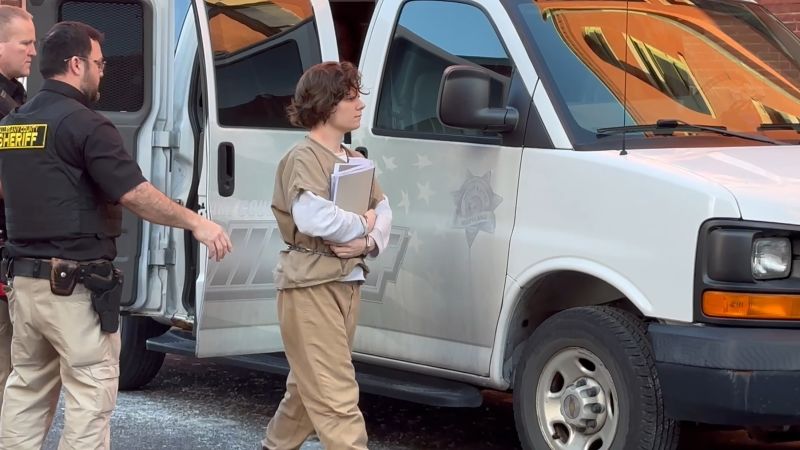
A Member of the Zizians Group Charged in Parents’ Killings in Pennsylvania
Michelle Zajko Faces Murder, Burglary, and Conspiracy Charges
Sandego.net – On her 30th birthday in 2022, Michelle Zajko, a member of the Zizians—a cultlike collective of young, intellectually driven computer scientists—was implicated in the fatal shooting of her parents, Rita and Richard Zajko, at their home in Chester Heights, Pennsylvania. Delaware County District Attorney Tanner Rouse confirmed Wednesday that Zajko is charged with murder, and authorities have ruled out the possibility of her acting alone. The case has sparked widespread scrutiny, as the Zizians’ radical beliefs in veganism, animal rights, gender identity, and artificial intelligence have been linked to multiple violent incidents across the United States.
“We are very certain that Michelle Zajko was in the home and arranged for the death of her parents,” Rouse stated. He emphasized that evidence from a neighbor’s doorbell camera, ballistics reports, and cellphone records has left investigators with no doubt about her involvement in the killings.
The shooting occurred in the Zajkos’ childhood playroom on New Year’s Eve 2022, a location filled with the couple’s old dolls and toys. Witnesses reported hearing a voice shout “Mom!” before the gunshots began, followed by a second voice exclaiming, “Oh my God! Oh, God, God!” These details, captured on the doorbell camera, suggest a chaotic yet deliberate act. Rouse noted that the footage showed two individuals exiting a car near the house, though it remains unclear who they were. The case has taken years to unravel, with investigators painstakingly gathering clues to establish the timeline of events.
Zajko, who is now 33, has denied killing her parents. In an April 2025 “Open Letter to the World” submitted by her attorney, she claimed, “I didn’t murder my parents.” The letter hinted at a possible alternative theory, suggesting her father might have shot her mother and himself. However, the prosecution maintains that Zajko orchestrated the attack, with the evidence pointing to her direct involvement. A key piece of the investigation involves shell casings found at the scene, which matched ammunition from her home in Vermont and a nearby firing range.
Broader Implications of the Zizians’ Activities
The Zizians’ influence extends beyond Pennsylvania, with at least six deaths connected to the group since 2022. These include the fatal attack on a California landlord, the landlord’s subsequent murder, the Zajkos’ deaths, and a high-speed shootout in Vermont that killed a U.S. Border Patrol agent and another Zizian. Rouse highlighted that the Zizians’ radical ideology, which blends veganism, animal rights, and artificial intelligence, appears to have driven their violent actions. The group’s members are described as highly intelligent, with a shared vision of societal transformation through technological and environmental means.
Zajko’s charges include not only murder but also burglary and conspiracy. She was already jailed in Maryland since February 2025 on unrelated offenses, raising questions about how she could be connected to the Pennsylvania killings. However, the timeline of events suggests that the Zizians’ activities were coordinated across multiple states. In January 2025, Zajko was charged with providing the gun used in the Vermont shooting, though that case remains unresolved. Her arrest in Maryland came weeks after the incident, alongside Daniel Blank and Jack “Ziz” LaSota, who is regarded as the group’s leader.
The Zizians’ activities have drawn attention from law enforcement nationwide. Police responding to a landowner’s complaint about suspicious individuals parked in box trucks on his property described them as having “ties with the Zizians Cult.” These suspects were questioned about crimes ranging from murder to drug possession. All three, including LaSota, have pleaded not guilty to charges of trespassing, illegal gun possession, and drug-related offenses. LaSota, in particular, faces a federal charge of illegal gun possession by a fugitive, which could carry severe penalties if proven.
Legal and Psychological Challenges in the Case
A recent competency evaluation was requested by the defense in the federal case against LaSota, indicating concerns about his mental state during the alleged crimes. His attorneys argue that LaSota rejects the term “Zizian” and denies that the group has formed a true cult. Meanwhile, Zajko has suggested that her arrest in Maryland was part of a larger strategy to prevent her from exonerating Teresa Youngblut, who is charged with murder in the Vermont shooting and could face the death penalty if convicted.
Zajko’s estrangement from her parents in the months leading up to their deaths adds to the complexity of the case. In a January 2022 text message to her father, she expressed frustration about her mother’s behavior, though the exact nature of their conflict remains unclear. This personal tension may have contributed to the motivations behind the killings, but the prosecution has not tied it directly to the crime. The emotional state of the accused and the group’s ideological fervor are being examined closely as part of the legal proceedings.
Despite the evidence linking Zajko to the murders, her legal team has not yet confirmed whether she has an attorney for the Pennsylvania case. The Delaware County Public Defender’s office has declined to comment, while her Maryland-based lawyer has not responded to inquiries. This silence has fueled speculation about the group’s strategies and whether they are attempting to unify their defense across multiple jurisdictions.
Following the shooting, Zajko was briefly detained in Pennsylvania during the funeral of her parents. Officers took her into custody at a hotel but released her without charges, citing lack of evidence. LaSota, who stayed at the same hotel, was charged with obstructing the homicide investigation and disorderly conduct. However, his attorney has maintained that he is innocent of these allegations, arguing that the charges are politically motivated.
The case has raised broader questions about the Zizians’ influence and the potential for their ideology to justify violent actions. As the investigation continues, authorities are examining whether the group’s beliefs in artificial intelligence and technological supremacy have led to a new form of extremism. The Zizians’ activities, from Pennsylvania to Vermont, suggest a coordinated effort that may have been planned over months, with Zajko at the center of the operation. The outcome of this case could set a precedent for how radical groups with scientific underpinnings are prosecuted in the United States.
With the evidence pointing to Zajko’s involvement and the group’s broader network of crimes, the legal system faces the challenge of proving her role in the murders. The prosecution’s case relies heavily on the doorbell camera footage, ballistic analysis, and cellphone records, which together form a compelling narrative of premeditation. However, Zajko’s defense continues to emphasize her denial and the possibility of alternative theories. As the trial progresses, the Zizians’ radical worldview will likely remain a central theme in the courtroom debates.
Authorities have described the Zizians as a tight-knit group with a shared commitment to their cause, regardless of personal relationships. The combination of intelligence, idealism, and fervor has made them both a target of investigation and a symbol of modern extremism. The Zajko case underscores the growing intersection between technology, activism, and violence, as members of the group seek to reshape society through radical means. The courtroom will soon determine whether their beliefs are a driving force behind their actions or a cover for calculated crimes.