A seismic event bounced off Earth’s core and shifted an island country
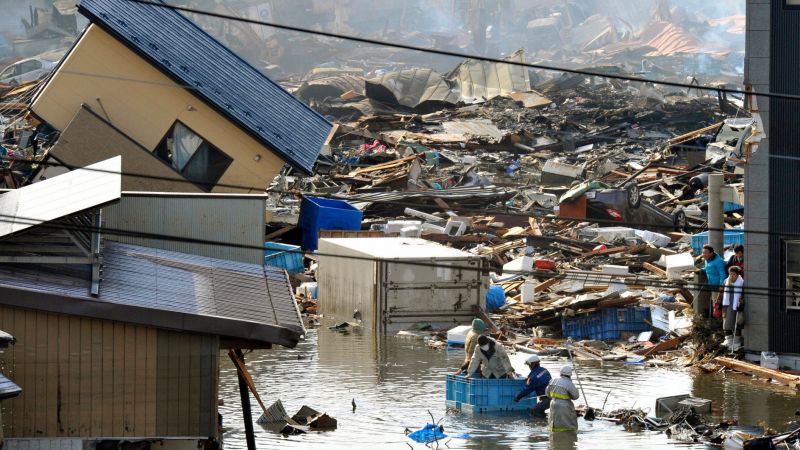
Sandego.net – On March 11, 2011, a catastrophic 9.0 magnitude earthquake struck Japan, leaving an indelible mark on the region. However, the impact of this disaster extended beyond the immediate devastation. According to GPS data, the entire country shifted eastward by a fraction—just 5 to 6 millimeters, or approximately 0.20 to 0.24 inches—but this displacement was permanent and occurred nearly 15 minutes after the initial tremors began at 2:46 p.m. local time. At the time, the subtle movement went unnoticed or was dismissed as a minor data anomaly. It wasn’t until years of analysis that researchers uncovered its significance.
Unprecedented Ground Movement
The study led by University of Chicago geophysicist Sunyoung Park revealed that this displacement was not a random occurrence but a result of seismic waves traveling to Earth’s core and bouncing back. The phenomenon, described as “extraordinary” in the research, indicated a previously undocumented mechanism of ground movement. Park explained that the entire Japanese archipelago, from Hokkaido to Kyushu, moved almost uniformly, an event that defied the typical patterns of tectonic activity. This movement did not align with the timing of the initial earthquake or its subsequent aftershocks, suggesting a deeper process at play.
“What was unusual about this movement is basically the whole of Japan was moving nearly uniformly at the same time,” said Park, who spearheaded the research.
Researchers analyzed both GPS and seismic data to trace the origin of this shift. They found that the earthquake’s energy had not only reached the crust but had also traversed through the planet’s interior, reflecting off the outer core before returning to the surface. This round-trip journey, covering roughly 3,600 miles, took about 15 minutes. The result was a secondary displacement that affected multiple tectonic plates simultaneously, a finding that challenges existing models of seismic wave behavior.
Core-Reflecting Seismic Waves
Seismologists have long understood that seismic waves from large earthquakes can penetrate deep into the Earth. However, the idea that these waves could reach the core and rebound back to the crust was considered an unusual but not impossible scenario. The key difference here was that the energy was not dissipated before returning, as previously thought. Instead, it triggered a widespread and measurable shift in the crust. “This type of deep-diving wave triggering some kind of event is new,” Park noted, emphasizing the novelty of the discovery.
The movement observed in the study, though minor, was remarkable in scale. It encompassed the intersections of four major tectonic plates: the Pacific and Okhotsk plates, as well as the Philippine Sea and Eurasian plates. Such a broad displacement is rare, making this event unique in geological history. The energy released during this process was comparable to that of a 7.5 magnitude earthquake, according to the study’s findings. Yet, because the energy was spread across a vast area, the effects were less intense than those of a localized quake of similar magnitude.
“Even if there was any damage, it would likely be very difficult to distinguish it from damage caused by the mainshock and the subsequent aftershocks,” Park said.
Japan’s advanced seismic monitoring network played a critical role in detecting this phenomenon. Vedran Lekić, a professor at the University of Maryland, highlighted the country’s “magnificent” array of stations, which allowed for precise tracking of such subtle movements. However, he also noted that this event could occur elsewhere, particularly in regions with less comprehensive instrumentation. The 2011 earthquake, which occurred 231 miles (372 kilometers) northeast of Tokyo, was the most severe to ever hit Japan, generating a massive tsunami and triggering a nuclear crisis that claimed an estimated 20,000 lives.
The Mechanics of the Phenomenon
The researchers hypothesized that the initial earthquake’s powerful shaking may have acted as a catalyst for the core-reflected wave. This wave, bouncing off the liquid outer core, reactivated fault lines associated with the main quake and also influenced more distant plate boundaries. The result was a chain reaction that caused the entire country to shift eastward, even before the primary aftershocks were recorded. “The initial quake’s energy might have facilitated the arrival of the wave from the core, which then triggered movement along plate intersections that were not directly affected by the main event,” Park explained.
Unlike traditional aftershocks, which are unpredictable, this core-reflected event followed a predictable 15-minute cycle. This characteristic opens the possibility of forecasting such occurrences, potentially giving policymakers and emergency responders a warning to prepare for secondary effects. Park emphasized the importance of recognizing this new source of seismic risk, urging authorities to integrate it into risk assessments and disaster planning.
Broader Implications for Seismic Science
The discovery challenges previous assumptions about how seismic energy propagates through the Earth. While seismologists knew that waves could travel through the core, they believed the energy would dissipate before causing surface displacement. This study, however, suggests that the core can act as a mirror, reflecting waves back to the crust in a way that amplifies their impact. Goran Ekstrom, a geophysicist at Columbia University, provided additional context, noting that the mainshock itself caused the island of Honshu to shift east by about 20 centimeters. “This rapid movement is what generated the ground shaking and the tsunami,” Ekstrom said, though he was not involved in the study.
Such a large-scale displacement, though smaller in magnitude than the primary earthquake, underscores the complexity of tectonic interactions. The 2011 event demonstrated that even minor shifts in the crust can have significant implications when they affect multiple plates across a vast region. This finding could lead to new insights into how earthquakes influence global tectonic systems and how secondary effects might be anticipated in future seismic events.
Future Research and Applications
Park and her team’s work highlights the need for further investigation into the mechanics of core-reflected waves. Understanding how these waves interact with tectonic plates could improve predictive models and enhance preparedness strategies. The study also raises questions about the potential for similar phenomena in other parts of the world, especially in less monitored regions. For Japan, the event serves as a reminder of the country’s vulnerability to seismic hazards, even beyond the immediate aftermath of a major quake.
The 2011 earthquake remains a pivotal moment in seismic history, not only for its destructive power but for the unexpected insights it provided. By revealing that seismic waves can bounce off the Earth’s core and cause widespread, albeit subtle, shifts, the research adds a new dimension to the study of tectonic movements. This discovery could reshape how scientists and policymakers approach earthquake risk, emphasizing the importance of monitoring not just the surface but the deep structures that influence our planet’s dynamic behavior.
As the global community continues to explore the Earth’s inner workings, the 2011 event stands as a testament to the interconnectedness of geological processes. The ability to detect and analyze such phenomena underscores the value of advanced technology in uncovering hidden patterns of tectonic activity. While the shift itself was minor, its implications are profound, offering a glimpse into the intricate dance of forces that shape our planet and the potential for new, unforeseen seismic events in the future.