Russia Inches Forward in Donetsk Despite Exaggerated Claims
Sandego.net – Russia is still inching forward in eastern Ukraine, a claim that has sparked mixed reactions from experts and military analysts. While Moscow reports steady gains in the Donetsk region, many believe the progress is overstated. The ongoing operations, centered around the strategic Kostyantynivka area, highlight a delicate balance between Russian advances and Ukrainian resistance. This slow but persistent movement has raised questions about the true scale of Russia’s tactical success and its long-term objectives in the region.
Gray Zones and Infiltration Tactics
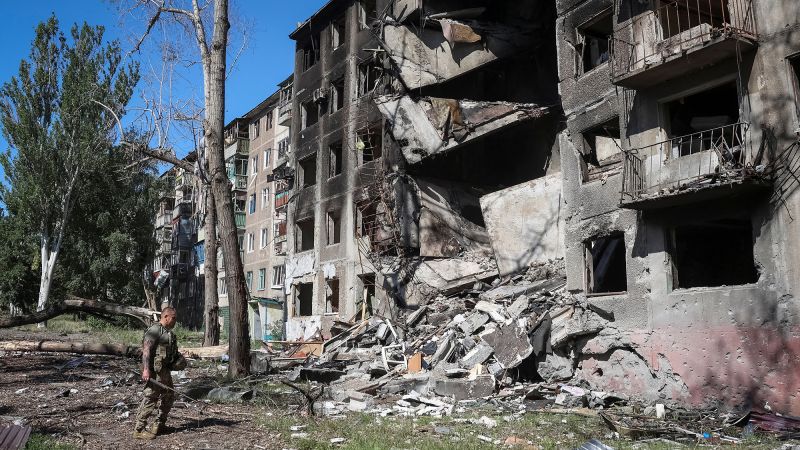
Kostyantynivka, a key city within Ukraine’s industrial heartland, has become a symbol of the contested frontlines. Russian state media has asserted full control over its eastern part, yet independent sources describe the situation as a “gray zone,” where control is fluid and partial. Analysts argue that Russia is employing infiltration tactics rather than outright territorial conquest, sending small teams to secure critical positions without committing large forces.
“Russia’s so-called advances are really just infiltrations. They’re sending small groups of maybe one or two soldiers into specific positions, but these aren’t consolidated gains,” explained Kateryna Stepanenko, the lead Russia analyst at the Institute for the Study of War. “The process is slow and methodical, requiring significant time and resources before they can establish lasting control.”
Ukrainian Resistance and Strategic Defense
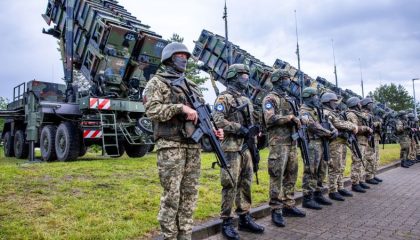
Despite the Russian push, Ukrainian forces are actively countering the advance. Soldiers on the frontlines report intensified attacks but also emphasize their ability to hold ground. Kostiantyn Melnykov, a spokesperson for Ukraine’s 24th Mechanized Brigade, noted that the enemy is struggling to make real gains. “We’re killing enemy troops, destroying equipment, and slowing their momentum,” he said.
Ukraine’s strategy involves using the terrain to disrupt Russian operations, with counterattacks aimed at halting their infiltration efforts. The capture of Pokrovsk earlier this year followed a similar pattern, where initial advances were followed by prolonged battles. “Infiltrations are a way to create the illusion of progress without achieving actual control,” added Yuriy Madyar, acting deputy commander of Ukraine’s 19th Army Corps. “We’ve seen single Russian soldiers advancing on their own, but they’re not able to sustain large-scale operations.”
Donbas as a Strategic Objective
Russia’s ultimate aim in the Donetsk region is to secure the entire Donbas area, a vital hub for logistics, supply routes, and industrial capacity. Controlling Kostyantynivka and surrounding settlements is seen as a stepping stone toward broader objectives. However, Ukrainian forces remain determined to resist, using defensive positions to counter Russian movements. “Our soldiers are holding back the enemy’s forces, even when they’re outnumbered,” Melnykov said.
Experts suggest that the current phase of Russian operations is part of a broader plan to consolidate control in the region. “The Kremlin is trying to project success amid recent setbacks,” said Stepanenko. “But the reality is that these advances are slow and require sustained effort.”
Weather and Technology Driving the Current Push
The timing of Russia’s operations has been linked to favorable summer weather, which enhances mobility and visibility for both ground and aerial forces. A Russian commander on Telegram noted that the greenery provides natural cover, making it harder for Ukrainian defenders to spot movements. “The greenery provides natural cover, making it harder for Ukrainian defenders to spot our movements,” the commander wrote.
Meanwhile, improved weather conditions also benefit drone operations, a critical tool in modern warfare. Yet, analysts argue that the current push is more about maintaining momentum than achieving significant territorial control. “Russia is still inching forward, but the gains are minimal,” Stepanenko added. “They’re using the weather to their advantage, but the terrain and Ukrainian resilience are still key barriers.”
Expert Perspectives on the Battlefield
Independent assessments consistently challenge the narrative of Russian progress. The Institute for the Study of War highlights that while Russian forces have managed to occupy certain areas, they lack the resources to hold them permanently. “Infiltrations are a way to create the illusion of progress without achieving actual control,” said Madyar.
Experts also note that the focus on Kostyantynivka reflects Russia’s broader strategy of attrition. “This is a methodical effort to wear down Ukrainian defenses,” Stepanenko said. “Even with their numerical superiority, they’re struggling to make real gains.”
Conclusion: A Delicate Balance of Advance and Resistance
Russia is still inching forward in eastern Ukraine, but the extent of its progress remains a subject of debate. While the Kremlin emphasizes territorial gains, many observers believe the advances are more symbolic than strategic. The situation in Kostyantynivka underscores the complex nature of the conflict, where small-scale infiltration tactics are used to test Ukrainian defenses without full commitment. “The key is to maintain pressure without overextending resources,” Madyar concluded. “Ukraine’s resilience is proving a major obstacle to Russia’s ambitions in the region.”