Why the forces that felled Keir Starmer threaten so many Western leaders
The Starmer Phenomenon
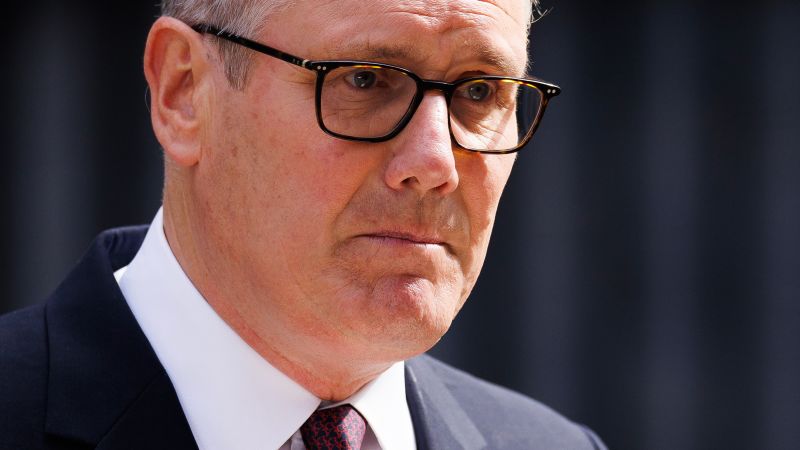
Sandego.net – British Prime Minister Keir Starmer’s recent resignation has sparked discussions about a broader trend in Western politics. Elected in 2024 on a platform of renewal and progress, he now faces the consequences of a political landscape where promises of change often fall short. His downfall mirrors that of leaders across the globe, who have been unable to meet voter expectations in an era marked by economic instability, institutional distrust, and social media-driven polarization.
Starmer’s tenure was defined by a struggle to implement his agenda amid a backdrop of chaos. The UK, once a symbol of political stability, has seen a rapid succession of leaders since the Brexit vote in 2016. Within just two years of securing a parliamentary majority, Starmer found himself grappling with a nation that demanded immediate solutions to soaring living costs, deteriorating public services, and a sense of economic precarity. His inability to address these issues has left many questioning whether the current generation of leaders lacks the clarity or strength to govern effectively.
Macron’s Struggles
France’s President Emmanuel Macron, another leader who rose to power with a vision of modernization, now faces similar challenges. Despite his initial promise to transform the country through economic reforms and a centrist political strategy, he has struggled to gain public support. His two-term presidency has been plagued by protests, a lack of legislative traction, and a perception of elitism. The French far-right National Rally party has emerged as a significant threat, capitalizing on Macron’s failures to reform the economy and the labor market.
Macron’s administration was hampered by its own internal divisions and the resistance of entrenched interests. The French state, often described as monolithic, has resisted structural changes that could alleviate the burden on citizens. His ideological battles with trade unions and his perceived detachment from the public’s concerns have eroded his political capital. As the country approaches its next presidential election, Macron’s potential departure raises concerns about the viability of center-left governance in France.
Trump’s Dilemma
Meanwhile, in the United States, President Donald Trump has become a case study in the challenges of maintaining public trust. Elected on a wave of populist sentiment, his administration has been characterized by a focus on personal vendettas and a dismissal of economic data. His recent remarks about the luxury of his new Air Force One, which he claimed surpassed any previous standard, have highlighted a disconnect between his rhetoric and the realities of everyday life for American voters.
Trump’s approach, marked by a focus on personal vendettas and a dismissive attitude toward economic concerns, has left his base disillusioned. While the U.S. economy has remained resilient, many citizens feel the burden of high energy prices and stagnant wages. His inability to address these issues has translated into plummeting approval ratings, with Democrats anticipating major gains in the upcoming midterm elections. The narrative of affordability, once a cornerstone of his campaign, now seems like a mirage to those struggling with basic costs.
Obama’s Reflection
The issue of unfulfilled promises has resonated beyond the UK and France. Former President Barack Obama, who championed the idea of “hope and change” during his 2008 and 2012 campaigns, recently addressed the theme in a speech at his presidential center in Chicago. In a
“appeals to democracy and civic participation are corny and old fashioned and boring and naive”
, he defended the resilience of democratic systems despite their flaws. Yet, the erosion of public confidence in leaders like Starmer and Macron suggests that Obama’s optimism may be tested in the years ahead.
Obama’s experience in Britain, where he positioned himself as a unifying figure after the Brexit vote, offers a parallel to Starmer’s challenges. He promised competence and a renewed sense of purpose, but his government faced a series of policy reversals and internal party conflicts. These struggles, compounded by a low-growth economy and a shortage of resources to address healthcare and public service crises, have weakened his momentum. The result? A political landscape where even leaders with strong ideals find themselves sidelined by systemic inertia.
The Modern Political Maelstrom
The current political climate raises critical questions about the effectiveness of Western leadership. Are leaders simply lacking the charisma and vision of past icons like Margaret Thatcher, Helmut Kohl, or Ronald Reagan? Or is something more fundamental at play? The modern era’s complexity, from global economic forces to the fragmentation of traditional media, has created an environment where even the most well-intentioned reforms are difficult to implement.
Voters, increasingly skeptical of institutional promises, demand immediate results. This has led to a cycle of election victories followed by governance struggles. Starmer’s resignation exemplifies this pattern, as his inability to control his own party and navigate economic uncertainty turned his campaign of renewal into a source of frustration. Similarly, Macron’s failure to rally support for his modernization agenda has left the political center in France vulnerable to extremist gains. The question remains: can any leader in this fragmented landscape truly deliver the change they promised, or are we witnessing the decline of democratic governance as we know it?
The Jinx of Incumbent Power
The repeated failures of leaders like Starmer and Macron underscore a growing crisis of trust in Western politics. Once seen as the bedrock of stability, democratic institutions now face challenges from both the left and the right. The rise of populist movements and the erosion of public confidence have created a vacuum where extremists can thrive. This trend is evident in the UK, where a sixth prime minister has been appointed in a decade, and in France, where the National Rally party’s prospects have surged.
The implications of this political shift are profound. Leaders who once commanded widespread support now find themselves navigating a turbulent environment where promises are easily derailed. The inability to meet expectations has not only fueled public cynicism but also accelerated the fragmentation of traditional political narratives. In this context, the question of whether democratic governance can survive in the age of political chaos becomes increasingly urgent. As the modern maelstrom continues, the fate of Western democracies may hinge on the capacity of their leaders to adapt, communicate, and deliver on their pledges. For now, the jinx of incumbent power seems to be in full effect, with even the most promising leaders struggling to maintain their foothold in a rapidly changing political world.