Tucker Carlson says he will no longer support the Republican Party
Political commentator announces break from party after criticizing its recent decisions
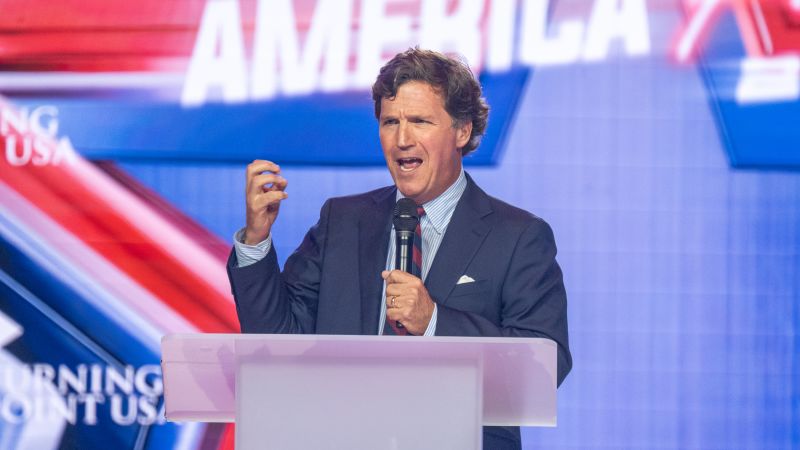
Sandego.net – Tucker Carlson, a prominent conservative voice, announced during a recent podcast episode that he will not endorse the Republican Party in the upcoming November midterm elections. This declaration marks a significant shift for the former Fox News host, who has long been a staunch defender of the party’s principles. Speaking on his show “Can’t Be Censored,” Carlson emphasized that his allegiance to the party is now in question, citing growing disillusionment with its leadership and priorities.
“I’ve been a consistent defender of the Republican Party for 35 years, but there’s no defending this,” Carlson said. “They are making decisions on the basis of other criteria—what’s best for this company, what’s best for Israel, what’s best for our donors. That’s not just off in the wrong direction; that’s unacceptable, treasonous, and immoral.”
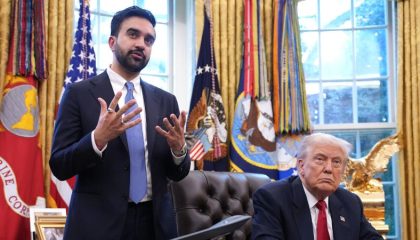
Carlson’s departure from the Republican Party has sparked widespread discussion, especially following his recent criticism of President Donald Trump’s decision to escalate tensions with Iran in February 2024. While he had previously supported Trump’s 2024 presidential campaign, Carlson expressed regret over his backing after the conflict began, calling it a moment of “misleading people.” He clarified that his apology was not out of regret but rather a recognition of the broader implications of the party’s actions.
The political commentator, who gained a massive following through his independent podcast since leaving Fox News in 2023, has increasingly distanced himself from the party’s agenda. His criticism centers on the perceived prioritization of corporate interests and foreign alliances over domestic concerns. “The party is moving in a direction that doesn’t align with the values of its voters, citizens, or the nation as a whole,” he argued. This sentiment reflects a growing rift within the conservative movement, as Carlson questions whether the party still represents its core principles.
“Not gonna support the Democratic Party,” Carlson added, underscoring his frustration. “I don’t know what I’m going to do.”
Carlson’s relationship with the Republican Party has been a cornerstone of his career, dating back to his early days as a commentator. However, his current stance signals a major turning point. The decision to abandon the party comes after a series of disagreements, particularly over its foreign policy choices. His latest comments are part of a broader pattern of criticism directed at the party’s alignment with Israel, which he claims has overshadowed the interests of American citizens.
Since his departure from Fox News, Carlson’s podcast has become a platform for his evolving views. He has attracted a diverse audience, including both longtime supporters and critics of the Republican Party, as he delves into the party’s internal dynamics and external policies. This shift in audience engagement highlights the growing influence of independent voices in shaping political discourse, even as they challenge established media institutions.
The Iran conflict in February 2024 acted as a catalyst for Carlson’s disillusionment. While he had previously backed Trump’s 2024 campaign, the decision to take military action against Iran led him to reassess his support. “This war was not just about defending our national interests,” he said. “It was driven by the interests of other entities, and that’s when I realized the party had strayed from its original mission.” His comments suggest a deeper ideological conflict, one that has intensified since the 2023 firing from Fox News.
Carlson’s critics argue that his shift reflects a broader trend of liberalization within the conservative movement. However, he maintains that his departure is rooted in a commitment to transparency and accountability. “I’ve always stood for the truth,” he said. “When the party starts making decisions that prioritize profit over principle, I can’t stay silent.” His remarks have drawn both support and skepticism, with some allies accusing the party of being out of touch, while others question his motives.
The political landscape has seen a dramatic transformation since Carlson’s departure, with his podcast becoming a focal point for debates on party loyalty and ideological alignment. His critique of the Republican Party’s decision-making process has resonated with many who feel the party has become more aligned with corporate and international interests than with the American public. “This is not just a personal choice,” Carlson explained. “It’s a reflection of a system that no longer serves the people it was founded to protect.”
As the midterm elections approach, Carlson’s decision to withhold support from the Republican Party could influence the broader political climate. His base of listeners, many of whom have grown disillusioned with traditional media and political figures, may now look to him as a symbol of a new era in conservative thought. “If I’m out, then a lot of other people are out too,” he said, hinting at a potential wave of defections from within the party.
Carlson’s journey from Fox News to independent commentary underscores the changing dynamics of political influence. His ability to retain a large following despite the loss of his previous platform demonstrates the power of digital media in reshaping political narratives. As he continues to articulate his views, the question remains: how will his break from the Republican Party affect the upcoming elections and the future of the party itself?
Despite his criticism, Carlson has not entirely abandoned the Republican cause. He remains a vocal advocate for conservative policies, though his focus has shifted toward holding the party accountable. “I’m not saying the Republican Party is wrong in everything,” he admitted. “But when its decisions no longer reflect the values of the American people, I can’t keep supporting it.” His words carry weight, especially as the midterm elections draw closer and the political stakes continue to rise.
Carlson’s departure from the Republican Party is seen as a bold move, one that could signal the beginning of a new chapter in American politics. His comments have ignited conversations about the role of individual politicians in shaping party direction and the importance of maintaining ideological consistency in a rapidly evolving political environment. As he navigates this new phase, the impact of his stance will likely be felt in the weeks and months ahead.