New images show what’s behind the tarp at the Kennedy Center
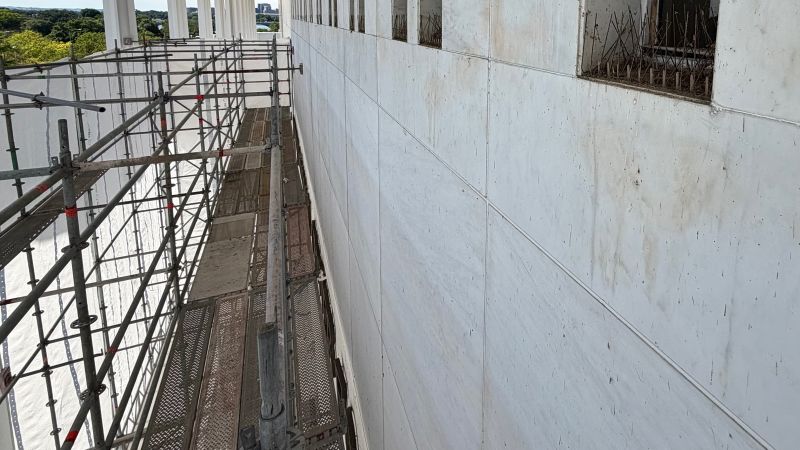
Sandego.net – Recent photographs released by CNN reveal the Kennedy Center’s exterior signage with President Donald Trump’s name stripped away, aligning with an official court statement from the arts center’s executive director, Matt Floca. These visuals, first shared by the Washington Post, were made available to the network by the activist group “Hands Off the Arts,” marking the first public confirmation of the name’s removal. A large tarp remains draped over the building’s facade ten days after the change, obscuring the newly exposed marble walls, which now carry the legacy of the late President John F. Kennedy. The tarp’s presence underscores the ongoing effort to finalize the transformation, which has drawn attention from both supporters and critics of the decision.
Activist group’s role in unveiling the change
The activist organization “Hands Off the Arts” has played a pivotal role in documenting the shift at the Kennedy Center. Co-founder Mallory Miller, who once managed dance programming for the venue, shared that the group’s network of community members facilitated the acquisition of the images. Miller emphasized the symbolic importance of the removal, stating, “Tonight, there is a tarp that is covering the bare marble that these photos reveal to the world. The president does not want you to see them and that’s exactly why they’re important!” The images not only confirm the legal mandate but also serve as a visual testament to the cultural institution’s commitment to its historical roots.
“The president does not want you to see them and that’s exactly why they’re important!” — Mallory Miller, co-founder of “Hands Off the Arts”
The decision to remove Trump’s name from the Kennedy Center followed a judicial order that required the venue to retain its status as a living memorial to President John F. Kennedy. This ruling, issued after a legal battle, has prompted staff to begin the process of erasing the former president’s name from the exterior wall. The timeline of events suggests that the removal was executed overnight on June 13, with the tarp acting as a temporary shield until the final stages of the project are complete. While the external change is now visible, the internal operations of the center continue to face significant hurdles, as financial constraints demand strategic adjustments.
Financial challenges complicate internal operations
Behind the tarp, the Kennedy Center’s internal landscape reflects a struggle to maintain its artistic programming amid a deteriorating financial outlook. Multiple sources familiar with the center’s operations have highlighted the difficulties of restarting a full-scale schedule, citing factors such as declining ticket sales, the withdrawal of artists due to political tensions, and a reduced workforce. These challenges have forced the center to prioritize essential services while deferring more ambitious initiatives. The federal judge overseeing the case has mandated that the facility remain operational during renovations, but the financial strain has raised concerns about its long-term stability.
The Kennedy Center’s financial picture has been further complicated by recent events, including the removal of Trump’s name and the ongoing lawsuit. While the external branding change has been confirmed, the internal operations are still in flux, with the board of directors exploring various options to fund the necessary upgrades. The court’s requirement to keep the center running during the transition has added pressure, as staff work to balance the demands of maintaining services with the costs of renovation. The tarp’s removal on June 13 was a critical step, but the full transformation of the space requires additional time and resources.
Legal battle and the demand for continued operation
Earlier this week, the Kennedy Center filed a motion with the federal judge, requesting an extension of the compliance deadline in its ongoing lawsuit. The court’s original order mandated the institution to retain the name of John F. Kennedy as a tribute to the late president, but the process of removing Trump’s name has been accelerated. The legal proceedings highlight the tension between political symbolism and the center’s mission to serve as a cultural hub. While the external signage change has been executed, the internal adjustments are still being finalized, and the center’s leadership is working to ensure the facility can continue to operate without interruption.
The Kennedy Center, a historic landmark in Washington, D.C., has been a focal point of political and cultural discourse since its founding. The decision to remove Trump’s name from the building’s exterior marks a significant shift in its public identity, aligning it more closely with its original purpose as a tribute to JFK. However, the removal has also sparked debate about the balance between political messaging and the center’s role as an arts institution. Supporters argue that the change reinforces the legacy of the nation’s 35th president, while critics question whether the center can sustain its operations without the financial backing previously associated with the Trump name.
As the tarp remains in place, the Kennedy Center’s staff continues to navigate the complexities of its current situation. The legal and financial challenges have created a ripple effect, influencing the center’s ability to host events and attract audiences. The board is actively seeking solutions to fund the renovation, but the process is proving to be more intricate than anticipated. With the name of Trump no longer on display, the focus is now on the future of the Kennedy Center, including its ability to adapt to changing political and economic landscapes.
The Kennedy Center’s transformation is not just a matter of aesthetics but a reflection of broader societal shifts. The removal of the former president’s name from the building’s signage signals a move toward distancing the institution from partisan associations, allowing it to concentrate on its cultural mission. However, the internal financial struggles underscore the challenges of maintaining a high-profile arts venue in a competitive market. The ongoing legal battle has also highlighted the importance of judicial oversight in ensuring that the center remains true to its founding principles. As the tarp is gradually lifted, the public will gain a clearer view of the new identity that the Kennedy Center is embracing.
Contributors to this report include CNN’s Sunlen Serfaty, Devan Cole, and Aleena Fayaz, who have provided insights into the center’s current state. Their coverage has emphasized the interplay between legal rulings and the practical implications for the Kennedy Center’s operations. The removal of Trump’s name from the exterior is a visible symbol of the center’s commitment to its historical role, but the internal challenges suggest that the path forward will require careful planning and execution. As the Kennedy Center continues to evolve, the community will watch closely to see how it adapts to these new circumstances.
The tarp’s presence has also become a point of interest for visitors and media, with many speculating about the significance of the change. While the immediate focus is on the external branding, the internal adjustments are equally critical to the center’s survival. The combination of political symbolism and financial pragmatism has created a unique situation, where the Kennedy Center must balance its identity with the realities of budgetary constraints. The next steps will determine whether the center can successfully transition to a new era without compromising its artistic integrity or operational capacity.
As the Kennedy Center moves forward, the removal of Trump’s name represents a symbolic victory for those advocating a return to its original purpose. The images released by CNN have sparked conversations about the role of public institutions in political discourse and the importance of preserving historical legacies. While the tarp still covers the newly exposed walls, the underlying message of the change is clear: the Kennedy Center is redefining its place in the cultural and political landscape of the United States. The future of the institution will depend on its ability to overcome these challenges and continue serving as a beacon of artistic excellence.