
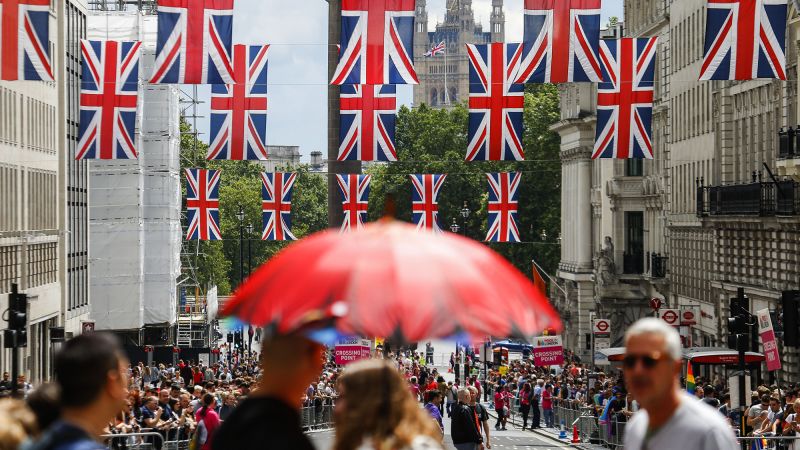
Ten years on, Britain counts the cost of Brexit
Sandego.net – A decade has passed since the UK opted to exit the European Union’s expansive single market, a decision that has reverberated through the nation’s economic landscape. The Brexit referendum on June 23, 2016, marked a pivotal moment, initiating a protracted process of separation from the EU. With 51.9% of voters choosing to leave and 48.1% favoring remaining, the outcome sparked immediate political chaos and economic uncertainty. The implications of this choice continue to shape the UK’s trajectory, with challenges persisting even as the country nears its 10th year of independence from the bloc.
Political Turmoil and Economic Consequences
The fallout from the 2016 vote has left British politics in a state of flux, as seen in the current struggles within the Labour Party. Leadership disputes and policy hesitations have become recurring themes, reflecting the deep-rooted instability Brexit introduced. Economically, the consequences have been profound. While some dire forecasts—like an immediate recession or a housing market collapse—did not materialize, experts broadly agree that the UK’s departure from the EU has dampened its growth prospects. Estimates suggest the economic loss ranges from 2% to 8% of potential output, a figure that underscores the complexity of isolating Brexit’s impact amid overlapping crises such as the pandemic and the energy challenges from the Ukraine war.
Michael Saunders, a senior adviser at Oxford Economics and a former Bank of England official, emphasizes that Brexit has acted as a “constant drag” on the economy. He explains that the UK’s GDP has consistently fallen short of its potential, with reduced government revenue and the necessity for tax increases and spending reductions. “Brexit continues to reduce the level of gross domestic product compared to what it would otherwise be,” Saunders told CNN. This sentiment is echoed by Julian Jessop, an independent economist who supported the Leave campaign. Jessop acknowledges the “initial impact” of Brexit as “clearly negative” but argues that the long-term costs may diminish over time. “The costs have been smaller than feared,” he stated, while noting the uncertainty surrounding its benefits.
The Promise of Benefits and Their Unmet Expectations
Despite the challenges, proponents of Brexit once envisioned a future of reduced regulations, lower immigration rates, and enhanced trade opportunities. However, these promises remain unfulfilled. Recent data reveals that the UK-EU trade relationship, valued at £856 billion in 2023, is unmatched by new agreements with countries like Australia, New Zealand, India, and Japan. “We were promised as a country we’d be better off (outside the EU), and I just don’t feel as if that’s been true,” said Geraint, a British software developer from the West Midlands. His experience highlights the disillusionment felt by many who supported the referendum, particularly over concerns about immigration’s strain on public services.
Geraint, who voted Leave in 2016 due to fears of rising immigration, now regrets that decision. He admits he would “100% vote to remain” if given another chance, citing improved job prospects as a key factor. “Opportunities outside of Britain are quite appealing to me, and now I feel trapped,” he explained. His wife, however, had voted Remain, underscoring the personal and ideological divides that still exist within the UK.
The Struggles of Post-Brexit Trade
The formal withdrawal from the EU, finalized in January 2020, brought about a new era of trade regulations and logistical hurdles. Businesses faced the burden of customs checks, border controls, and extensive paperwork, disrupting supply chains and increasing costs. Prior to Brexit, the UK’s seamless integration into the EU’s customs union and single market allowed for the effortless movement of goods, people, and capital. This ease was a cornerstone of the UK’s economic identity, and its loss has been a significant blow to industries reliant on cross-border trade.
Even as the UK’s trade deals with non-EU nations have expanded, these agreements pale in comparison to the scale of its former partnership with the EU. The complexity of negotiating a new trade relationship, coupled with the ongoing uncertainties of Brexit, has created a climate of caution for businesses. This has led to reduced investment and slower productivity growth, further complicating the UK’s economic recovery.
Migration and the Unmet Promise
One of the most contentious promises of Brexit was the reduction of net migration. However, the post-Brexit system has not delivered on this front. According to the University of Oxford’s Migration Observatory, net migration to the UK averaged 550,000 annually from 2021 to 2023, surpassing the 250,000 figure seen in the 2010s. In 2023 alone, the number neared 950,000, an all-time high, as immigration from non-EU countries surged before moderating under new policies. This pattern suggests that Brexit’s impact on migration has been more nuanced than initially anticipated, with short-term spikes offsetting long-term reductions.
The public’s perception of Brexit’s success is mixed, with a recent YouGov poll indicating that six in 10 Britons believe the decision has been a failure. This sentiment is particularly strong among those who felt the economic and social costs outweighed the benefits. For many, the promise of a more autonomous and prosperous UK has not materialized, leading to a sense of frustration and uncertainty about the path forward.
Reflections and Lingering Questions
As the UK navigates its post-Brexit reality, questions about the long-term consequences persist. While some argue that the UK has adapted and found new opportunities, others stress that the country remains economically weaker than it might have been under EU membership. The debate over Brexit’s legacy is far from settled, with its effects continuing to influence political decisions and economic strategies. For Geraint and countless others, the decision to leave the EU has been a personal journey of disillusionment, as the anticipated benefits have yet to fully materialize.
Ultimately, the Brexit saga serves as a case study in the complexities of political change. The UK’s exit from the EU was a bold move, but its economic and social impacts have proven to be multifaceted. As the nation reflects on its first decade without the EU, the challenge remains to reconcile the promises made with the realities faced. Whether Brexit will ultimately be seen as a strategic shift or a costly misstep depends on how the UK’s economy evolves in the years to come, and whether the benefits of independence can outweigh the enduring costs of separation.