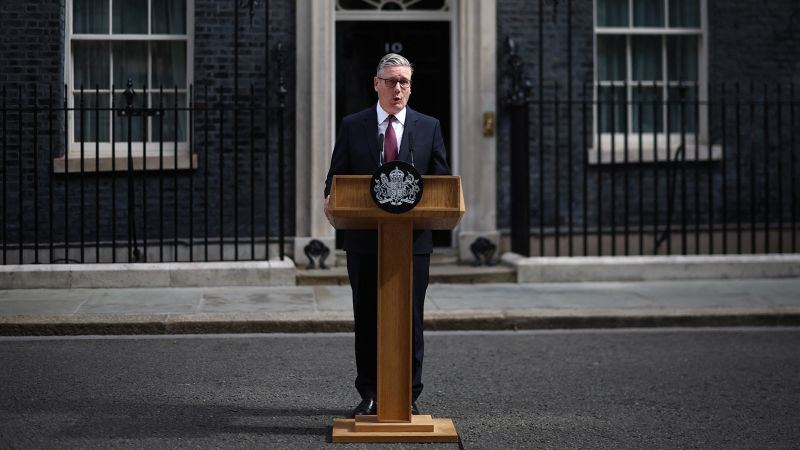
Elected on a promise of better times, Keir Starmer failed to deliver the change Britain wants
A New Dawn for Labour
Sandego.net – In the summer of 2024, the Labour Party triumphed in the general election, ending a fourteen-year absence from power. The victory was seen as a mandate for renewal, with voters eager to break from the Conservative era of economic strain and political instability. Yet, within less than two years, the Labour government faced internal turmoil, culminating in the resignation of its leader, Keir Starmer, who announced his plans to step down just two years into his tenure. His successor, once selected, will mark the seventh prime minister from Labour in a decade, a stark contrast to the party’s initial hopes for transformative leadership.
The Unraveling of Starmer’s Leadership
Starmer’s government struggled to maintain unity as early signs of discontent emerged. While the party had vowed to end the Conservatives’ chaotic leadership, Starmer’s own decisions sparked criticism. A key misstep involved hiking taxes on wealthier pensioners to fund energy costs, a policy that drew accusations of unfairness. Similarly, proposals to reduce benefits for disabled individuals were met with backlash, further eroding public confidence. These choices, though pragmatic, were perceived as inconsistent with Labour’s progressive image. Meanwhile, scandals over Starmer’s acceptance of corporate gifts and his appointment of Peter Mandelson—a figure linked to the Jeffrey Epstein affair—as UK ambassador to Washington added to the growing unease.
“Things will get worse before they get better,” Starmer warned in his first major speech as prime minister, a phrase that now feels like a prophetic admission of his own mismanagement.
The Legacy of Austerity
Starmer inherited a nation weary from the Conservative decade of austerity. Despite the government’s goal to curb debt and revive the economy post-2008, the results were mixed. Public finances remained strained, and growth stagnated, leaving Britons frustrated. Starmer’s campaign had promised a shift toward stability, but his leadership style seemed to compound the sense of stagnation. Unlike previous Labour governments, which entered office with a wave of optimism, Starmer’s team emphasized caution, framing the nation’s challenges as long-term and complex. This approach, while pragmatic, clashed with the public’s desire for immediate change.
Recalling the 1997 Labour government, which rode a wave of public hope into power, Starmer’s administration faced a different landscape. The 2024 electorate, weary of Conservative governance, had little patience for delays. Starmer’s speech about “worse before better” resonated with some, but it alienated others who expected swift progress. The party’s narrative of resilience was undermined by its reluctance to embrace bold policies, a strategy that left critics questioning its commitment to reform.
A Leadership in Flux
Starmer’s political journey was marked by adaptability, but his tenure as prime minister revealed a lack of cohesive vision. After years in the shadow cabinet under Jeremy Corbyn, he transitioned from a hard-left advocate to a centrist leader, a shift that left his base divided. His human rights background, which earned him a reputation for integrity, was overshadowed by decisions perceived as lacking principle. When Labour was elected, its leaders positioned themselves as a corrective force, but the party’s cautious approach soon seemed to contradict that mission.
The “Ming Vase” strategy—named for its fragility—defined Labour’s early governance. Polls had predicted a decisive victory, yet the party hesitated to capitalize on its momentum. By tempering ambitious plans, Labour avoided bold statements that could polarize voters. This caution, however, backfired. The Conservatives, anticipating a landslide defeat, launched sweeping tax cuts before the election, hoping Labour would inherit the burden of raising taxes. Starmer’s refusal to increase income tax, national insurance, or corporation tax left the party without a clear policy framework, enabling critics to accuse it of failing to address the nation’s fiscal challenges.
The Weight of Expectations
Starmer’s downfall was not solely due to policy decisions but also the public’s growing impatience. Voters elected him to end years of Conservative mismanagement, yet his government was bogged down by internal disputes and a reluctance to take decisive action. The contrast between his election promises and his governance style became stark. While Labour had vowed to stabilize the economy, its handling of inflation and public services faltered, fueling frustration. The party’s focus on incremental change left it unable to meet the high expectations set during the campaign.
Starmer’s leadership also faced scrutiny for its internal dynamics. Despite his reputation as a pragmatic leader, he struggled to unify the party’s factions. His tenure saw a string of leadership challenges, with some members calling for a more dynamic approach. The “Starmerism” he was meant to embody—a blend of centrist economics and social justice—remained elusive. Without a clear ideological compass, Labour’s policies were seen as reactive rather than visionary. This lack of direction, combined with high-profile controversies, sapped the party’s credibility and ultimately led to his resignation.
Britons Reflect on a Lost Opportunity
As Starmer steps down, the British public remains divided. Some acknowledge the challenges he faced, while others argue that his leadership could have been stronger. The collapse of Labour’s majority, once seen as a historic triumph, now symbolizes a missed chance to rebuild trust. The party’s caution, though well-intentioned, created a vacuum in its messaging, allowing the Conservatives to regain footing. Meanwhile, Starmer’s personal missteps—ranging from tax hikes to corporate ties—highlighted the fragility of his position.
Despite these setbacks, Starmer’s tenure marked a pivotal chapter in British politics. His rise from a relatively unknown figure to prime minister underscored the electorate’s desire for fresh leadership. Yet, the rapid unraveling of his government raises questions about the balance between realism and ambition. As the Labour Party prepares to select its next leader, the focus will shift to restoring its credibility and redefining its role in a rapidly changing political landscape. The next prime minister will need to address the legacy of Starmer’s missteps and rebuild the public’s faith in the party’s ability to deliver meaningful change.
The fall of Starmer is a cautionary tale for modern politicians. In an era of high expectations, even small fractures can widen into significant crises. His story reflects the complexities of governing in a time of economic uncertainty and social division. While his resignation may signal the end of an era, it also opens the door for new ideas and leadership to emerge, offering a chance to reshape Britain’s future.