Spanish Prime Minister’s Wife Restricted from Travel Amid Rising Corruption Scrutiny
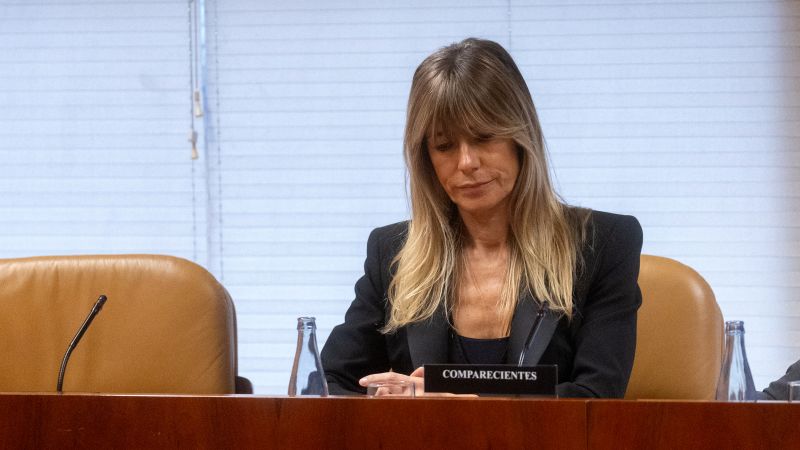
Sandego.net – Spain’s political landscape has been shaken by a new wave of corruption investigations, with the wife of Prime Minister Pedro Sánchez now under judicial restrictions. On Saturday, a Madrid judge issued an order compelling Begoña Gómez, Sánchez’s spouse, to stand trial for alleged corruption, while simultaneously banning her from exiting the country. The decision also mandates her to appear in court twice monthly, marking a significant escalation in the scrutiny surrounding the Sánchez administration.
A Tangled Web of Allegations
The charges against Gómez include embezzlement, influence peddling, and misuse of funds, with prosecutors accusing her of leveraging her marriage to advance her career at a Madrid university. This case, part of a broader pattern of corruption probes, adds to the mounting pressure on Sánchez, who has faced a series of legal challenges over the past year. While both Gómez and Sánchez have denied any wrongdoing, the judge’s ruling has sparked debate about the political motivations behind the investigation.
“Today is a dreadful day for those of us who believe in justice,” Justice Minister Félix Bolaños wrote on X, reacting to the court order. He emphasized that “truth will ultimately prevail,” though some critics argue the measures taken are disproportionate.
Manos Limpias, a prominent anti-corruption group with ties to Spain’s far-right, filed the initial complaint against Gómez in 2024. The group alleges that she engaged in influence-peddling, a claim that has drawn attention to the potential for political bias in the proceedings. At the time, Sánchez temporarily stepped away from public duties to assess whether he should continue as leader, highlighting the personal stakes involved.
Spain’s Economic Rise and Political Struggles
Despite Spain’s emergence as one of Europe’s most dynamic economies during Sánchez’s nearly eight-year tenure, the government’s coalition remains fragile. The prime minister’s party, the Spanish Socialist Workers’ Party (PSOE), has relied on the support of Catalan and Basque separatist groups, a partnership that has increasingly come under scrutiny. The current corruption cases threaten to erode this fragile alliance, with regional elections recently showing signs of PSOE’s decline.
Sánchez’s leadership has been defined by his vocal criticism of the Trump administration, particularly on issues like the Iran conflict and trade tariffs. However, his own party’s headquarters in Madrid recently became the focus of a police raid, which targeted alleged misuse of party funds. The High Court cited the probe as part of an investigation into a “network allegedly aimed at undermining judicial proceedings affecting the party or the government.” This raises questions about whether the party is attempting to shield its members from scrutiny.
Broader Investigations and Internal Strains
The case against Gómez is not isolated. It is part of a series of investigations that have ensnared Sánchez’s inner circle. Former Socialist Prime Minister José Luis Rodríguez Zapatero, a key figure in the party’s history, is now a suspect in a case involving organized crime, document falsification, and a loan tied to a small airline. Similarly, former right-hand man José Luis Ábalos faces charges for accepting kickbacks linked to the purchase of $60 million worth of facemasks during the COVID-19 pandemic.
Zapatero has consistently denied any wrongdoing, stating that the allegations against him are politically driven. Sánchez, in turn, has pledged full cooperation with the justice system, vowing to defend his allies, including Zapatero, and ensuring their presumption of innocence. Ábalos, who spent seven months in pretrial detention before his trial in April, has also faced accusations of prioritizing personal gain over public interest.
Political Implications and Public Perception
These investigations have further weakened Sánchez’s already precarious minority government. The ruling coalition, which depends on the support of separatist parties, has suffered setbacks in several regional elections, with public confidence in the administration waning. The raids on PSOE headquarters and the ongoing legal actions against close associates have intensified pressure on Sánchez, who has been described by opponents as the country’s “least stable leader in recent memory.”
Alberto Núñez Feijóo, head of the main conservative opposition, recently called the government’s situation “death throes,” suggesting the administration is on the brink of collapse. While some analysts argue that the justice system’s actions are excessive, given Gómez’s police protection, others believe the measures are justified as a way to prevent her from fleeing the country. The judge even suggested that her security detail could be used to facilitate an escape, further fueling accusations of bias.
Spain’s Corruption Legacy
Spain has a long history of corruption, with political careers often being derailed by scandals. The country’s recent wave of investigations is part of a trend that has targeted high-profile figures, from former prime ministers to current leaders. The 17th-century poet Francisco de Quevedo once described “Mr. Money” as a “powerful gentleman,” a phrase that seems eerily prescient in today’s context.
The current crisis reflects a deeper struggle within Spain’s political system. While the Sánchez government has pushed for economic reforms and increased transparency, the perception of corruption has cast a long shadow over its achievements. The PM’s brother, a musician, is also embroiled in a separate case, accused of influence peddling in his appointment to a government position nine years ago. This personal dimension of the scandal has added to the public’s skepticism about the administration’s integrity.
El País, Spain’s leading daily, has criticized the handling of the case, stating that “the entire investigation has been marked by disproportionate measures, seeking maximum media attention, and lacking the impartiality and restraint that citizens expect from the justice system.” The newspaper’s editorial underscores a growing concern that the legal process is being used to target political opponents rather than simply enforcing the rule of law.
As the investigations continue, the question remains: Will they lead to the downfall of Sánchez’s government, or will they be seen as necessary steps to cleanse the political class? For now, the prime minister’s wife is under house arrest, her passport seized, and her future uncertain. Meanwhile, the broader implications for Spain’s political stability and public trust hang in the balance, with the nation watching closely as the case unfolds.