A Vengeful Arsonist or a Convenient Scapegoat? What We’ve Learned from Testimony in the Palisades Fire Trial
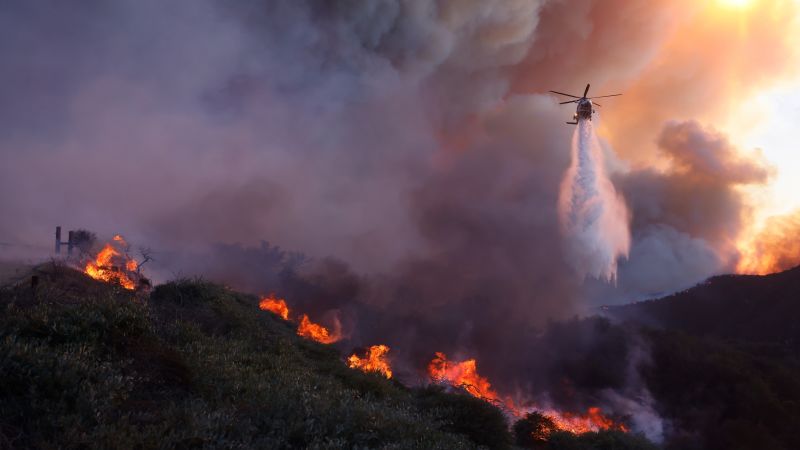
Sandego.net – Following six days of intense courtroom activity, federal prosecutors have concluded their case in the trial of Jonathan Rinderknecht, the man accused of igniting the Palisades Fire—a disaster that devastated parts of Los Angeles in early 2025. The blaze, which resulted in twelve fatalities and the destruction of thousands of properties, is now at the center of a legal battle that seeks to determine whether Rinderknecht acted with premeditation or was merely a scapegoat for a larger, more complex event. The prosecution’s narrative hinges on the claim that the defendant was the sole individual present on a remote hillside clearing called the Hidden Buddha during the critical hours when the fire began.
The Prosecution’s Case: A Single Man, A Smoldering Spark
US Assistant Attorney Matt O’Brien opened the trial by outlining the government’s theory: Rinderknecht was the only person on the Hidden Buddha clearing on the late night of December 31, 2024, and the early morning of January 1, 2025, when the fire started. Surveillance footage from nearby residences and wildfire monitoring systems was central to this argument, showing his rented Uber vehicle driving through the area before parking near the suspected origin point. The evidence also included statements from investigators who reported that Rinderknecht had claimed to be alone in the clearing while hiking after dropping off passengers, a detail the prosecution used to suggest intent.
“Investigators examined what caused the fire on January 1,” O’Brien told the jury during opening statements. “It wasn’t an accident.”
Further testimony revealed that the US Bureau of Alcohol, Tobacco, Firearms and Explosives had concluded the fire was intentionally set. The blaze, initially identified as the Lachman Fire, was described as a holdover fire that smoldered underground before being reignited by strong winds on January 7, 2025, transforming it into the Palisades Fire. O’Brien argued that Rinderknecht, who had shown an obsessive fascination with fire for months prior, was fixated on Luigi Mangione, a wealthy individual, and sought to channel his anger into a act of vengeance.
One of the key pieces of evidence was a Bic grill lighter found in the glove compartment of Rinderknecht’s rental car. Prosecutors maintained this tool was used to start the fire, linking it to the defendant’s alleged intent. The defense, however, challenged this connection, emphasizing the absence of direct eyewitnesses to the act. Steve Haney, Rinderknecht’s attorney, acknowledged that his client was at the Hidden Buddha clearing but contended that the timing and circumstances suggested a different motive.
“The government says that’s the voice and actions of a man who started a fire … That’s the voice of a man who’s trying to stop a fire,” Haney told jurors during his opening statement, playing a 911 call from the night of the fire.
The Defense: A Possible Miscalculation or A Victim of Circumstance
Defense attorney Steve Haney painted a contrasting picture of Rinderknecht’s actions. He highlighted that the defendant had called 911 multiple times immediately after the initial fire broke out, a detail he used to argue that Rinderknecht was actively attempting to alert authorities. Haney also questioned the timeline, noting that the fire was spotted 12 minutes past midnight, yet the 911 calls could not connect until 12:17 a.m. due to poor reception in the area.
“There is no reliable evidence that Rinderknecht started that fire,” Haney asserted, challenging the prosecution’s claim. He suggested that the fire might have been a result of an accident or an unintended consequence of the defendant’s actions. This argument was bolstered by the defense’s claim that Rinderknecht was present at the Hidden Buddha to observe New Year’s Eve fireworks, not to set the blaze.
Rinderknecht’s demeanor during the trial has been a subject of interest. He appeared composed at the defense table, often wearing a black suit and tie, and occasionally engaged in quiet conversations with his attorney. His presence on the witness stand remains uncertain, but his behavior has raised questions about whether he is preparing to defend himself or simply playing the role of a calm, collected defendant.
Testimonies and Technology: The Role of ChatGPT
The trial has also brought to light Rinderknecht’s interactions with ChatGPT, the AI chatbot. Prosecutors presented evidence that the defendant had used the platform to explore his frustrations, including inquiries about his ex-girlfriends and the wealthy. At one point, he asked, “Why am I so angry all the time?” These queries were interpreted by the prosecution as signs of a man fixated on revenge, with his fascination with fire serving as a metaphor for his emotional state.
Despite these claims, the defense has not disputed the use of ChatGPT. Instead, they have focused on the absence of direct proof linking Rinderknecht to the act of starting the fire. The trial has thus become a battleground of interpretations, with the prosecution relying on surveillance footage and the Bic lighter to build their case, while the defense emphasizes the lack of eyewitness accounts and the defendant’s immediate response to the fire’s onset.
As the trial moves forward, the jury will need to weigh the evidence presented by both sides. The prosecution argues that Rinderknecht’s actions were deliberate, while the defense maintains that the fire was a byproduct of his presence at the scene and not an intentional act. The outcome of this case could have significant implications for how we understand the role of technology and personal grievances in modern arson investigations.