Zelensky Returns Poland’s Highest Honor Amid Historical Dispute
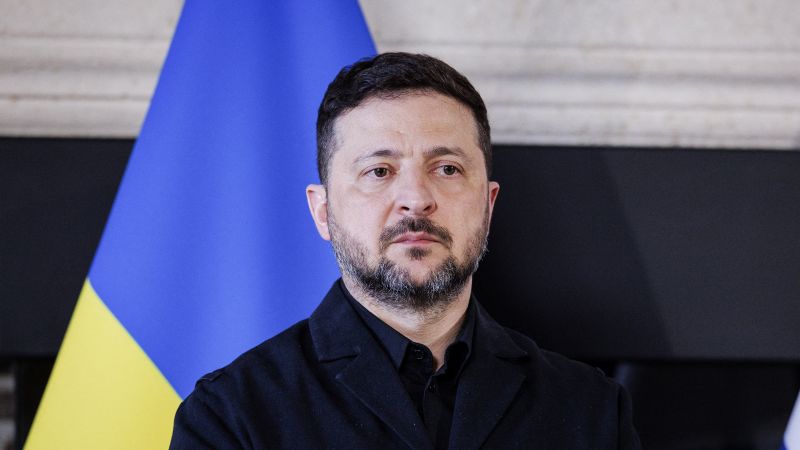
Sandego.net – President Volodymyr Zelensky of Ukraine has returned Poland’s highest honor, the Order of the White Eagle, following a decision by Polish President Karol Nawrocki to revoke it. This move underscores the growing tensions between the two nations over their shared history, particularly the actions of the Ukrainian Insurgent Army (UPA) during World War II. Zelensky’s gesture, while symbolic, highlights the political significance of historical narratives and the potential for disputes to affect bilateral relations.
Historical Context and the Revocation Decision
The Order of the White Eagle, a prestigious award in Poland, was granted to Zelensky in recognition of Ukraine’s contributions to the defense of Europe during the Russian invasion. However, Nawrocki stripped him of the honor due to the naming of a military unit after the UPA, a group accused of massacring Poles in the 1940s and 1950s. Zelensky’s decree, issued on May 26, honored the UPA for its role in defending Ukrainian territory, a decision that ignited controversy in Poland and sparked debates over the group’s wartime legacy.
The UPA’s actions during the war have been a focal point of the dispute. While the group fought for Ukrainian independence against both Nazi Germany and the Soviet Union, its attacks on Polish civilians in regions like Volhynia and Eastern Galicia have led to accusations of genocide. In 2016, the Polish Parliament formally declared these actions as part of a broader campaign of brutality. Nawrocki’s revocation of the award was seen as a political statement to reaffirm Poland’s stance on the UPA’s role in wartime atrocities.
Zelensky’s Response and Continued Diplomacy
Zelensky, in a social media post, defended his decision to return the honor, stating, “I am confident the future will confirm the respect Ukrainians deserve.” The message included photos of the Polish award and a postal receipt, emphasizing his resolve to address historical grievances. Despite the revocation, Zelensky expressed hope for continued collaboration with Poland, acknowledging the nation’s support for Ukraine’s defense against Russia. His remarks underscored a commitment to maintaining diplomatic ties, even as tensions over wartime history escalated.
Poland’s move has not signaled a shift in its support for Ukraine. The two countries have shared strategic interests in countering Russian aggression, with recent efforts focused on resolving historical differences. A December 2025 meeting in Warsaw between the presidents was viewed as a step toward reconciliation, particularly regarding the exhumation of wartime victims. However, the revocation of the honor has reignited discussions about the UPA’s legacy and its impact on contemporary political relations between Ukraine and Poland.
Zelensky’s decision to return the Order of the White Eagle has been met with mixed reactions. While some Ukrainian officials, including Kyrylo Budanov, criticized the move as a political act favoring Russia, others supported it as a necessary correction of historical narratives. The incident reflects broader divisions in the region, where the interpretation of past events continues to shape present-day alliances and conflicts. As the debate over the UPA’s role intensifies, both nations must navigate the delicate balance between honoring historical truths and preserving political unity.
The controversy also highlights the role of nationalist sentiment in shaping international diplomacy. Nawrocki framed the revocation as a way to align with hardline historical views that emphasize the UPA’s brutality, while Zelensky’s supporters argue for a more nuanced perspective. The incident serves as a reminder that historical disputes can have real political consequences, even as countries work together on current issues like defense and security. As discussions continue, the relationship between Ukraine and Poland remains a complex interplay of memory, pride, and pragmatism.