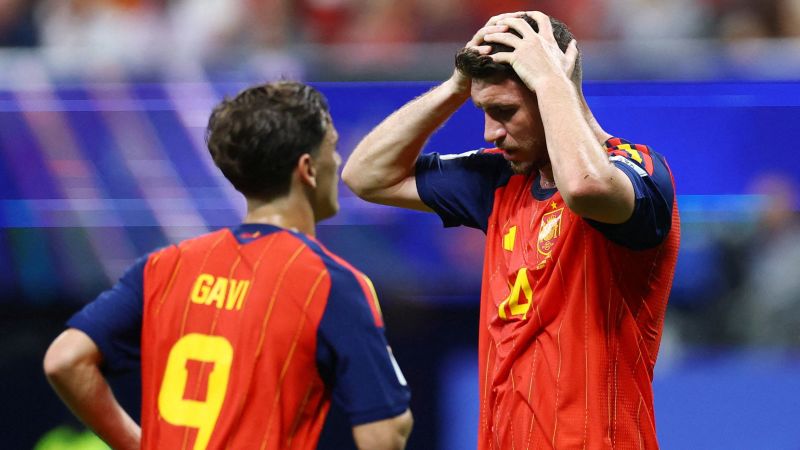
Spain’s World Cup Concerns Emerge in Draw with Cape Verde
Sandego.net – How Spain’s bad habits were exposed in the shock draw against Cape Verde, raising alarms about their form and strategy. The match, which ended in a 0-0 stalemate, highlighted vulnerabilities that could threaten their quest for a second World Cup title. While Cape Verde’s underdog victory was a feat, it exposed cracks in Spain’s usually dominant approach, signaling a potential shift in their tournament fortunes. The result has sparked debates about the team’s reliance on traditional strengths and their ability to adapt to new challenges.
Player Absences and Tactical Shifts
The absence of key players Lamine Yamal and Nico Williams played a significant role in Spain’s underwhelming performance. Yamal, the teenage sensation who had been gradually reintegrated into the squad, missed crucial moments due to a hamstring injury. Similarly, Williams, sidelined by a similar issue, left a void in Spain’s attacking width. Manager Luis de la Fuente’s adjustments, such as slotting Ferrán Torres and Gavi into pivotal roles, seemed to disrupt the team’s rhythm, revealing how dependent they are on specific players for cohesion.
Torres, typically a central striker, was thrust into a right-wing role, which exposed his unfamiliarity with the position. His limited impact during the game underscored the challenges of adapting star players to different roles. Gavi, returning from a meniscus tear that kept him out for over six months, also struggled to replicate his usual influence on the left wing. These performances raised questions about Spain’s depth and whether their tactical strategies are resilient when key players are unavailable.
Midfield Struggles and Defensive Reliance
Spain’s midfield, a cornerstone of their previous success, underperformed against Cape Verde’s organized defense. Despite retaining Rodri and Fabián Ruiz from the Euro-winning squad and adding a fit Pedri, the team failed to create the fluid play that defines their identity. Rodri, often a commanding force, appeared sluggish, suggesting potential fatigue or lack of sharpness. Ruiz’s inability to deliver precise passes further highlighted the midfield’s struggles, forcing Spain to rely heavily on defensive efforts rather than attacking creativity.
Opta Stats noted a concerning trend: Spain’s top forward, Mikel Oyarzabal, touched the ball just once in the first 30 minutes. This marked the first time since the 1966 World Cup that a starting forward failed to engage so early in a match, indicating a possible shift in Spain’s attacking mindset. The defensive resilience of Cape Verde, combined with Spain’s inability to break through, suggested that their usual dominance might be waning, especially if they face similar opposition in the knockout stages.
Historical Context and Group Survival Prospects
Despite the draw, Spain remains in a strong position to secure top spot in their group. Historical examples show that teams can recover from early setbacks, such as Argentina’s 2022 World Cup triumph after losing to Saudi Arabia. However, this result feels more like a warning than a temporary blip. The team’s defensive reliance and midfield stagnation could jeopardize their progress if they fail to address these issues quickly.
Spain’s bad habits, from slow starts to inconsistent finishing, have become more pronounced. While their talent pool remains one of the most formidable in the world, the recent performance suggests a need for tactical refinement. The ability to maintain composure under pressure and create scoring chances will be critical in the upcoming matches. Fans of La Roja, who had grown accustomed to the squad’s technical brilliance, now face a reality check as the team’s form and strategy are put to the test.
What This Means for Spain’s World Cup Ambitions
The match against Cape Verde has exposed how Spain’s bad habits could derail their World Cup ambitions. The lack of creativity, defensive reliance, and struggles with player roles all point to a team that may be losing its edge. If these issues persist, Spain’s chances of advancing beyond the group stage could be at risk. The performance serves as a clear message: without addressing their tactical shortcomings, the squad’s dominance may not be as certain as it once seemed.
As Spain moves forward, the focus will be on how they adapt to these challenges. The team’s ability to bounce back from setbacks and refine their approach will determine their success in the tournament. While the draw is not a complete disaster, it underscores the importance of consistency and depth. The World Cup is a test of resilience, and Spain’s bad habits may be the difference between triumph and heartbreak.