Andy Burnham: The Charismatic Mayor Ready to Vie for Britain’s Premiership
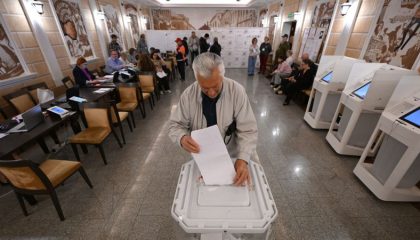
Sandego.net – Andy Burnham, the mayor of Greater Manchester, is emerging as a key contender for the role of Prime Minister after securing a decisive victory in a by-election in Makerfield, northwest England. This election, akin to a U.S. special election, has been seen as a strategic move to bolster his political standing and position him as a potential challenger to Labour leader Keir Starmer. With his return to parliament, Burnham’s ambitions for the top job have gained traction, setting the stage for a significant shift within the Labour Party.
Burnham’s path to the prime ministerial race has been shaped by recent developments in British politics. While he has long been a respected figure, his ability to mount a leadership bid was previously limited due to his absence from the parliamentary ranks. Now, with the by-election results in his favor, the political landscape appears to be changing. His supporters argue that his victory, marked by a strong performance against Reform UK, signals a renewed momentum for the party and a potential turning point in the leadership race.
A Political Journey Marked by Resilience
Burnham’s career has been defined by a series of roles that span both local and national politics. His early days as a parliamentary researcher at 24, followed by a special adviser position at 28, laid the groundwork for his eventual election as an MP at the age of 31. Over the years, he played pivotal roles in Tony Blair and Gordon Brown’s governments, including a stint as health minister, before running twice for Labour leadership in 2010 and 2015. Though he lost both bids, his experience and political acumen have since solidified his reputation as a pragmatic yet influential leader.
His most notable political shift came during the tenure of Jeremy Corbyn, who led the party’s leftward drift. Initially aligned with Corbyn’s vision, Burnham’s appointment as Manchester mayor in 2017 allowed him to step back from the intense factional battles within Labour. This move gave him a platform to advocate for regional priorities, contrasting with the central focus of Westminster politics. As a result, he has developed a distinct identity—one that emphasizes economic growth, public infrastructure, and social equity, while maintaining a distance from the more ideological divides within the party.
Burnham’s leadership in Manchester has earned him the nickname “The King of the North,” a label that underscores his ability to navigate the historical North-South political divide. His tenure has seen significant improvements in the city’s public transport system, a surge in economic activity, and the initiation of large-scale housing projects. These accomplishments have not only enhanced his public profile but also reinforced his image as a leader who prioritizes practical, people-centric policies over partisan rhetoric.
The By-Election as a Political Statement
Thursday’s by-election in Makerfield has been interpreted by many as a direct challenge to Starmer’s leadership. With Labour’s recent electoral setbacks and a growing split within the party, Burnham’s win is seen as a sign of public discontent with Starmer’s direction. Critics argue that Starmer’s shift toward centrist policies has alienated the party’s left wing, which remains critical of his role in ousting Jeremy Corbyn and moving Labour away from its socialist roots.
Despite his popularity, Burnham’s potential bid for the premiership hinges on the Labour Party’s internal dynamics. Starmer has vowed to resist any leadership contest, deepening the tension within the party. However, Burnham’s recent success in Makerfield has emboldened his allies, who believe his outsider status and broad appeal could unify the party. “Everyone knows that politics isn’t working,” Burnham remarked after the election results, “Everyone can feel that the country isn’t where it should be. Tonight could just be the turning point.”
The by-election also highlights the broader political climate. Nigel Farage’s Reform UK and the Green Party have seen a rise in support, reflecting a fragmented electorate and growing frustration with traditional party lines. Burnham’s ability to outperform these emerging forces in Makerfield suggests that his policies resonate with voters seeking stability and progress. His victory has been described as a “resounding” statement, with some Labour MPs already calling for Starmer to step down, even though Burnham himself has not explicitly declared his leadership ambitions.
Contradictions and Consensus
Burnham’s political persona is often described as a chameleon, adapting to the prevailing ideologies within Labour. While he has embraced progressive policies, his alignment with the “soft left” of the party has drawn both praise and scrutiny. Political science researcher Lotte Hargrave notes that Burnham occupies a middle ground between Starmer and more radical figures like Corbyn. “You’d put him a bit further left than Starmer, but certainly more right than someone like Corbyn,” Hargrave explained.
His reputation for balancing competing interests has been both a strength and a point of contention. For instance, his tenure as mayor was marked by ambitious projects such as ending homelessness in Manchester by 2020, a goal that, while not fully realized, was widely celebrated as a bold vision. Critics, however, argue that much of the groundwork for these achievements was already laid by previous administrations, leaving Burnham’s legacy in question. Nevertheless, his efforts have been credited with revitalizing Greater Manchester, earning him the label of “Manchesterism”—a term that encapsulates his approach to governance.
Burnham’s rise to prominence has also been influenced by his ability to connect with voters. His charismatic presence and relatable message have made him a standout figure in a party increasingly divided by ideological lines. This has led to speculation about his potential to bridge the gap between Labour’s left and right factions. As the party faces an uncertain future, Burnham’s return to parliament has positioned him as a unifying force, or at least a compelling alternative to Starmer’s leadership.
In the lead-up to the by-election, Burnham’s campaign emphasized his commitment to addressing local issues, from transport improvements to housing. His deputy mayor, Kate Green, described his vision as one that prioritizes tangible benefits for residents. “He’s also been very focused on things that will make a difference for people’s everyday lives,” she said. This focus on practical outcomes has set him apart in a party often preoccupied with theoretical debates.
With Starmer’s authority waning and Burnham’s popularity growing, the Labour Party finds itself at a crossroads. The by-election in Makerfield may not only determine the next leader but also shape the party’s future direction. As Burnham continues to build momentum, his candidacy represents a blend of experience, local success, and a fresh perspective—qualities that could resonate with voters seeking change in a time of political uncertainty.
Whether Burnham’s bid for the premiership will succeed depends on his ability to consolidate support within the Labour Party and navigate the challenges of national politics. His campaign has already sparked discussions about the party’s identity and priorities, with some arguing that his leadership could offer a more moderate path forward. As the dust settles from the by-election, the stage is set for a pivotal contest that could redefine British politics in the coming months.