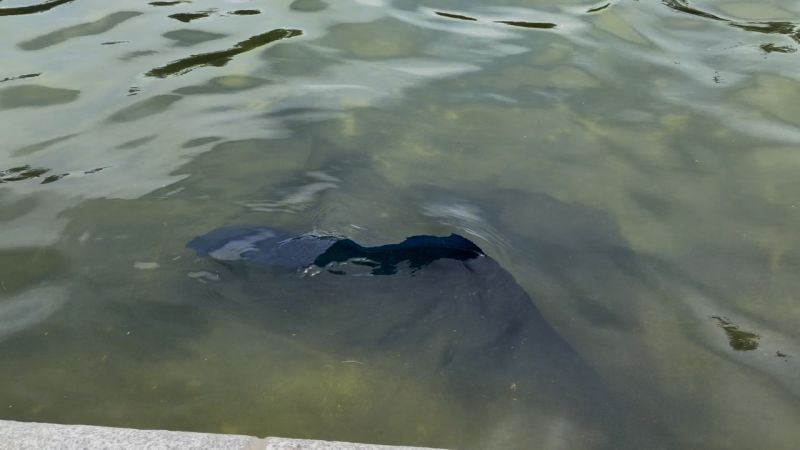
Blue Material Peeling Off Bottom of Reflecting Pool, Days After Costly Renovation
Sandego.net – Recent images captured on the National Mall have sparked concern about the Lincoln Memorial Reflecting Pool, where blue material is reportedly lifting from the bottom. This issue emerged just days after the pool was repainted and refilled as part of a multi-million dollar renovation initiated by President Donald Trump. CNN observed a noticeable flap of blue material partially detached in one section and drifting toward the surface, raising questions about the durability of the recent work.
Experts Uncertain About the Cause
Authorities have yet to clarify whether the material in question is paint or a protective sealant. The Department of the Interior has not immediately responded to inquiries about the problem. Eddie Wood, owner of Atlantic Industrial Coatings, the Virginia-based company contracted to carry out the renovation, acknowledged that the visuals provided do not offer enough detail to determine the exact nature of the issue.
“From the images alone, it’s hard to tell precisely what that is,” Wood remarked. “There are multiple factors we need to examine during our maintenance checks, and if this proves to be an issue, we’ll address it promptly.”
Tim Auerhahn, a pool infrastructure specialist and chairman of the Aquatic Council, noted the difficulty in diagnosing the problem from the video footage. “The apparent delamination is hard to pinpoint without closer inspection,” he said. Auerhahn outlined possible causes, ranging from improper surface preparation to environmental exposure or mechanical damage, emphasizing that the issue could stem from a combination of factors.
“The coating system can fail for several reasons,” Auerhahn explained. “It might be due to contamination, adhesion problems, or even the choice of materials. The key is to determine whether this is an isolated incident or part of a larger trend.”
Meanwhile, the algae problem persists despite the recent renovation. As of Thursday afternoon, large sections of the pool remained green, with visible algae. Earlier this week, workers reportedly used hydrogen peroxide to combat the discoloration, while deploying “advanced nanobubbler technology” as described by an Interior Department spokesperson. This method aims to break down algae more effectively than traditional cleaning methods.
A History of Maintenance Challenges
The Reflecting Pool has faced recurring issues since its construction a century ago. Algae growth and leaks have plagued the iconic water feature nearly continuously, affecting multiple presidential administrations. In 2012, President Barack Obama’s team invested $34 million in an 18-month overhaul to tackle persistent algae blooms. However, the pool quickly returned to a murky state, stained by algae, bird droppings, and dead ducks, prompting criticism of the project’s long-term success.
When President Trump took office, he ordered another renovation, aiming to restore the pool’s appearance and enhance its aesthetic appeal. The project was initially estimated to cost $1.8 million, but the final contract summary from the Interior Department reveals the cost has risen to $14.7 million. Despite this increased budget, similar problems have resurfaced. Not long after the pool was filled with water earlier this month, the algae issue returned, highlighting the challenges of maintaining such a large and historically significant structure.
Political Context and Broader Projects
The Reflecting Pool is one of several initiatives launched by Trump to “beautify” Washington, DC. Alongside the pool, the president proposed a range of projects, including a ballroom at the East Wing of the White House, a towering arch near Arlington National Cemetery, and a “National Garden of American Heroes” featuring 250 lifelike statues of key historical figures. These projects have often been scrutinized for their cost and public reception, with the pool’s issues becoming a focal point in the ongoing debate about infrastructure spending and maintenance priorities.
While the peeling material and algae resurgence are localized problems, they have taken on symbolic significance. The pool, a centerpiece of the National Mall, has long been a site of historical and cultural importance. Its condition reflects the broader challenges of keeping such landmarks in pristine form, especially under the pressure of political agendas. Critics argue that the repeated issues suggest a lack of long-term planning or oversight, even as supporters emphasize the need for modernization and visual upgrades.
The nanobubbler technology, part of the latest efforts to address algae, uses microscopic bubbles to release oxygen into the water, potentially disrupting algae growth at a molecular level. This approach was chosen over traditional methods, which may not be as effective in large-scale water features. However, the technology’s impact remains to be seen, and its integration into the pool’s maintenance process raises questions about the effectiveness of the new measures.
As the pool continues to face scrutiny, the incident underscores the complexities of public works projects. The blue material peeling off the bottom, though seemingly minor, could signal deeper issues with the renovation’s materials or application. For now, the focus remains on resolving these immediate concerns while keeping an eye on the pool’s long-term health. The Department of the Interior’s response will be crucial in determining whether this is a one-time setback or a sign of more widespread problems.
Historically, the Reflecting Pool has been a symbol of American resilience and unity, reflecting the Lincoln Memorial and serving as a gathering spot for millions. Its maintenance has often been a balancing act between preserving its historical charm and adapting to modern demands. The current situation, however, has reignited discussions about the role of political leadership in infrastructure projects and the importance of transparency in addressing public concerns.
With the pool’s condition continuing to draw attention, the situation may also serve as a reminder of the enduring challenges of maintaining such a prominent landmark. Whether this marks a temporary hiccup or a larger issue, the incident highlights the need for thorough evaluation of both materials and methods used in large-scale renovations. As the pool’s restoration efforts progress, the hope is that these problems will be resolved, ensuring the water feature remains a lasting symbol of national pride and heritage.