Supreme Court Limits Federal Authority to Disarm Marijuana Users
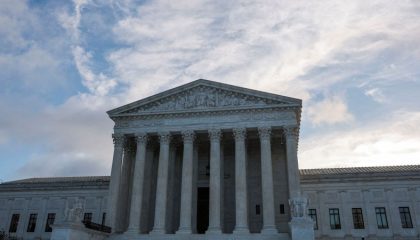
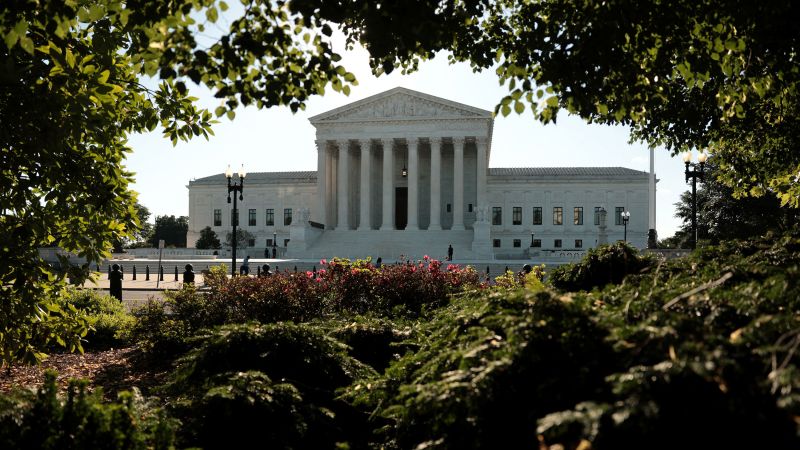
Sandego.net – On Thursday, the Supreme Court took a step to restrict the federal government’s ability to seize firearms from individuals who regularly use marijuana. The ruling, authored by Justice Neil Gorsuch and supported unanimously by all nine justices, challenged the constitutionality of a 1960s-era law that allowed authorities to remove weapons from drug users. The decision focused on a specific case involving Ali Danial Hemani, a dual citizen of the United States and Pakistan, whose indictment under the federal anti-guns-and-drugs statute became the central point of contention.
A Narrow Victory for the Second Amendment
The case revolved around Hemani, who was charged in 2023 with violating a law that criminalizes gun possession by individuals who use drugs. The indictment followed an FBI search of his home, where a Glock 9mm pistol and 60 grams of marijuana were discovered. While the Justice Department alleged that Hemani engaged in drug dealing, used cocaine, and had ties to Iran, the court emphasized that the prosecution’s argument was based on the mere act of regular marijuana use rather than evidence of danger or violence.
“We do not question that sometimes an individual’s unlawful use of marijuana (or any other controlled substance) may render him a danger to others,” the court wrote. “But, again, the government disclaims the need to show anything like that in this case. Instead, it asks us to conclude that anyone who regularly uses marijuana is categorically violent and dangerous without any further showing.”
Justice Gorsuch argued that the government’s claim was too broad, asserting that the law’s application to marijuana users required more concrete evidence of risk. The ruling, while significant, left open larger questions about whether federal prosecutors could target individuals addicted to drugs or those whose drug use poses a threat to themselves or others. This narrow interpretation signals a shift in how the Supreme Court views the balance between public safety and individual rights under the Second Amendment.
The Broader Implications of the Decision
The decision came at a pivotal moment for marijuana policy in the U.S. As of 2026, approximately half of the states have legalized recreational marijuana use, while a majority allow it for medical purposes. This growing acceptance of cannabis has raised questions about the relevance of older federal laws that criminalize drug use. The court’s unanimous opinion, however, underscored the tension between modern drug use trends and historical legal frameworks.
The ruling also reflects the Supreme Court’s ongoing efforts to revisit gun control laws through the lens of history. In its 2022 decision NYSRPA v. Bruen, the court made it easier for individuals to carry handguns in public by requiring prohibitions to align with founding-era principles. This new case builds on that precedent, highlighting the justices’ willingness to scrutinize federal regulations that may not have a clear historical basis.
Political Context and Public Reaction
The case gained additional political weight due to its connection to the Biden administration and its handling of drug-related offenses. President Joe Biden’s son, Hunter Biden, was convicted in 2024 under the same federal law for gun possession while addicted to crack cocaine. Though he was later pardoned by his father, the incident brought attention to the law’s application in high-profile cases and its potential impact on personal freedoms.
Gun rights advocates celebrated the decision as a major win for constitutional protections. John Commerford, executive director of the National Rifle Association’s lobbying arm, called it a “major victory for the Second Amendment,” arguing that the ruling reinforces the right to bear arms for nonviolent conduct. “There is no historical justification for depriving individuals of their God-given right to keep and bear arms simply because they use marijuana,” he stated.
In contrast, gun control groups expressed cautious optimism. Leigh Rome, a senior litigation attorney with the Giffords Law Center, noted that the decision “continues to allow the government to enact and enforce reasonable categorical prohibitions on firearms ownership,” provided they are grounded in specific evidence. The ruling, she suggested, does not eliminate the possibility of future restrictions but limits their scope.
The Role of Ideological Divide in the Court’s Ruling
Despite the ideological splits that often define Supreme Court decisions, all nine justices agreed on this particular ruling. This rare consensus highlighted the narrow nature of the decision, which focused solely on the application of the 1960s law to marijuana users. The court’s willingness to align on this issue suggests a growing recognition of the law’s potential overreach, even as broader debates about drug-related gun laws remain unresolved.
During oral arguments in March, both conservative and liberal justices voiced concerns about the law’s broad scope. Justice Amy Coney Barrett, a Trump appointee, raised a hypothetical question about a person taking Ambien without a prescription. Her query underscored the law’s lack of specificity, prompting the government to defend its application as a necessary measure to prevent harm.
Looking Ahead: Unresolved Questions and Future Challenges
While the court avoided making sweeping rulings on drug addiction and gun ownership, it acknowledged that such questions will likely resurface. Steve Vladeck, a CNN Supreme Court analyst and professor at Georgetown University Law Center, noted that the decision “continues to allow the government to enforce reasonable categorical prohibitions” but leaves room for future challenges. “It’s only a matter of time before those bigger questions come back to the Court,” he said, emphasizing that the justices may struggle to avoid them in more complex cases.
The ruling also has implications for how federal law interacts with state policies. With more states decriminalizing or legalizing marijuana, the federal law’s enforcement has become increasingly contentious. The Justice Department estimated that about 300 people are charged annually under the statute, with convictions carrying up to 15 years in prison. However, the Supreme Court’s intervention may pressure lawmakers to reconsider the law’s effectiveness and fairness.
As the nation continues to grapple with the legal status of marijuana, this decision marks a turning point in the interpretation of gun rights. It reinforces the idea that the Second Amendment protects individuals from being automatically deemed dangerous based on drug use alone, while also acknowledging the government’s role in ensuring public safety. The ruling’s impact will likely be felt in courtrooms, legislative halls, and the ongoing dialogue about drug policy and constitutional freedoms in the United States.