New Book Unveils Trump’s Bold Comparisons to History’s Most Notorious Leaders
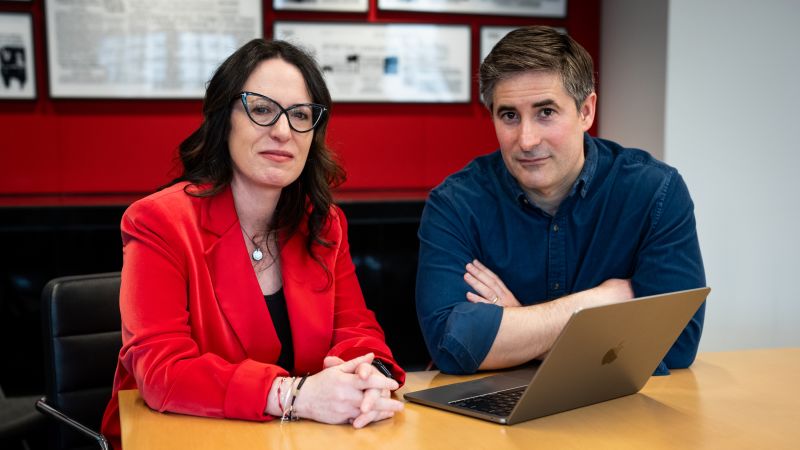
Sandego.net – In a revealing exchange during March’s interview with New York Times journalists Maggie Haberman and Jonathan Swan, former President Donald Trump presented a two-page document that positioned him as a figure of unmatched authority. The text, which he had received from a historian, claimed he surpassed leaders such as Attila the Hun, Genghis Khan, Napoleon, Stalin, Mao, and Hitler in terms of global influence. Trump’s aides retrieved the document for the reporters, and the president proudly described how each of these historical icons, though feared in their eras, operated within localized power structures. “Their power was local,” he emphasized, according to the book. “But (Trump’s) was not.”
The Document’s Surprising Author
While the document framed the author as a “presidential historian,” the book later revealed the true identity of its creator. The individual was actually Gary Player’s long-time caddy and trusted confidant, a figure who had initially shared his assessment with the golfer and then conveyed it directly to Trump during a session in Florida. The caddy explained that the analysis was crafted after observing Trump’s leadership style, with the president’s own words and actions serving as the foundation. Trump’s decision to post the document on Truth Social shortly after midnight on Thursday raised eyebrows, with one insider suggesting it was a strategic move to pre-empt the book’s release.
“Who would ever do a thing like that? Right?”
Trump’s comments in the book highlight his tendency to position himself as a unique force in world history. He argues that his power stems not from fear, as many of his predecessors relied, but from a combination of charisma and unrelenting will. This perspective is woven throughout “Regime Change,” the new book by Haberman and Swan, which offers an unfiltered look at Trump’s second term. The authors, who conducted over 1,000 interviews over three years, captured both grand gestures and subtle moments, revealing a leader who often acted without restraint.
The Unconstrained Power of Trump’s Second Term
The book’s narrative underscores how Trump’s presidency has evolved since his return to office in 2024. Unlike his first term, where he adapted to the political landscape, his second任期 is marked by a more assertive approach. Haberman and Swan detail his willingness to challenge established norms, whether through bold foreign policy decisions or internal political maneuvers. One particularly striking example comes from the Oval Office, where the president’s personal touch on decor became a symbol of his control. According to the book, White House press secretary Karoline Leavitt arrived one morning to find Trump engaged in a task that surprised even his closest advisors: “clutching a tube of superglue and attempting to affix gold decorations to the marble fireplace mantel.”
This scene illustrates Trump’s hands-on nature, as he took it upon himself to personalize his workspace. The Oval Office was transformed into a gleaming showcase of luxury, with gold vermeil figurines, medallions, and eagles adorning every surface. Rococo mirrors and tiny cherubs from Mar-a-Lago were strategically placed to reflect his vision of power. The book notes that this aesthetic overhaul was not merely decorative—it served as a psychological tool, reinforcing his belief in his own dominance.
Foreign Policy: A Tale of Contradictions
Trump’s second term also saw a significant shift in his foreign policy. The book highlights his decision to escalate tensions with Iran, aligning with Israel in a conflict that had previously caused internal divisions. Haberman and Swan recount how Trump oscillated between support and skepticism for Israeli Prime Minister Benjamin Netanyahu, even expressing hesitation about the war during its early stages. “He didn’t want any part” of the conflict, the authors write, as Trump confided in an Israel critic. Yet, by the time the war gained momentum, his stance had solidified into a definitive position.
These contradictions are not isolated. The book delves into the administration’s erratic responses to crises, such as the Epstein files scandal, where Trump’s team appeared overwhelmed by the magnitude of the situation. Meanwhile, his actions in the international arena often reflected a blend of impulsiveness and calculation, with allies and adversaries alike caught off guard by his decisions. The narrative suggests that Trump’s leadership in this period is defined by a lack of constraints, as he pursues his agenda with an unrelenting focus on personal gain and political impact.
Behind the Scenes: Voices of the Trump Era
“Regime Change” is built on direct quotes and firsthand accounts, with the authors attributing statements to their original sources. Many of these quotes come from contemporaneous notes, recordings, or transcripts, providing a layered perspective on Trump’s presidency. The book’s interviews reveal a leader who is both self-assured and volatile, often delivering sharp critiques of fellow world leaders while maintaining a defensive posture when questioned about his own conduct. These interactions offer insight into the dynamics of his inner circle and the broader political landscape.
The authors’ daily reporting during Trump’s second term allowed them to capture the rhythm of his leadership, from high-stakes meetings to spontaneous decisions. The March interview, in particular, stands out as a defining moment, where the president’s confidence in his legacy was laid bare. By comparing himself to historical figures, Trump sought to anchor his authority in a narrative of timeless power, a theme that resonates throughout the book. The text also explores the personal relationships that shaped his policies, such as the bond with Gary Player, whose caddy’s analysis became a key part of Trump’s self-promotion.
As the book’s release approaches, its revelations have sparked widespread discussion about the nature of Trump’s leadership. From the gilded interiors of the Oval Office to the global conflicts he orchestrated, the authors paint a picture of a president who thrives on unpredictability. The document’s author, a caddy with a personal connection to Trump, serves as a reminder that even the most authoritative narratives can originate from unexpected sources. With its blend of personal anecdotes and political analysis, “Regime Change” promises to deepen the understanding of a presidency that defied traditional boundaries and redefined the concept of power in the modern era.