Does Trump’s understanding with Iran count as a ‘deal’?
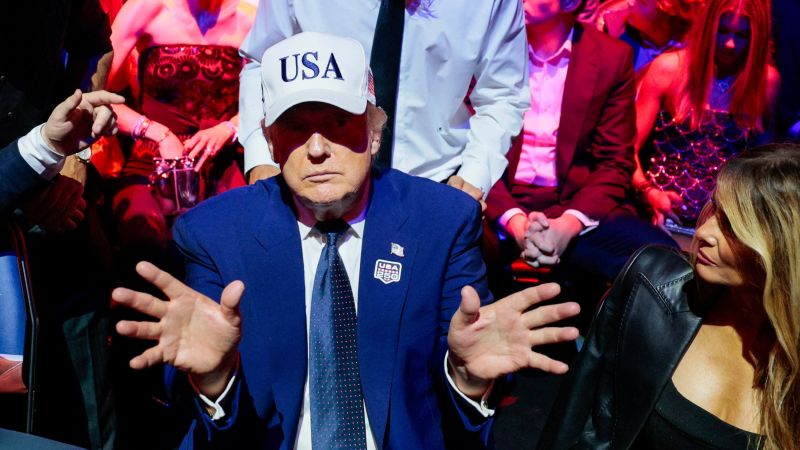
Sandego.net – On a Sunday evening, as the world watched a UFC event unfold on the White House lawn, President Donald Trump took to his social media platform to declare that the conflict with Iran had reached a conclusion through a “deal.” The message, posted on Truth Social, read: “The Deal with the Islamic Republic of Iran is now complete. Congratulations to all!” Yet, the clarity of this assertion was soon called into question. Hours after the announcement, details about the agreement remained scarce, sparking debate over whether it could truly be classified as a “deal” in the traditional sense.
The confusion stemmed from the lack of a unified narrative between the U.S. and Iranian officials. While the administration referred to the agreement as a “memorandum of understanding,” the Iranian side offered a slightly different interpretation. This divergence in terminology led to a flurry of alternative labels in the media: “agreement,” “tentative deal,” “framework,” and even “framework deal.” The term “deal” itself, however, lacked a formal definition in the realm of diplomacy, as noted by experts. It was not listed in the Palgrave Macmillan Dictionary of Diplomacy or the National Museum of American Diplomacy’s diplomatic encyclopedia, raising questions about its legitimacy as a binding agreement.
“The problem with Washington, they don’t make deals,” Trump told Fox News in 2016. “It’s all gridlock. And then you have a president that signs executive orders because he can’t get anything done. I’ll get everybody together.”
Trump’s rhetoric around “deal” has long been a cornerstone of his political identity. His 1987 book, “Trump: The Art of the Deal,” positioned him as a master negotiator, blending business acumen with a vision of transformative leadership. This image was reinforced in his 2016 presidential campaign, where he framed himself as a figure capable of striking deals that could redefine international relations. However, his approach to the Iran agreement seemed to diverge from this promise, as the terms of the arrangement appeared to lack the specificity of a formal treaty.
During his first term, Trump had previously dismantled the 2015 Joint Comprehensive Plan of Action, a landmark accord between the U.S. and Iran. He called it “a horrible, one-sided deal that should never, ever have been made,” highlighting his skepticism of multilateral agreements. Now, with a new arrangement in place, the administration’s reluctance to provide immediate details fueled speculation. It wasn’t until days later that the document was officially released, with journalists having already obtained draft versions. The final text described it as a “memorandum of understanding,” a term that suggested a less binding arrangement than a formal treaty.
Professor Inderjeet Parmar of City, University of London, pointed out that the multiple labels used to describe the agreement reflected a lack of consensus among the negotiating parties. “They all suggest that there is nothing actually determined or decided yet,” he explained, “and that all the hard work is really yet to come.” This ambiguity underscored the challenges of defining the agreement’s scope, particularly regarding key issues like Iran’s nuclear program and access to the Strait of Hormuz. While both sides claimed to have reached an understanding, the specifics of what that entailed remained contested.
The term “deal” has historical roots that further complicate its modern usage. Originating from Old English, the word “dǽl” initially meant a part of a whole. By the 19th century, it had evolved to describe business transactions and mutual benefits in commerce and politics. This shift in meaning made it a versatile yet vague term. As an example, Sen. John Sherman’s 1863 letter to his brother, General William Tecumseh Sherman, illustrated the frustration of the era: “Charleston is not taken, the war is prolonged, and but little chance of its ending until we have a new deal.” Here, “deal” signified a strategic breakthrough, but its application in contemporary contexts has grown more fluid.
Officials and analysts alike have debated the implications of Trump’s choice of terminology. While “deal” is a popular label for his style of negotiation, terms like “framework” or “agreement” carry more defined diplomatic weight. According to Mona Yacoubian, director of the Middle East Program at the Center for Strategic and International Studies, these alternatives aim to reflect the precise nature of the agreement. “An agreement can have informal and formal meanings,” Yacoubian noted, “often used to characterize informal understandings with limited scope, or as a formal treaty.” The use of “memorandum of understanding” further emphasizes the provisional nature of the arrangement, which may not yet include enforceable obligations.
“Bamo Nouri, a senior lecturer in international relations at the University of West London, is reluctant to even apply the term ‘agreement’ to the current arrangement.”
The political stakes of the agreement are evident in the conflicting narratives. The U.S. sought to frame it as a breakthrough, while Iran emphasized its strategic gains. The Strait of Hormuz, a critical chokepoint for global oil trade, became a focal point of the discussions. However, the exact terms of its restoration were not clearly outlined, leaving room for interpretation. This lack of clarity has prompted critics to argue that the agreement remains more of a preliminary step than a comprehensive resolution.
As the dust settles, the terminology used to describe the agreement continues to shape public perception. While Trump’s embrace of “deal” aligns with his branding as a dealmaker, the use of more precise terms by officials highlights the complexity of the negotiations. The word “deal” has become a powerful symbol in his political lexicon, yet its application in this context may not satisfy the demands of a more formalized diplomatic process. The future of the agreement will likely depend on whether the terms laid out in the memorandum evolve into a tangible framework or remain a collection of aspirational statements.
Editor’s Note
CNN’s “Word of the Week” series explores the evolving meanings of terms in the news. The word “deal” has transcended its business origins to become a versatile term in political discourse. While it lacks a formal definition in diplomatic literature, its usage reflects both the strategic intent and the ambiguity inherent in international negotiations. As Trump’s agreement with Iran demonstrates, the term can be a tool for framing progress, but its power lies in its adaptability—and the debates it provokes.