‘I am responsible.’ Takeaways from Gilgo Beach Serial Killer Rex Heuermann’s Life Sentence
Sandego.net – Rex Heuermann, the man behind the Gilgo Beach murders, received a life sentence without parole on Wednesday, marking the culmination of a decades-long investigation. The sentence came after he pleaded guilty to seven of the eight killings and confessed to the eighth, which he had previously admitted to in April. The victims, primarily young female sex workers on Long Island, New York, were killed between 1993 and 2010, with their remains discovered in 2010 at Gilgo Beach. This case, which had haunted families and investigators for years, finally reached its conclusion as Heuermann stood before the court, facing the full weight of his crimes.
The Legacy of the Gilgo Four
The discovery of four women’s remains in 2010, later dubbed the “Gilgo Four,” sparked a massive manhunt that spanned over a decade. Investigators later identified at least 10 sets of human remains, linking them to Heuermann’s modus operandi. For the families of the victims, the case was more than a legal proceeding—it was a personal reckoning. As they took to the stand, their words painted a vivid picture of loss and resilience.
“For so many years, this case has been a weight I carried every single day,” said Liliana Waterman, Megan Waterman’s daughter. “Today’s proceedings do not erase what happened, and nothing ever will. But today brings accountability.”
Waterman’s statement reflected the emotional toll the case had taken on her family. Megan Waterman, one of the Gilgo Four, had dreamed of building a wonderful life for herself and her daughter, her aunt Elizabeth Meserve recalled. The victim’s legacy, once reduced to a grainy photograph and a short description, was now being reimagined as a story of hope and strength.
Another family member, Melissa “Missy” Cann, the sister of Maureen Brainard-Barnes, another of the Gilgo Four, described the profound impact of the killer’s actions. “He took my sense of safety, he took my peace of mind,” Cann said. “In many ways, I became one of his victims, too.”
“He took my sense of safety, he took my peace of mind,” said Melissa “Missy” Cann, sister of Maureen Brainard-Barnes. “In many ways, I became one of his victims, too.”
Cann’s words underscored how the killer’s crimes extended beyond the victims themselves, leaving an indelible mark on those left behind. Each family member’s testimony brought the victims to life, highlighting their individuality and the tragedy of their untimely deaths. Valerie Mack, for instance, was remembered as someone who “lit up the world around her,” according to her sister Danielle Mack. Jessica Taylor, who would have turned 43 on Wednesday, was described as “pure sunshine” and a “spunky, smart, beautiful friend” by her cousins.
Heuermann’s Emotional Response
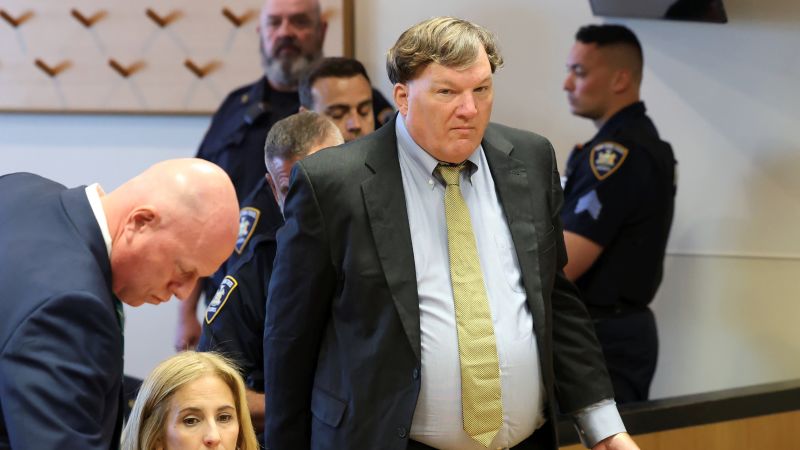
During the sentencing hearing, Heuermann’s demeanor was notably restrained. He sat stone-faced, with his hands folded on the table, and avoided eye contact with the victims’ families. The courtroom was filled with anticipation as to whether he would speak, but his response was brief and subdued. When prompted by the judge, he offered little more than a quiet acknowledgment of his guilt.
“There are no words I can say,” Heuermann said, his voice nearly inaudible. “I am responsible for all that was said in this room today. The words I would say have no meaning.”
Despite his lack of emotional expression, Heuermann’s admission carried weight. Judge Timothy Mazzei, who presided over the case, pressed him on his feelings of remorse. “You’ve been described as a very big man,” Mazzei said, his tone sharp. “But you’re a disgusting and despicable small man, if you’re a man at all. And you’re a coward!”
Heuermann’s response to the judge’s probing questions was measured. When asked if he felt any regret for the women he strangled, he nodded and said, “Yes.” The judge’s frustration was evident, but the sentence he delivered was clear: life without parole for all eight victims. The judge sentenced Heuermann to three consecutive life terms and four additional terms of 25 to life, ensuring he would spend the rest of his days in prison.
The Path to Justice
The years of investigation were marked by persistence and a deepening understanding of the killer’s pattern. From the initial discovery of the Gilgo Four to the eventual identification of Heuermann as the perpetrator, the process was both painstaking and transformative. For the families, the wait was agonizing, but the final sentencing offered a measure of closure.
While Heuermann’s crimes were the focus of the hearing, the stories of the victims’ loved ones reminded the court of the human cost. Amber Costello, another of the victims, was described by her sister Kimberly Overstreet as a “sinner” who “sacrificed her life for something she believed in.” These personal accounts added layers of meaning to the legal proceedings, ensuring the victims were not just names on a list but individuals with dreams, struggles, and lives.
The judge’s words echoed the sentiment of many in the courtroom. “Today brings accountability,” Mazzei said, emphasizing that Heuermann’s sentence would serve as a testament to the justice served. The families, who had waited years for this moment, now had the chance to honor their loved ones through their words.
A Reflective Conclusion
As the hearing concluded, the gravity of Heuermann’s actions remained. The 17-year span of his killings had left a trail of sorrow and mystery, but the guilty plea and sentencing brought a definitive end to the case. For the victims’ families, the process was not just about punishment—it was about finding peace and ensuring the killer would never again roam free.
The legacy of the Gilgo Beach murders will endure, not only in the records of the court but in the memories of those who loved the victims. As one family member, Violet Swager, said: “I’m so grateful for this day of justice and I know she is too.” Her words, accompanied by a heartfelt “Happy birthday, Jess,” served as a poignant reminder of the lives lost and the lives affected.
Heuermann’s sentence stands as a symbol of the justice system’s ability to deliver long-awaited resolution. While the killer’s remorse was evident in his brief acknowledgment, the families’ emotional testimonies painted a fuller picture of the devastation he caused. The hearing was a moment of reckoning, where the past met the present, and the victims’ stories finally found their place in the annals of history.
Though the case is now officially closed, the impact of the Gilgo Beach killings will linger. The timeline of the murders, stretching from 1993 to 2010, highlights the patience of investigators and the resilience of the victims’ families. As the courtroom emptied and the judge’s gavel fell, the final verdict was more than a legal sentence—it was a promise to the survivors and a tribute to the eight women whose lives were taken in the most brutal way.