G7 Leaders — and the Rest of the World — Await Clarity on US-Iran Agreement
Sandego.net – As the G7 leaders gathered for a Monday evening meal overlooking the serene Lake Geneva shoreline, the atmosphere buzzed with anticipation and uncertainty. The summit, held in the alpine resort of Évian-les-Bains, was intended to foster collaboration on pressing global issues, yet the exact terms of President Donald Trump’s recent pact with Iran remained shrouded in ambiguity. Two officials close to the discussions described how, after nearly two hours of dialogue, the leaders still found themselves in the same state of bewilderment as they had entered the room. The custom-built pavilion, designed for diplomatic exchanges, became a stage for vague promises and unconfirmed details, leaving many to wonder whether the agreement would hold the weight of its promises.
Secrecy and Contradictions
Despite the length of the meeting, the agreement’s specifics were not fully disclosed. Neither the United States nor Iran had released the one-and-a-half page text formalized during a virtual signing on Sunday, creating a situation where conflicting narratives emerged. In Washington, officials provided varying accounts of the deal’s structure, while Tehran’s representatives offered equally divergent interpretations. This lack of transparency raised questions about the deal’s legitimacy and its potential impact on international relations.
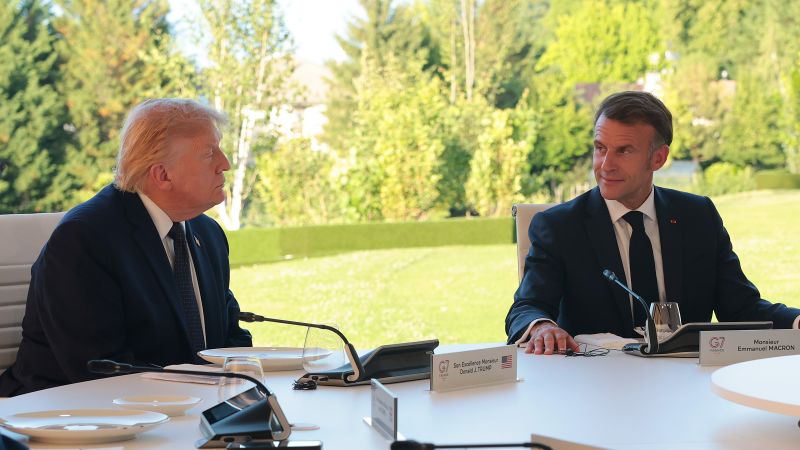
“I want it to be released. So probably pretty soon,” Trump said, sitting alongside French President Emmanuel Macron. “I would say some time after Friday.”
While Trump’s statement suggested a timeline for public disclosure, it left room for interpretation. One senior US official, speaking off the record, hinted that the memorandum of understanding (MOU) would be unveiled days before the formal signing ceremony in Switzerland, where Vice President JD Vance is set to participate. This official emphasized the importance of transparency, framing the delayed release as a strategic move to ensure the document’s full impact was felt. However, this optimism was tempered by the fact that the G7 leaders and global observers had yet to lay eyes on the text, despite having congratulated Trump on its completion.
The agreement’s secrecy has sparked concerns among some of Trump’s allies. Conservative commentator Mark Levin, a frequent critic of the administration, expressed frustration over the lack of public access to the document. “I have asked for days, why can’t we, the people, see the damn MOU? Not through people briefed by an anonymous person. Honestly, I’ve never seen anything like this. If it is a great outcome for peace, then release it,” Levin wrote on X. His comments reflect a growing unease within the political sphere about the extent of Trump’s influence and the clarity of his decisions.
“I have asked for days, why can’t we, the people, see the damn MOU? Not through people briefed by an anonymous person. Honestly, I’ve never seen anything like this. If it is a great outcome for peace, then release it,” Mark Levin wrote on X.
Trump’s aides had anticipated that the summit would provide a clearer picture of the agreement, particularly regarding its implications for the Strait of Hormuz. After months of criticism directed at European allies for their perceived inaction during the Iran war, the administration hoped that the leaders would finally endorse a plan to clear the strategic waterway of mines. France and Britain had already signaled their willingness to assist, but without definitive details, their commitments felt tentative. As one European official noted, “Without knowing the full scope of the agreement, it’s hard to make concrete decisions or allocate resources effectively.”
The MOU, signed by Iran’s parliament speaker Mohammad Bagher Ghalibaf and the Supreme Leader Mojtaba Khamenei, remains a subject of debate. While Ghalibaf was the official signatory, Khamenei’s absence from the signing ceremony has fueled speculation about his role in the deal. “Just doesn’t sign these agreements,” one US official remarked, suggesting that the Supreme Leader may have been sidelined in favor of more pragmatic negotiators. This dynamic has left some observers questioning the depth of Iran’s involvement and the long-term stability of the agreement.
Regional Alliances and Financial Commitments
The upcoming signing in Switzerland is expected to bring further clarity, but it also highlights the complex web of international partnerships shaping the deal. Macron, who has played a central role in the negotiations, has invited the rulers of Egypt, Qatar, and the United Arab Emirates to join a lunchtime discussion with G7 members. These Gulf states, particularly Qatar, have been deeply involved in the process, working behind the scenes to secure a framework that balances US interests with regional concerns.
One of the key aspects of the agreement is the proposed $300 billion reconstruction fund for Iran, a financial commitment intended to ease tensions and promote economic cooperation. The US is counting on Gulf nations to contribute significantly to this initiative, which could mark a shift in diplomatic relations. However, the fund’s terms remain unclear, with some officials suggesting it would focus on infrastructure and energy projects, while others hint at broader economic incentives tied to Iran’s nuclear program.
Trump’s remarks during the Monday dinner offered a glimpse into his confidence in the deal, though his tone was laced with defiance. “It goes to a second stage, which I think will be actually easier,” he said, positioning the upcoming talks as a more manageable phase of negotiations. This statement, while optimistic, also underscored the challenges of the previous discussions, which had grappled with contentious issues like Iran’s nuclear capabilities and regional security.
Political Tensions and the Path Forward
The uncertainty surrounding the agreement has strained Trump’s relationships with G7 leaders, who have grown increasingly skeptical of his approach. During the summit, he was seated between Macron and British Prime Minister Keir Starmer, two figures who had previously criticized his handling of the Iran conflict. Their absence from the signing ceremony has raised questions about the level of support the deal has within the alliance. While Trump claimed to have secured the agreement, his allies in Europe and the US have yet to fully align with the terms.
As the summit moves forward, the focus remains on reconciling conflicting narratives and securing broader consensus. The G7 leaders, accustomed to collaborative decision-making, are now tasked with evaluating a pact that was largely negotiated in secret. This situation has created a sense of urgency, with many hoping that the details will be unveiled before the formal signing. Yet, the potential for last-minute changes or unspoken conditions adds another layer of complexity to the process.
With the formal signing set to take place in Switzerland, the international community will be watching closely for any signs of compromise or revelation. The agreement’s success will depend not only on its terms but also on the willingness of all parties to embrace transparency. As Trump’s rhetoric shifts from skepticism to optimism, the G7 leaders must navigate a delicate balance between trust and scrutiny, ensuring that the deal meets the expectations of both Iran and the global stage. Whether the memorandum will finally clarify its intentions or deepen the fog of uncertainty remains to be seen.