Federal Judge Blocks Kennedy Center Closure and Name Change
Sandego.net – A federal judge has issued a decisive ruling that prevents the Kennedy Center from proceeding with a planned temporary closure for an extensive renovation and stops it from incorporating President Donald Trump’s name into the venue’s title. US District Judge Casey Cooper’s 94-page decision highlights that the law governing the center explicitly mandates its name be dedicated to President John F. Kennedy, making it impossible to rename the institution without congressional approval. Cooper emphasized that the board’s unilateral decision to rename the center violated its statutory obligation, stating, “Congress gave the Kennedy Center its name, and only Congress can change it.”
Renaming and Closure Violate Statutory Requirements
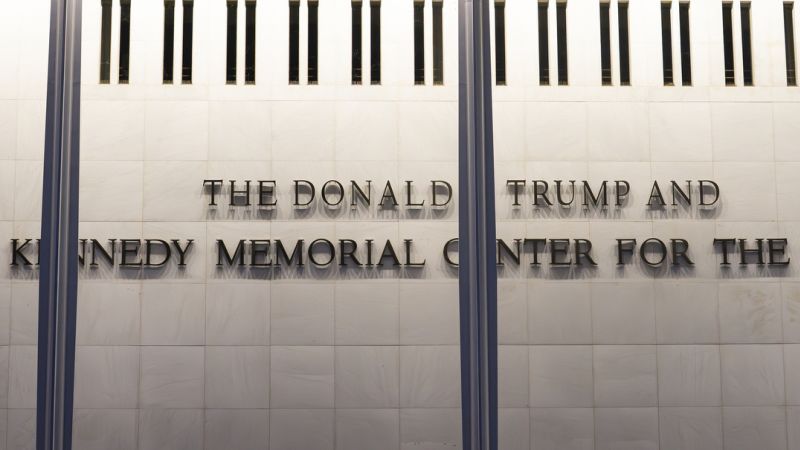
Cooper’s ruling asserts that the center’s name change, which proposed the “Donald J. Trump and John F. Kennedy Memorial Center for the Performing Arts,” creates a public misconception about the institution’s identity. “The law makes crystal clear that the Center is to be named for President Kennedy, and it cannot bear any other formal name or public memorial based on the Board’s unilateral say-so,” the judge wrote. The decision also halts the center’s plan to temporarily close its doors, citing insufficient evidence that the board considered its full range of statutory obligations in making the move. Cooper noted that the closure would disrupt the center’s requirement to maintain continuous programming, a key function outlined in its founding charter.
Trump, who was elected chairman of the board last year, has been actively involved in reshaping the Kennedy Center’s operations. His leadership has sparked controversy, with critics arguing that changes to the board’s composition and management have led to declining ticket sales and the departure of prominent artists from scheduled events. Cooper’s ruling, issued on Friday, underscores that these administrative shifts do not justify altering the center’s name or closure, as the law explicitly assigns the name to Kennedy and requires Congress to oversee the institution’s annual funding.
Trump’s Response and Transfer of Control
Following the ruling, Trump signaled a shift in strategy, suggesting he was ready to hand over authority to Congress. In a post on Truth Social, he stated, “I have instructed the Department of Commerce to make all necessary arrangements with Congress to allow a full and complete transfer of this Institution, giving them the responsibility for its Operation, Maintenance, and Management.” While acknowledging he had been “treated unfairly,” Trump emphasized his desire to retain autonomy, declaring, “I have no interest in continuing unless I am free to do what I want to do.”
The details of this transfer remain unclear, but Cooper’s decision sets a clear framework for the center’s future. The judge mandated that within two weeks, officials must remove all signage featuring Trump’s name and update the Kennedy Center’s website to eliminate references to the “Trump Kennedy Center” or the “Donald J. Trump and John F. Kennedy Memorial Center.” He also ruled that the center cannot display any physical or digital signage implying it is named after someone other than Kennedy. This includes changes to its branding and public identity, which the board had sought to implement during the renaming process.
Appeal and Democratic Rep. Joyce Beatty’s Role
The Kennedy Center has already announced its intent to appeal the decision. Roma Daravi, the center’s vice president of public relations, stated, “We are confident that on appeal the court will uphold the board’s will to recognize President Trump’s historic contributions to our nation’s cultural center.” Despite the ruling, the center maintains that its plans for renovation and potential closure are still viable, provided they align with the law’s requirements. Daravi noted that the board intends to review the judge’s decision “carefully” while emphasizing the urgency of the facility’s need for infrastructure upgrades.
The appeal follows a lawsuit filed by Democratic Rep. Joyce Beatty, an ex-officio member of the Kennedy Center’s board. Beatty initiated the legal action after fellow board members moved to rename the center, a step she argued lacked legal foundation. Her complaint was later expanded when Trump unveiled his plan to close the center during a major renovation. In a statement, Beatty said, “Today’s ruling rightly affirms that this administration’s efforts to rename and close the center have no basis in law. The Kennedy Center is an institution that belongs to the American people, not to Donald Trump.”
Impact of Trump’s Tenure and Future Considerations
The judge’s decision has broader implications for the Kennedy Center’s governance. Cooper pointed out that Trump’s leadership has influenced significant programmatic and leadership changes, which some argue have contributed to the center’s challenges. The ruling, however, prevents the board from unilaterally deciding to close the center, stating, “There is no evidence before the Court that the Kennedy Center Board of Trustees considered how it would accomplish its full legislative mandate during the closure period.”
While the immediate closure is blocked, Cooper allowed the center to continue with its renovation work. The judge acknowledged that the board could still pursue infrastructure improvements, such as updating the HVAC system, soffit panels, and drainage, but emphasized that these efforts must not interfere with the center’s statutory duty to maintain ongoing programming. The ruling also allows the board to revisit the closure decision once it has fully evaluated the impact on its obligations, providing a pathway for future action.
Additionally, Cooper’s decision extends to the “anti-weaponization fund,” a Trump initiative aimed at funding renovations. The federal judge halted work on this fund, citing the lack of legal basis for its implementation. This move aligns with the broader theme of the ruling, which reinforces that the Kennedy Center’s name and operational control are tied to congressional authority. The judge’s opinion serves as a reminder that the center, established as a living memorial to President Kennedy, must uphold its founding principles while allowing for necessary modernization.
Legacy and Future of the Kennedy Center
Cooper’s ruling has sparked a debate about the balance between institutional heritage and modernization. While Trump’s administration seeks to rebrand the center and adapt its operations, the legal decision underscores the importance of preserving its historical identity. The judge’s emphasis on congressional oversight highlights that the Kennedy Center, though managed by the executive branch, remains a national institution subject to legislative authority. This dynamic is crucial as the center navigates its future, with the board now required to align its decisions with the law’s original intent.
As the Kennedy Center prepares for potential appeals, the focus remains on its statutory role as a cultural landmark. Cooper’s decision not only halts the immediate closure but also sets a precedent for how the institution’s name and operations are governed. The ruling reflects a legal battle that has tested the boundaries of executive control over a congressional-established entity, leaving the center’s leadership to reassess its approach while ensuring compliance with the law. Whether the appeal will alter the outcome remains to be seen, but for now, the Kennedy Center’s name and its doors are preserved under the current judicial order.