Escalating Tensions at Newark ICE Facility
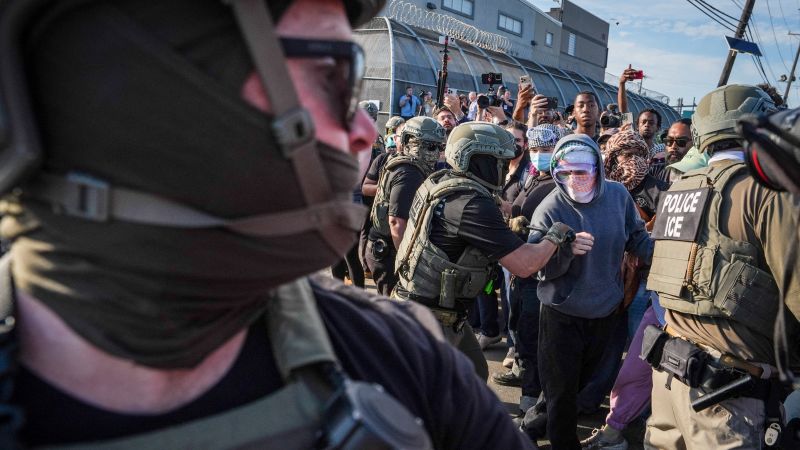
Sandego.net – At the edge of Newark, New Jersey, a quiet industrial zone has become a focal point of public outcry this week. For days, crowds have gathered near the razor-wire perimeter of the Delaney Hall immigration detention center, where protesters and federal agents have engaged in heated confrontations. The turmoil follows mounting criticism of the Trump administration’s immigration policies, which have intensified scrutiny of conditions at this 1,000-bed facility. With a dedicated “protest zone” now in place, the situation reflects a broader clash over the treatment of detainees and the role of immigration enforcement.
Lawmakers Enter the fray
Over the weekend, several state officials sought to examine the facility firsthand. Among them was New Jersey Governor Mikie Sherrill, who attempted to tour Delaney Hall but was initially blocked from entry. Officials later granted her access, allowing her to witness the interior firsthand. This move came amid growing calls for oversight, with critics arguing that the facility’s conditions have worsened under the current administration’s aggressive deportation strategy.
Senator Andy Kim, a Democrat, visited the site on Monday and described the scene as a tense standoff. “We’ve seen this on TV and online, but to experience it in person is surreal,” he remarked, emphasizing the visceral impact of the protests. His account included a dramatic moment when he was briefly incapacitated by pepper spray, underscoring the intensity of the confrontations between protesters and ICE agents.
“These images – what happened – it honestly felt very familiar because we’ve seen it online. We’ve seen it on TV. To see it in person is surreal,” said Kim. “But what we see is, unfortunately, the normalization of this violence in America.”
Facility Adaptations and Surveillance
As protests persisted, Delaney Hall’s operators, the GEO Group, took steps to manage the situation. On Friday, workers painted yellow lines on the sidewalk and installed “private property” and “no trespassing” signs at the main entrances. These measures were part of an effort to delineate the boundaries of the protest zone, though the area remains a magnet for demonstrators. A telecommunications truck also arrived, with staff setting up surveillance cameras to monitor the activity.
The facility’s proximity to a busy highway, where large commercial trucks frequently pass, has amplified the visibility of the protests. This location, once a low-key industrial site, now serves as a stage for public dissent. The GEO Group’s adjustments reflect the pressure the facility faces as it balances operational needs with the demands of the community.
DHS and State Police Collaboration
Friday afternoon marked a pivotal moment when New Jersey Governor Mikie Sherrill announced the state’s decision to deploy State Police to support ICE agents outside Delaney Hall. This partnership aims to create a “peaceful, protected protest zone” while ensuring security during the demonstrations. The Department of Homeland Security (DHS) praised the move as a triumph for maintaining order, though they also highlighted the governor’s earlier refusal to allow state troopers to assist with the protests.
“The governor’s support is critical to ensuring the safety of both protesters and ICE officers,” stated a DHS spokesperson. The agency is now considering reallocating Customs and Border Protection staff from Newark Airport to aid in crowd control at the facility. This potential shift could lead to delays at the airport, further linking the immigration debate to everyday life for travelers.
Health Department Inspection Halted
In a separate development, the New Jersey Health Department attempted to conduct a public health and food safety inspection of Delaney Hall. However, their efforts were curtailed when they were denied full access to the facility. Instead, they were permitted to evaluate only the food service areas, leaving questions about broader conditions unanswered.
“Our team was restricted from inspecting all parts of the facility, which limits our ability to assess the full scope of the situation,” the department noted in a statement. This partial inspection has fueled concerns about transparency, with critics arguing that the facility’s operators are evading a comprehensive review of living standards.
Continuing the Debate
As the week progresses, the protests show no signs of abating. Crowds have fluctuated between hundreds and dozens, but the emotional charge remains high. Lawmakers and activists continue to call for accountability, citing reports of overcrowding, inadequate medical care, and unhygienic living conditions. Meanwhile, ICE and DHS officials defend the facility’s operations, emphasizing that it meets federal standards and serves as a necessary component of immigration enforcement.
Amid the controversy, a “Support ICE” rally is scheduled for Saturday, providing a platform for advocates to counter the criticisms. The event is expected to draw attention to the agency’s role in managing the nation’s immigration system, even as the protests outside Delaney Hall gain momentum. The clash between supporters and opponents highlights the polarizing nature of the debate, with each side framing the situation as a reflection of broader societal values.
The protests at Delaney Hall have become a microcosm of the national discourse on immigration. As the facility’s operations face scrutiny, the role of federal agencies and private contractors remains central to the conversation. Whether the establishment of a protest zone will lead to improved conditions or heightened tensions remains uncertain, but the events of this week underscore the growing demand for transparency and humane treatment in the immigration system.