‘A bird that flies never leaves a trace’: Why is Japan Always So Tidy at the World Cup?
The Cleanliness Phenomenon
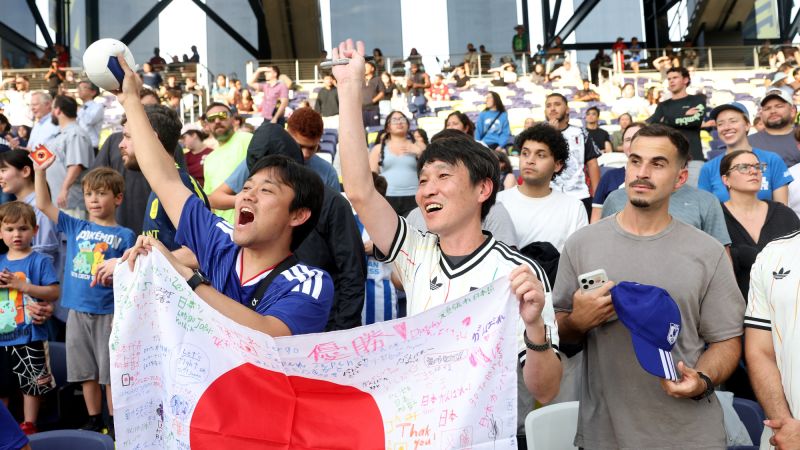
Sandego.net – The FIFA World Cup in 2026 has seen 48 teams competing, each with their own hopes and surprises. Among them, Japan’s fans stand out for their meticulous approach to cleanliness, a trait that has become a hallmark of their presence in international stadiums. From sweeping floors to picking up trash, their behavior often leaves other spectators in awe. This reputation isn’t accidental—it’s rooted in a cultural ethos that emphasizes order, respect, and communal responsibility. Even in the chaos of global sports events, Japanese supporters consistently uphold a standard of tidiness that feels almost superhuman.
Early Lessons in Cleanliness
Nozomi Morgan, an intercultural leadership expert and CEO of Michiki Morgan Worldwide, recalls her childhood move from Seattle to Tokyo as a formative experience. At the age of eight, she noticed how different the Japanese approach to cleanliness was from what she’d known in the United States. “One of the first things that really surprised me,” she said, “was the ritual of taking off your ‘outside shoes’ and switching to ‘inside shoes’ to keep the interior spaces pristine.” This simple act, she explained, was part of a broader cultural norm where even the smallest details were treated with care. Her parents, anticipating this, had packed her with a Zokin—a small cloth used for cleaning—before her first day at school. “Each child has their own rag, sewn from recycled fabric and labeled with their name,” Morgan added. “The first task was to clean the classroom, which felt less like a chore and more like a game of collective effort.”
“Each child has their own rag, several pieces of recycled fabric, hand-sewn together, with their names on it,” Morgan said.
These early lessons extended far beyond the classroom. By the time Morgan reached middle school, she was accustomed to cleaning everything from staircases to restrooms. “There’s a saying that captures this perfectly: ‘A bird that flies never leaves a trace,’” she shared. This phrase, often used to describe the Japanese people’s commitment to leaving no mark, reflects a mindset that values cleanliness as a reflection of one’s character. For Morgan, it was a subtle yet powerful reminder of the cultural expectations that shaped her life.
Adult Perspectives and Cultural Shifts
Hirokazu Tsunoda, a longtime attendee of Olympic Games and World Cups, initially questioned the necessity of such meticulousness. “I hated every minute of it,” he admitted, recalling his childhood frustration with classroom cleaning. “I used to think, ‘Why do we even have to do this? Japanese classrooms aren’t that dirty to begin with, and everyone uses the bins anyway.’” His early resistance, however, didn’t last. By the time he became an adult, he had come to appreciate the deeper meaning behind the practice. It wasn’t just about keeping spaces clean—it was about fostering a sense of shared duty and pride in communal environments.
“I resented it, I used to think, ‘Why do we even have to do this? Japanese classrooms aren’t that dirty to begin with, and everyone uses the bins anyway.’”
Tsunoda now sees the value in these habits, especially after witnessing the impact of Japanese fans at large events. Since 2008, he has been a fixture at stadiums, ensuring that no trace of litter remains. “It’s not a place where you can do whatever you like simply because you paid for a ticket,” he said. “For us, it’s a sacred space. If something is a passion you truly care about, you don’t want to leave the place that matters to you in a mess. So, you pick it up.” His actions have made him an unofficial ambassador for the clean-up culture, though he credits his own shift in perspective to a moment in his daughter’s school where he saw the benefits of maintaining order.
The Team’s Contribution to the Tidy Image
Japan’s commitment to cleanliness isn’t limited to their fans—it extends to the national team itself. Even in the high-stakes environment of the World Cup, the Japanese squad maintains a spotless locker room, a testament to their disciplined approach. During the 2018 and 2022 tournaments, the team’s presence was marked by a thank-you note and origami cranes, symbolizing gratitude and a sense of ceremony. This attention to detail has become a defining feature of their brand, setting them apart in a world where mess often accompanies excitement.
Winning or losing, Japan’s team leaves behind an impression of order. Makoto Hasebe, the captain of the 2018 squad, highlighted this during a press conference. “I am truly proud of our staff. The same goes for the supporters,” he said. “Since I usually live abroad and have had many opportunities to visit various countries with the national team, I often feel that there is no country with streets as clean as Japan’s.” His comments underscore the belief that this tidiness is a reflection of the nation’s values, both in daily life and during global events.
Global Impact and Changing Perceptions
The influence of Japanese fans on global stadium etiquette has grown significantly in recent years. At the 2022 World Cup in Qatar, a video of fans cleaning up after a thrilling comeback win against Germany went viral, capturing the essence of their dedication. FIFA praised the effort on social media, recognizing the impact of Japan’s culture on international audiences. “Around 500 stadium volunteers came together from all over the venue just to thank us,” Tsunoda said, reflecting on the moment. “That, to me, felt like a turning point.”
Tsunoda’s observations reveal a shift in how cleanliness is perceived. While some initially dismissed Japan’s habits as mere performance, others began to see them as a genuine reflection of cultural pride. “There are genuinely people out there who talk badly about the Japanese fans picking up trash at stadiums, saying things like ‘They just want the attention’ or ‘It’s only for show,’” he said. “But what I want to say to those people is: Just try it once.” His message resonates with others who have experienced the satisfaction of maintaining order in a shared space.
Legacy and Future of the Clean Culture
Tsunoda’s journey from skepticism to advocacy highlights the evolving role of Japan’s clean-up traditions. He noted that non-Japanese supporters are increasingly adopting these habits, often surpassing their own nationals in participation. “There are often more non-Japanese people helping out than Japanese ones,” he said. “And in those moments, I make a point of calling out loudly and praising them, ‘Thank you!’” This public recognition, he believes, reinforces the idea that cleanliness is a universal value, not confined to any one culture.
The story of Japan’s World Cup tidiness is more than just about the physical act of cleaning—it’s a mirror of societal norms and individual responsibility. From the early lessons of childhood to the disciplined practices of adulthood, this culture has shaped how the Japanese people interact with their environment. As Tsunoda pointed out, the pride in maintaining order is a collective effort, one that extends beyond sports to everyday life. Whether it’s a classroom, a stadium, or a street, the Japanese approach to cleanliness is a subtle but powerful reminder of their dedication to harmony and respect.
As the 2026 World Cup approaches, the legacy of Japan’s clean culture continues to inspire. Their fans and players have set a standard that others strive to meet, proving that even in the most chaotic moments, a shared sense of responsibility can create order. This phenomenon, once seen as unusual, has now become a benchmark for global sports events. And as more people experience the joy of cleaning up together, the message remains clear: when you care, you clean—and that care is a mark of character.