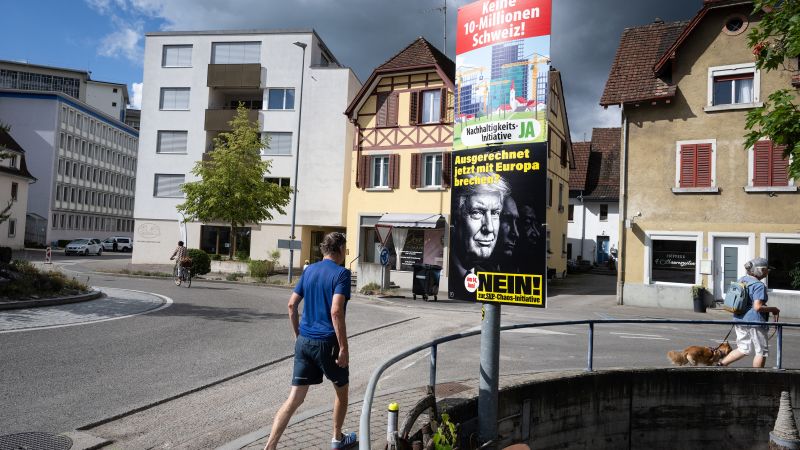
Swiss Voters Reject Population Cap in EU Referendum
Sandego.net – Swiss voters have rejected a proposal to impose a population cap, avoiding a potential rift with the European Union and signaling confidence in the nation’s economic strategy. The referendum, held on Sunday, saw a narrow defeat for the 10-million limit, with 55% of participants opposing the measure and 45% supporting it. The outcome, which echoes the 2016 Brexit vote, was hailed by business leaders as a victory for continued collaboration with EU partners, particularly after concerns arose about immigration’s impact on public services and housing.
Proposal and Its Implications
The initiative, championed by the right-wing Swiss People’s Party, sought to capping the country’s population at 10 million by 2050. If breached, Switzerland would have been obligated to suspend free movement of labor with the EU—a cornerstone of its trade and diplomatic ties. Government officials, including Justice Minister Beat Jans, stressed that the rejection safeguards Switzerland’s economic vitality and international standing. “This decision underscores the nation’s commitment to openness and stability,” Jans said in a joint press conference with President Guy Parmelin.
“With today’s decision, the electorate has sent out a signal of stability, openness, and reliability,” Jans stated during a joint press conference with President Guy Parmelin.
Support and Concerns
While the proposal faced strong opposition, it found traction among rural voters and political groups advocating for stricter immigration controls. Marcel Dettling of the Swiss People’s Party noted that the measure resonated with some citizens, though urban areas ultimately decided the outcome. “Not a single problem has been solved,” Dettling remarked. “We will continue to push for sensible immigration policies.”
Analysts highlighted the debate’s focus on balancing demographic growth with economic pressures. With nearly 28% of residents being foreigners, concerns over public strain and cultural integration drove much of the discussion. However, critics argue that the cap could undermine Switzerland’s ability to attract skilled labor, a key factor in its economic success. The EU Commission, which has seen faster population growth than neighboring countries, remained optimistic about the result.
Business Reactions and Economic Impact
Swiss business associations expressed relief at the referendum’s outcome, citing fears that the cap would restrict labor mobility and slow economic expansion. Economiesuisse, a major industry group, emphasized the importance of maintaining ties with the EU to secure a trade agreement finalized in late 2024. “The rejection of the cap is a win for Switzerland’s economic resilience,” the organization stated.
Voter Motivations and Campaign Dynamics
Public opinion was divided, with many voters weighing the long-term benefits of population growth against immediate challenges. Campaign materials underscored the symbolic value of the referendum, framing it as a test of Switzerland’s alignment with European values. A notable tactic involved linking the cap to global events, such as the 2025 trade tensions under President Donald Trump, which heightened anxieties about EU relations.
“Also there’s a feeling that in the current international environment, it’s not sensible for a small country to do this,” said Urs Bieri of GFS Bern, a polling firm.
Jan Hesselmann, a young teacher in Zurich, acknowledged the result but warned of lingering concerns. “This could fuel xenophobic sentiments,” he said, highlighting the proposal’s potential to deepen immigration debates across Europe.
Political and Social Aftermath
The referendum’s outcome marks a turning point in Swiss policy discussions, with analysts noting its broader implications for immigration governance. While the cap failed, it has opened new avenues for dialogue on population management. Sibel Arslan, a federal lawmaker from the Green Party, remarked that the debate has “legitimized talk about capping the population,” even if the immediate proposal was not approved.
Despite the defeat, the initiative reflects a growing European trend toward addressing migration challenges. Campaigns highlighted distinctions between skilled workers and asylum seekers, framing the cap as a tool to prioritize economic needs. The 59% voter turnout—higher than the usual 48%—suggests a deeply engaged electorate, with many weighing the trade-offs between growth and resource allocation.