
Iran names slain supreme leader’s son as successor, in a defiant message to Trump
Iran names slain supreme leader’s son as successor, in a defiant message to Trump
Continuing the Legacy of Power
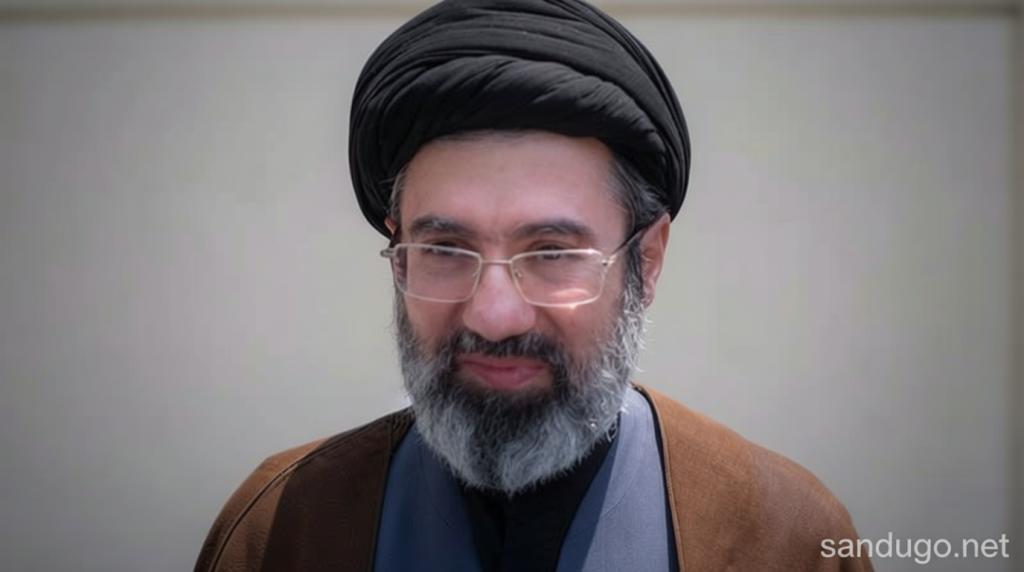
Following the 1979 revolution, which saw millions of Iranians overthrow the shah and dismantle the old regime, the tradition of father-to-son succession in Iran’s leadership seemed to fade. Yet, this has not been the case. Mojtaba Khamenei, the second son of the late Supreme Leader Ali Khamenei, has now been appointed to the position his father held for almost 40 years, following the leader’s death in a US-Israeli airstrike. This move has effectively transformed the Islamic Republic into a dynastic structure, a decision that has left many Iranians questioning its implications.
The 88-member Assembly of Experts, a key body in Iran’s political framework, has taken a decisive step by endorsing Mojtaba. This selection was met with an unmistakable signal: the Iranian leadership is unyielding in its resistance to American influence. Despite President Donald Trump’s characterization of Mojtaba as “unacceptable,” the regime’s actions reflect a commitment to maintaining its hardline stance, reinforcing the idea that it will not bend under external pressure.
Reinforcing Authority Through Media
Even before news of the appointment spread widely, state media began crafting Mojtaba’s public image. A four-minute documentary was released shortly after his elevation, highlighting his early life, his religious education, and his role in the Iran-Iraq war as a 17-year-old. The narrative emphasized his bravery and dedication to the revolution, positioning him as a natural heir to his father’s legacy. This effort aimed to counter concerns about his scholarly credentials, a key requirement for a supreme jurisprudent.
“Mojtaba may you die so you don’t assume the leadership role.”
The documentary also sought to preempt criticism by showcasing his involvement in global affairs and security matters. For Iran’s core supporters, it was a calculated attempt to instill confidence, portraying him as a leader capable of steering the country forward. The regime’s core institutions, including the president, parliament, and Islamic Revolutionary Guard Corps, swiftly pledged allegiance, reinforcing the stability of the system in the eyes of the public.
Behind-the-Scenes Influence
Mojtaba Khamenei, born in 1969, has long been part of his father’s inner circle. While he did not achieve the rank of Mujtahid, a title many view as essential for the Supreme Leader role, he maintained strong ties to the IRGC and the economic networks sustaining the regime. His influence, though often unseen, has been significant. In 2005, he played a critical role in supporting Mahmoud Ahmadinejad’s presidential campaign, mobilizing IRGC networks to challenge Rafsanjani, a rival of his father.
By 2009, when mass protests erupted over the re-election of Ahmadinejad, Mojtaba’s political acumen became evident. The demonstrations, which questioned the legitimacy of the vote, were met with a brutal crackdown. This event underscored his emergence as a key figure, with protesters even chanting a slogan expressing their fear of his leadership. His role in shaping the regime’s direction has grown steadily, culminating in his formal appointment after years of quiet preparation.
International Sanctions and Regional Ambitions
In 2019, Mojtaba faced US sanctions for his collaboration with the IRGC’s commander, accused of advancing his father’s “destabilizing regional goals and oppressive domestic policies.” This designation highlighted the extent of his involvement in Iran’s strategic initiatives. The recent US-Israel strike that killed his father, now known as the ninth day of the war with Iran, marked a pivotal moment in the country’s political landscape. Mojtaba’s elevation ensures the continuation of his family’s dominance, solidifying the hardliners’ grip on power as the Islamic Republic moves forward under his leadership.
