FIDE’s Suspension of Russia in Chess Sparks Ongoing Controversy
Sandego.net – The International Chess Federation (FIDE) has taken the unprecedented step of suspending Russia’s membership in the organization, a move that marks a significant shift in the global chess landscape. This decision follows a ruling by the Court of Arbitration for Sport (CAS), which supported Ukraine’s claim that Russia’s chess federation had exerted undue control over regions of Ukraine seized by Russian forces. The CAS’s March ruling mandated that Russia return administrative authority to five Ukrainian territories and cease organizing events in those areas within 90 days. When the deadline passed, FIDE announced the suspension, effectively barring Russia from its competitions, at least temporarily.
Russia, which has long been a powerhouse in chess, now faces its first major setback in decades. The suspension comes amid a broader geopolitical struggle, with FIDE’s leadership under Arkady Dvorkovich—Russia’s former deputy prime minister—under scrutiny. Critics argue that Dvorkovich’s actions, while appearing to align with the CAS decision, may have created new pathways for Russian players to remain competitive. FIDE’s statement clarified that adult Russian athletes will continue to participate under the organization’s banner, but junior players will be restricted to competing under the Russian flag. The most contentious clause, however, allows Russians to “may be eligible” for team events under a neutral flag, a provision that could enable their return to the chess Olympiad in Uzbekistan this September.
The suspension has sparked mixed reactions. Ukraine’s chess federation celebrated the decision as a “historic victory,” emphasizing its symbolic importance in the face of Russian influence. Yet, some observers question the long-term implications. Malcolm Pein, an English delegate to FIDE and a potential challenger in the upcoming presidential election, criticized the move as a political maneuver. “It’s designed to make it appear that the organization is complying with the CAS judgment when they palpably are not,” he told Reuters during a call. Pein highlighted concerns that the suspension might not fully sever Russia’s ties to the chess world, citing the possibility of legal challenges from Russian representatives.
“It’s not just about chess; it’s about a global trend of excluding Russian athletes, of cancelling them,” said Yaroslava, a 38-year-old chess player in Moscow’s summer competition area near the Bolshoi Theatre.
Russian state media, via TASS, quoted Andrei Filatov, head of the Russian Chess Federation, as stating that legal teams were reviewing the suspension and could seek reinstatement. Filatov’s comments reflect a determination to contest the decision, even as the chess community grapples with its consequences. The move also contrasts with a recent trend in global sports, where Russia’s athletes have been gradually reintegrated after years of sanctions. Initially barred due to a massive doping scandal, they were later allowed to compete as neutrals during the Olympics. Sports like swimming, fencing, and judo have since announced plans to lift these restrictions, signaling a shift toward inclusivity.
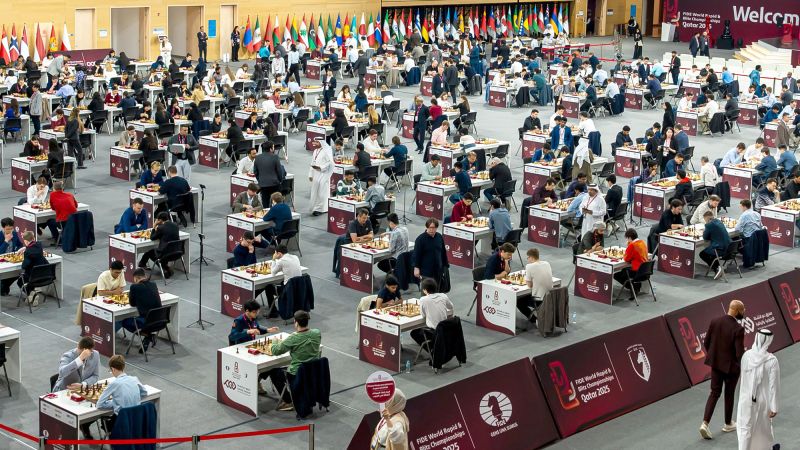
Russia’s chess legacy is deeply rooted in its cultural identity. From the bustling parks of Moscow to the quiet corners of rural towns, amateurs and professionals alike are often seen engaged in the game. This enduring tradition has produced some of the most iconic figures in chess history, including the legendary rivalry between Anatoly Karpov and Garry Kasparov, which dominated the sport from the late 1970s to the early 2000s. Their dominance was only briefly interrupted by Dutch champion Max Euwe in the 1930s and American prodigy Bobby Fischer in the 1970s. Today, however, Russia’s presence in the top tier of the sport is a fraction of what it once was. Only one Russian player currently ranks in the world’s top 20, a stark contrast to the era when Soviet and Russian grandmasters held the chess summit for nearly eight decades.
The recent suspension of Russia’s FIDE membership has been met with skepticism by some within the chess community. Alexei Lyslov, a local teacher in Moscow, dismissed the decision as a minor disruption. “Russians love chess. It’s a national sport,” he said. “I think this incorrect decision will not affect us very much.” His remarks highlight the emotional attachment many Russians have to the game, even as political tensions reshape its international framework. The situation also raises questions about the fairness of the suspension, with critics noting that Russian players are still permitted to compete under FIDE’s flag, ensuring their participation in elite tournaments.
Despite the suspension, the chess world remains divided. While FIDE asserts its authority, the ruling has opened a door to debate. The temporary exclusion of Russia from the Olympiad, a key event in the sport’s calendar, could lead to further legal action. Pein pointed out that several countries have publicly opposed FIDE’s decision, suggesting a lack of consensus on how to handle the situation. For now, the organization’s stance appears firm, but the possibility of a reversal remains alive. As the chess community watches, the question lingers: Will this suspension mark the end of Russia’s dominance, or simply a temporary pause in its influence?
The decision also underscores the evolving role of FIDE in global politics. With its leadership intertwined with Russian interests, the organization now faces the challenge of balancing sporting integrity with geopolitical pressures. The CAS’s ruling, while clear in its intent to support Ukraine, has left room for interpretation. FIDE’s allowance of Russian players in team events under a neutral flag, for instance, could be seen as a compromise rather than a definitive break. This nuance has fueled discussions about whether the suspension is a necessary step toward justice or a symbolic gesture that fails to address deeper issues.
Looking ahead, the chess world will need to navigate this new era of exclusion and inclusion. The suspension of Russia may not be the final chapter, as legal battles and political negotiations continue. For now, the game remains a microcosm of the broader conflict, with players, officials, and fans caught between tradition and change. As the next Olympiad approaches in Uzbekistan, the outcome of this dispute could shape the future of chess on the global stage.
A Brief History of Russian Chess Supremacy
Russia’s dominance in chess began in the early 20th century, when the Soviet Union emerged as a formidable force. The country produced a string of world champions, from Mikhail Botvinnik in the 1940s to the aforementioned Karpov and Kasparov. Their rivalry, which spanned over two decades, captivated audiences worldwide and set the standard for excellence in the sport. However, the 21st century has seen a shift in power, with Norway’s Magnus Carlsen leading the charge. His reign as world champion, from 2013 to 2022, marked a new era of global competition, though the shadow of Russian grandmasters still lingers.
The current landscape of chess reflects this transition. While Russia’s contributions to the game remain significant, its presence in the world’s top rankings has waned. The recent Candidates Tournament in April, for example, saw Russian player Andrei Esipenko finish eighth, a result that highlights the growing strength of players from India and China. These emerging stars, such as India’s Praggnanandhaa and China’s Ding Liren, have challenged the traditional supremacy of Russian and Soviet players, signaling a more diverse and competitive future for the sport.
Yet, the suspension of Russia’s FIDE membership has reignited debates about the sport’s role in political matters. Some argue that chess, as a neutral game, should remain untouched by conflicts, while others see it as a natural extension of global sanctions. The decision to suspend Russia has created a new chapter in the sport’s history, one that balances the need for political alignment with the integrity of competition. As the chess world adapts to this change, the legacy of Russian chess will continue to influence the game, even as new powers rise to prominence.