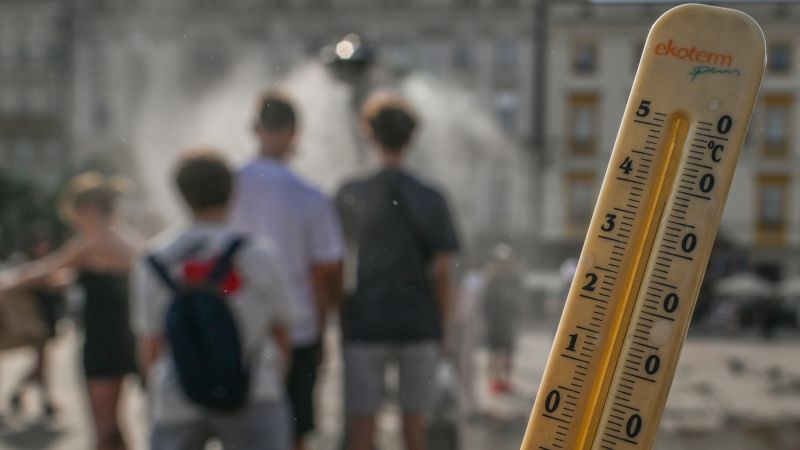
Why We Have So Many Ways to Measure Hot Weather
Why we have so many ways – As the summer heat intensifies across the Eastern United States, cities like Boston and Washington, DC are grappling with extreme conditions that challenge residents during outdoor events such as the July 4th celebrations. Officials are working tirelessly to provide cooling solutions, yet the question of how to define “hot” remains complex. With temperatures and humidity levels reaching unprecedented highs, understanding the various methods used to assess heat is crucial, as heat-related illnesses pose significant risks. These metrics not only help predict weather patterns but also determine the safety of individuals exposed to harsh conditions.
The Heat Index: A Common Metric
The heat index is one of the most widely recognized tools for measuring perceived temperature. It combines air temperature and relative humidity to estimate how hot it feels to the human body. This method is designed to reflect the discomfort and potential danger of heat, as higher values indicate more severe conditions. However, the calculation of the heat index relies on specific assumptions about human physiology and environmental factors, which may not always align with real-world scenarios.
“The heat index is based on a physiological model of human thermoregulation that assumes a healthy adult walking in the shade with the ability to keep the skin wetted with sweat,” said David Romps, a climate scientist at UC Berkeley who has closely studied the heat index. “For someone who, for whatever reason, has an impaired ability to regulate their body temperature, or is walking in the direct sun, or is exerting themselves more vigorously, that underlying model will be less representative,” he added.
One limitation of the heat index is its mathematical behavior under extreme conditions. According to Romps, the National Weather Service’s current system can misrepresent heat intensity when both temperature and humidity are at their peak. In such cases, the heat index may underestimate the actual heat conditions by up to 20 degrees Fahrenheit. This discrepancy highlights the importance of using additional metrics to capture the full scope of heat risk, especially in regions where temperatures have surged into the low triple digits and humidity remains high.
Wet Bulb Temperature: A Physiological Indicator
Another approach to evaluating heat effects is the wet bulb temperature, which focuses on the body’s ability to cool itself through evaporation. This measurement reflects the lowest temperature achievable by evaporating water, providing insight into how efficiently sweat can regulate body heat. As air temperature rises, the wet bulb temperature increases, and humidity plays a critical role in determining its value.
While the wet bulb temperature is typically lower than the actual air temperature, it serves as a key indicator of heat stress. Researchers have identified a theoretical threshold for human survivability at around 95 degrees Fahrenheit, but recent studies suggest this limit might be lower. For example, some experts argue that heat-related illnesses can occur at wet bulb temperatures as low as 86 degrees, depending on individual exposure and environmental factors.
Despite its usefulness, the wet bulb temperature has its own set of challenges. It does not account for solar radiation or wind speed, which can significantly influence how heat affects the body. This oversight means it may not fully capture the risks faced by people working in direct sunlight or engaging in physical activities. Nonetheless, it remains an essential tool for understanding the physiological impact of heat, particularly in urban areas where heat retention is a growing concern.
Wet Bulb Globe Temperature: A Comprehensive Measure
The wet bulb globe temperature (WBGT) takes a more holistic view of heat stress by incorporating multiple factors, including temperature, humidity, wind speed, and solar radiation. Unlike the heat index, which primarily focuses on air temperature and humidity, WBGT is designed to evaluate conditions across different environments. This makes it especially valuable for assessing risks in occupational settings, such as construction sites or agricultural fields, where prolonged exposure to heat is common.
For athletes and outdoor workers, WBGT offers a more accurate representation of heat intensity. It accounts for the additional heat absorbed from direct sunlight, which can raise the perceived temperature beyond what the heat index measures. This comprehensive approach has earned WBGT recognition as the most reliable metric for determining heat stress, particularly in high-stakes scenarios where safety is paramount.
Experts emphasize that while WBGT is more precise, it is not without its complexities. The calculation requires precise measurements of each variable, which can be challenging in dynamic environments. Moreover, the interpretation of WBGT values varies depending on the activity being measured. For instance, a WBGT reading of 80 degrees might be acceptable for a leisurely walk but dangerous for a marathon runner. These nuances underscore the need for tailored applications of heat metrics in different contexts.
As climate change drives more frequent and intense heatwaves, the demand for accurate heat measurement tools has grown. Each metric—whether the heat index, wet bulb temperature, or WBGT—offers a unique perspective on how heat impacts the human body and environment. By combining these methods, officials and researchers can better prepare for extreme weather events, ensuring public safety and minimizing health risks. The evolving nature of these tools reflects the broader challenge of adapting to a warming world, where understanding heat is no longer just about numbers but about real-life consequences.
With heatwaves becoming more common, the importance of accurate measurement systems cannot be overstated. The heat index provides a general sense of discomfort, but it may not capture the full danger for vulnerable populations. Wet bulb temperature highlights the body’s cooling mechanisms, while WBGT integrates all relevant factors to offer a more precise assessment. Together, these metrics form a critical framework for addressing the escalating risks of extreme heat, ensuring that both individuals and communities can respond effectively to the challenges posed by a changing climate.