Five Men Trapped in Laos Cave During Gold Hunt: Rescue Efforts Gain Momentum
Sandego.net – Their quest for gold led to a perilous situation as five men found themselves trapped in a flooded cave in Laos. After nearly a week of uncertainty, a breakthrough occurred when international divers braved the submerged environment to locate the survivors more than 260 meters from the entrance. This discovery reignited hope for their rescue, as the men had been in isolation, relying on limited resources and steady breath to endure the dark.
Rescue Team Navigates Challenges to Reach Trapped Miners
On Wednesday, divers made their way through the labyrinthine cave system, their headlamps illuminating the path as they approached the survivors. Norased Palasing, a Thai cave diving expert, conveyed reassurance to the men, who had been enduring the oppressive conditions. “You’re alive and supported now,” he said, emphasizing their collective strength. “The key is staying calm and conserving energy to wait for extraction.”
“You’re alive and supported now. The key is staying calm and conserving energy to wait for extraction.”
One of the trapped individuals, Ing, shared his emotions with the world via a video feed. “I miss Mom and Dad so much,” he said, his voice trembling. “We’re safe now, but we’re still waiting for the rescue team to bring us out.” His heartfelt message captured the personal significance of the operation, underscoring the human element behind the technical challenge.
Conditions in the Cave Test Rescuers and Survivors
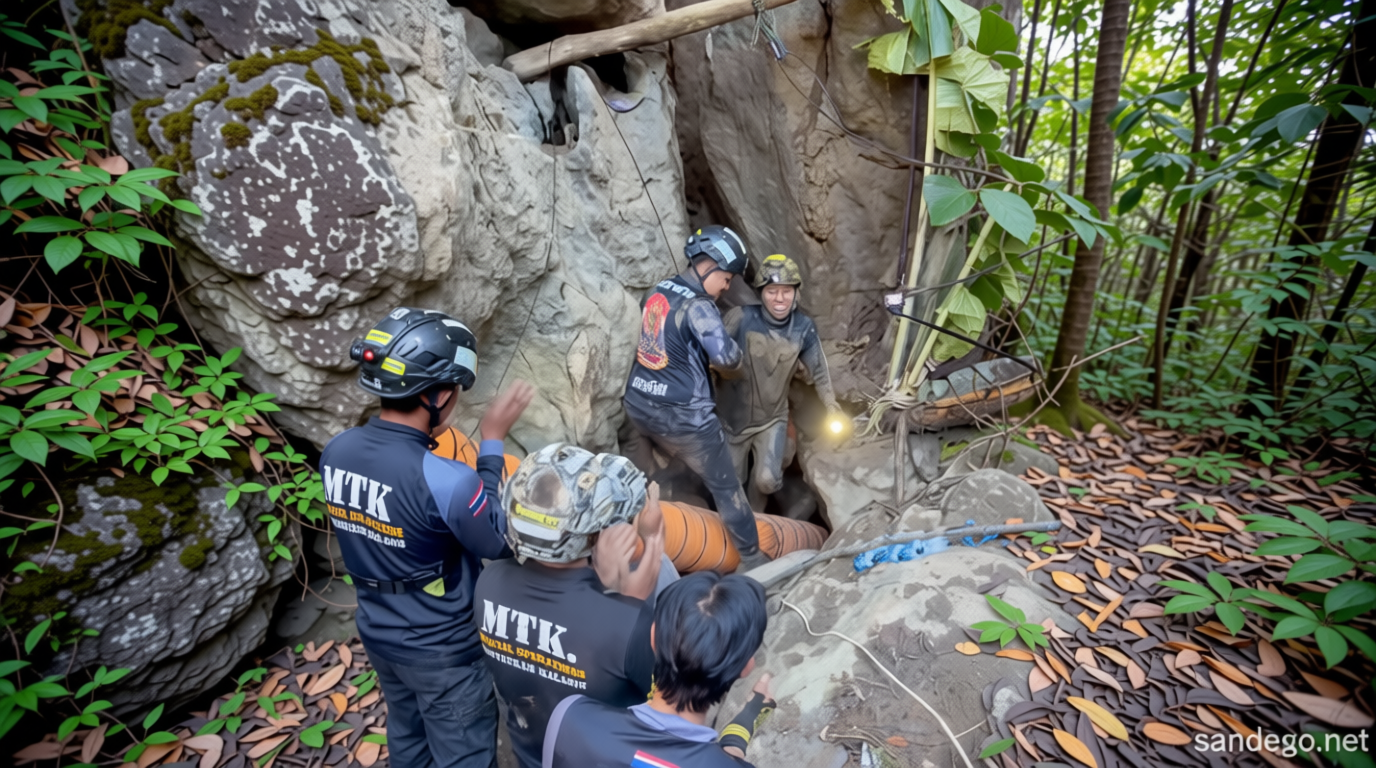
The search for the men unfolded under harsh conditions, with rescuers trekking through dense jungle to reach the cave, 55 kilometers east of Vang Vieng. The 260-meter journey was marked by physical and environmental obstacles, including narrow passages and underground streams. Kengkad Bongkawong and Finnish diver Mikko Paasi worked tirelessly, using cables and specialized gear to navigate the treacherous terrain.
The cave’s 45-degree entrance required divers to crawl on their stomachs, a physically demanding task that highlighted the resilience of both rescuers and survivors. Despite the strain, the men remained on an elevated ledge, which provided a consistent airflow and kept them alive. However, severe hunger and the risk of hydrogen sulfide exposure remained constant threats throughout the operation.
Historical Context and Modern Resilience
While the current rescue echoes the 2018 Thai cave incident, this time the focus is on five individuals rather than a group of children. The presence of hydrogen sulfide, a toxic gas from decomposing bat droppings, posed a critical challenge. Kengkad Bongkawong described the situation, noting that the gas had caused team members to faint, emphasizing the risks that still linger in the cave’s depths.
Despite these dangers, the survivors’ condition remains stable, thanks to their endurance and the strategic planning of the rescue team. Their ability to adapt to the environment, such as retreating to safer chambers when water levels rise, has been vital. This highlights the importance of preparation and teamwork, as the operation continues to unfold with high stakes and global attention.
Hope for a Swift Extraction
With water drainage progressing, the rescue team is optimistic about a timely extraction. Kengkad Bongkawong emphasized that the survivors’ knowledge of the cave’s layout has been crucial. “They know the safe points to retreat to, which helps them conserve energy,” he explained. “If we can fully pump the water, the next phase will be the final push to bring them out.”
As the operation moves forward, the combined efforts of international divers and local experts are central to the success. The keyword “they were trapped looking for gold” appears in the opening paragraph and is referenced in the context of the survivors’ ordeal. Their story serves as a reminder of the risks inherent in deep cave exploration, even as hope grows for their safe return.