Russia’s Overwhelming Manpower Advantage Against Ukraine is Beginning to Fade
Sandego.net – As the Ukraine war enters its fifth year, Russia’s initial edge in manpower is showing signs of weakening. The government has been actively promoting recruitment through high-value incentives, including bonuses and debt relief, but these efforts are yielding fewer results than anticipated. A report by Russian economist Janis Kluge highlights a 20% decline in military enlistments during the first quarter of 2026 compared to the same period in 2025, with indications that the trend continues. This shift underscores a growing challenge for Moscow as it seeks to maintain its war effort amidst economic and demographic pressures.
Financial Incentives and Strategic Shifts
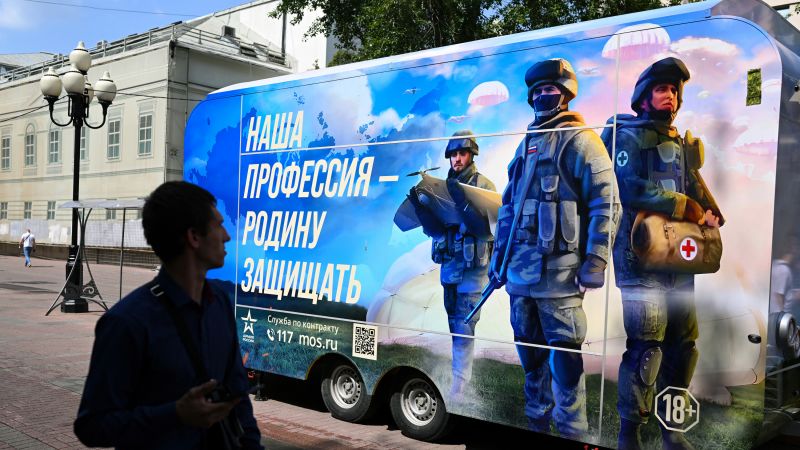
Ads on billboards and social media platforms are now offering young men in Russia substantial rewards—ranging from $80,000 in bonuses to $140,000 in debt forgiveness. These figures are more than the average annual salary, aiming to attract recruits by framing participation as a path to heroism or rapid citizenship. However, despite the tempting offers, the number of volunteers has dropped significantly. Analysts suggest that the economic strain of prolonged conflict, combined with reports of harsh conditions on the front lines, is dampening enthusiasm for joining the war effort.
“Rubles don’t fight wars,” remarked Nigel Gould-Davies, a Russia and Eurasia expert at the International Institute for Strategic Studies (IISS). He emphasized that this is the first war in Russian history where the state is actively paying citizens to fight rather than compelling them through conscription. This new approach is creating strain on the economy, as the cost of maintaining incentives rises while the availability of recruits declines.
The Kremlin’s strategy has long depended on attritional warfare, leveraging its vast population and robust military industry to sustain a prolonged campaign. Yet, as the war drags on, the economic impact is becoming more pronounced. The recent increase in oil prices, fueled by the Iran conflict, has provided a financial lifeline, but it’s not enough to offset the broader economic consequences. Gould-Davies noted that the state’s ability to generate revenue is being tested by the ongoing demand for resources to support the war.
Economic Fallout and Labor Crisis
The labor shortage caused by the war is now affecting multiple sectors of the Russian economy. With thousands of men of conscription age leaving the country or being deployed to Ukraine, industries reliant on a stable workforce are struggling. This includes the defense sector, where factories are operating at full capacity but still face difficulties in expanding production. Gould-Davies pointed out that the strain on labor is driving up wages, contributing to inflation and further complicating the economy’s recovery.
“The whole Russian economy is suffering from the most severe labor shortage in history,” Gould-Davies stated. “Labor is a scarcer input than physical capital or finance. It is also harder to increase,” he added. “With effort, it is possible to build a new factory or raise money. But the state cannot dictate the birth rate.”
Analysts warn that Moscow is increasingly resorting to desperate measures to compensate for the shortfall. Reports indicate that the government has already enlisted tens of thousands of former prisoners and is bolstering its ranks with North Korean soldiers. Additionally, incentives for immigrants to join the military are being expanded. A new recruitment campaign promises to eliminate up to $140,000 in debt for those who sign up, but this is only one of many strategies being explored.
The impact of the war on the labor market extends beyond military enlistment. Many Russians are avoiding conscription by migrating to other countries, leaving a critical gap in the workforce. This has forced the government to consider sourcing labor from abroad, potentially including regions like India, North Korea, and parts of Africa. Gould-Davies suggested that such measures could ease pressure on both civilian and military sectors, though they may come at a political cost.
Future Challenges and Unpopular Decisions
With the current recruitment rates, Moscow may need to implement more stringent policies to maintain its military strength. This could involve a second forced mobilization or restricting citizens’ ability to leave the country, especially men of conscription age. Such actions were met with strong opposition during the first partial mobilization, which led to widespread emigration and public unrest. Gould-Davies predicted that the Kremlin will soon face a tough decision: either intensify its demands on the economy and society or adjust its war objectives to match its diminished capabilities.
The strain on Russia’s economy is also influencing the treatment of soldiers. Reports of poor conditions on the front lines, including inadequate supplies and harsh living environments, have raised concerns among recruits. Some soldiers have reportedly bribed officers to avoid high-risk missions, highlighting the growing disillusionment with the war. This trend suggests that even with financial incentives, the willingness of citizens to serve is waning.
As the conflict continues, the question remains: what will motivate potential recruits to join? While the initial promise of bonuses and citizenship may have worked, the sustainability of these efforts is uncertain. Gould-Davies noted that the state’s ability to attract volunteers depends on its capacity to manage the economic burden, a challenge that is becoming more apparent. If the current incentives fail, the Kremlin may need to rely on compulsory measures, which could further strain public support and economic stability.
The labor shortage is also prompting discussions about the long-term effects of the war on Russia’s industrial output. With factories already working at maximum efficiency, the demand for additional workers is putting pressure on other sectors. This has led to a broader crisis, as businesses face difficulties in hiring and retaining staff. The situation is forcing the government to rethink its approach to economic planning, balancing the needs of the military with the demands of the civilian population.
Experts warn that the ongoing war may require more drastic adjustments. If recruitment continues to fall short, Putin may need to make decisions that are politically unpopular, such as increasing taxes or cutting public spending. These choices could further deepen the economic crisis and affect the quality of life for Russian citizens. Meanwhile, the Kremlin’s reliance on foreign labor and conscription highlights the evolving nature of the conflict and its impact on Russia’s domestic and international standing.
As the war progresses, the balance between economic sustainability and military necessity will define Russia’s next steps. The lessons from the first mobilization have been clear: compulsory measures can lead to significant social and economic consequences. For now, the Kremlin is navigating a complex landscape, where financial incentives are no longer sufficient to counteract the growing fatigue among the population. The challenge ahead will be to maintain the war effort without sacrificing the economy or public morale.