Iran’s Accidental President Survives War, Peace Challenge Ahead
A Turning Point in Leadership
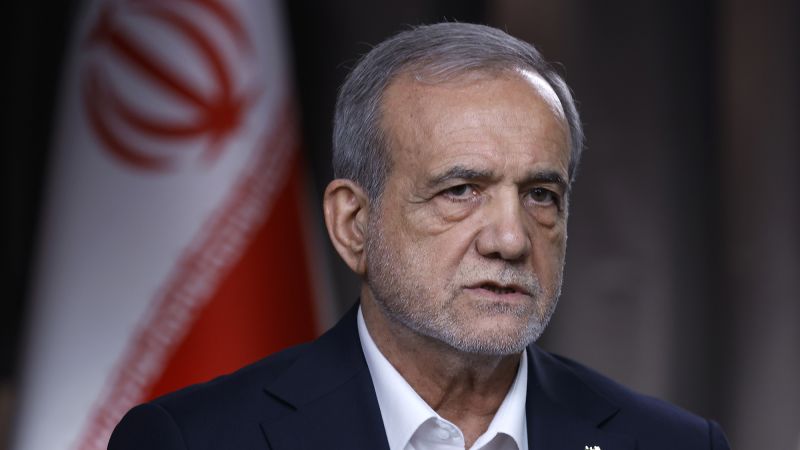
Sandego.net – Iran’s ‘accidental’ president has survived the war, marking a pivotal moment in the country’s political trajectory. After the unexpected death of Ebrahim Raisi in a helicopter crash, Masoud Pezeshkian assumed the presidency in 2024, initially perceived as a temporary replacement. Yet, his tenacity has allowed him to navigate the chaos of the ongoing conflict, including relentless missile strikes and economic turmoil. While his survival is now a fact, the question remains: can he guide Iran toward peace in the wake of war?
Symbolism in the Face of Struggle
During a tense meeting on Iran’s water crisis, Pezeshkian’s choice to remove his blazer and wear a short-sleeved polo shirt sparked debate. In a country where conservative dress codes are deeply ingrained, the gesture was seen as a bold attempt to project humility and connect with citizens. Critics from within the regime argued it undermined authority, while supporters viewed it as a sign of adaptability. This incident underscores how Pezeshkian’s leadership has become a blend of symbolic actions and pragmatic decision-making.
His survival through the war has not only solidified his position but also shifted public perception. Once a figure of doubt, he now holds a critical role in shaping Iran’s post-war recovery. However, the challenge of restoring stability and fostering peace looms larger than ever. The president must balance the demands of a divided nation, where hardline factions and reformist voices continue to clash.
Political Strategy and Survival
Experts suggest Pezeshkian’s election was a calculated move to prevent the ultra-conservative Saeed Jalili from gaining full control of the government. Voters, weary of rigid policies, opted for a leader who could maintain the status quo while offering a glimpse of moderation. This strategic choice has allowed him to retain some influence, even as Supreme Leader Ali Khamenei’s assassination intensified internal power struggles.
Despite his efforts, Pezeshkian’s authority remains tenuous. The regime’s conservative establishment often challenges his decisions, viewing them as concessions to Western pressures. Yet, his persistence has earned him respect among moderates and civil society groups, who see him as a potential bridge between Iran’s traditional values and its evolving needs. His ability to survive the war has positioned him as a key player in the nation’s political reconfiguration.
The Path to Peace
As Iran braces for the next phase of its crisis, Pezeshkian faces the daunting task of transitioning from wartime survival to peacetime diplomacy. Recent reports indicate a growing U.S.-Iran memorandum of understanding, though Iran’s official stance remains cautious. This development highlights the president’s role in negotiations, even as he contends with domestic unrest and the legacy of Raisi’s leadership.
“Pezeshkian’s wartime experience has strengthened his credibility, but peace requires more than endurance—it demands vision and compromise,” said Dr. Leila Samadi, a Middle East analyst at the University of Tehran. Her insight reflects the broader challenge: how to leverage his survival into a platform for lasting change amid a regime still resistant to reform.
Legacy and Uncertainty
The phrase “accidental president” now feels increasingly ironic. Pezeshkian’s leadership has been tested by missile attacks, protests, and the political vacuum left by Raisi’s death. Yet, his ability to remain in power suggests a deeper resilience. While his survival is celebrated by some as a sign of hope, others see it as a testament to the regime’s survival instincts. The path to peace remains uncertain, with Pezeshkian at the center of a nation’s shifting priorities.