Her Boss is in US Prison. How the Woman Running Venezuela Got Trump on Her Side
A Shift in Power and Strategy
Sandego.net – The interim government of Venezuela has described the current situation as a “new political moment,” a phrase that encapsulates the quiet transformation in the country’s leadership since President Nicolás Maduro’s arrest by US forces in early 2026. This event marked a pivotal turning point, prompting a major reorganization of the cabinet and the adoption of policies more favorable to international investors. Despite the upheaval, the core principles of the Chavista regime—rooted in the 27-year rule of Hugo Chávez—remain intact. The recent display of US military might at the embassy in Caracas, just three weeks ago, signals a new reality that would have seemed improbable a year prior. It underscores the adaptive strategies of a regime that has weathered decades of political turmoil, now navigating its survival with calculated diplomacy.
The Evolution of Venezuela’s Political Landscape
As the interim government grapples with the aftermath of Maduro’s capture, its approach has evolved. While anti-imperialist rhetoric has largely faded from public discourse, the political framework remains starkly unchanged. A concrete timeline for democratic elections is still elusive, and the country’s repressive apparatus persists, even as it faces scrutiny from global institutions. The United Nations’ International Fact-Finding Mission and the International Criminal Court’s investigation into possible crimes against humanity have not altered the status quo. Over 400 political prisoners, according to figures from the Foro Penal, continue to be held in custody as of May 25, a stark reminder of the regime’s resolve.
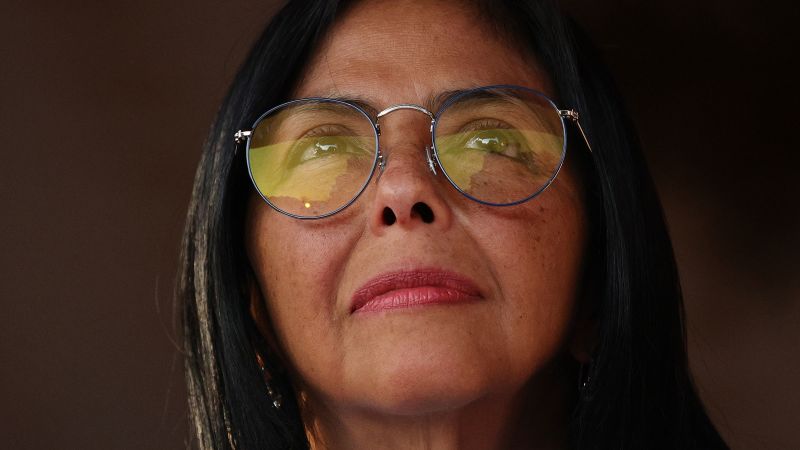
The interim leadership, under Delcy Rodríguez, has embraced a pragmatic strategy to maintain Chavismo’s grip on power. This approach mirrors that of her predecessors, who balanced resistance with cooperation. Rodriguez’s recent remarks at a meeting with pro-government journalists revealed her three-part plan: preserving the Republic’s peace, securing the release of hostages, and safeguarding political authority. “We must proceed with patience and prudence,” she emphasized, “with three very clear objectives, sisters and brothers.” These priorities reflect a calculated effort to appease the United States while retaining control over Venezuela’s destiny.
From Rhetoric to Alliance
Despite the initial tension following Maduro’s imprisonment, Venezuela’s acting president has found unexpected solidarity with US President Donald Trump. The alliance, though not fully publicized, has taken shape through coordinated actions. A joint operation targeting the notorious Tren de Aragua gang, designated a Foreign Terrorist Organization by the US, exemplifies this collaboration. Trump announced the death of Héctor Rusthenford Guerrero Flores—known as “Niño Guerrero”—during a military strike, calling it a “coordinated effort with our friends in Venezuela, with whom we are working very well.” The Venezuelan government acknowledged the operation’s success, attributing it to intelligence exchanges and technical support, a level of cooperation that was once unthinkable.
This partnership has allowed the US to leverage Venezuela’s resources, particularly its oil supply, in its broader military campaign in the Middle East. Five months after the initial meeting between Rodríguez and pro-government media, the interim leader has managed to secure her position, with Washington’s backing. The US benefits from Venezuela’s energy exports, a strategic advantage as it prepares for the November midterm elections. Meanwhile, Rodríguez’s administration continues to prioritize economic stability, revising Chávez-era laws to streamline oil production and reduce state royalties. These adjustments open the door for international companies to access Venezuela’s vast hydrocarbon reserves, aligning with US interests.
Strategic Concessions and Persistent Resistance
Rodríguez’s ability to maintain power amid US pressure highlights her skill in navigating complex political waters. While she has softened her stance on opposing the United States, the underlying goals of Chavismo remain steadfast. The interim government’s emphasis on “stabilizing Venezuela” and “recovery” has become the cornerstone of its policy, with the ultimate aim of transitioning to democracy framed as a secondary objective. Secretary of State Marco Rubio’s three-phase plan, which outlines this progression, has yet to produce significant results. Venezuela is currently in the second phase, focused on opening its resources to foreign investment, while the first phase—consolidating control—has already been achieved.
Although the US and Venezuela have moved closer, the country’s political prisoners remain a symbol of its ongoing repression. The government’s decision to allow some opposition figures to return to public life has been met with cautious optimism, but the presence of 400 detainees underscores the persistence of authoritarian practices. This duality—of opening political space while maintaining control—has become a hallmark of the interim administration’s strategy. By aligning with Washington, Rodríguez has managed to secure external support, yet the internal structure of power remains deeply entrenched.
A New Era of Diplomacy
The evolving relationship between Washington and Caracas has taken on a more pragmatic tone. While Maduro’s imprisonment has weakened the regime’s position, it has not eliminated its influence. Rodríguez’s leadership has demonstrated a willingness to make tactical adjustments, including collaborating with US intelligence to combat organized crime. The joint operation against Tren de Aragua, which has long plagued Venezuela’s security, is a testament to this new dynamic. Trump’s repeated praise for Rodríguez, calling her “doing a fantastic job,” reinforces the regime’s current alignment with the Trump administration.
Yet, this alliance does not signal a complete shift in Venezuela’s political trajectory. The interim government’s focus on economic recovery and stability, rather than immediate democratic reforms, suggests a longer-term vision. The US, in turn, appears content with its oversight role, ensuring that Maduro’s successors remain under its watch. This arrangement allows both sides to pursue their interests: the US gains access to Venezuela’s energy sector, while the regime retains its grip on power through strategic concessions.
As the situation unfolds, the question remains whether this partnership will lead to meaningful change. While the interim government has made progress in stabilizing the economy and reducing its isolation, the absence of a clear timeline for elections raises concerns. The Chavista regime’s ability to endure, despite external pressure, highlights its resilience. For now, the balance of power in Venezuela seems to favor a pragmatic approach, with Delcy Rodríguez at the helm of a regime that has adapted to the new political landscape. The interplay between resistance and cooperation continues, shaping the future of a country at the crossroads of history and modernity.
Quotes from Key Figures
“We must proceed with patience and prudence, with three very clear objectives, sisters and brothers. The first is to preserve the peace of the Republic, the second is to rescue our hostages, and the third is to preserve political power.”
— Delcy Rodríguez, Minister of Communication and Information
“Delcy Rodríguez is doing a fantastic job.”
— Donald Trump, US President
This collaboration between the US and Venezuela’s interim government has created a unique political alliance, one that blends resistance with pragmatism. As the country moves forward, the success of this partnership will depend on whether it can achieve its stated goals without compromising the principles that have defined Chavismo for decades. For now, the survival strategy of the regime remains intact, with Rodríguez at the forefront of a leadership that has learned to navigate the tides of international politics.