Ex-South Korean President Yoon Suk Yeol Faces 30-Year Jail Term for Pyongyang Drone Scheme
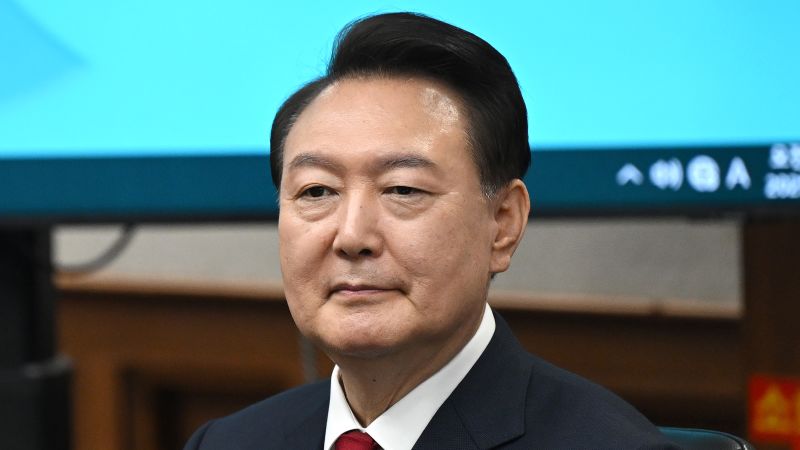
Sandego.net – South Korea’s judicial system delivered a landmark verdict on Friday, sentencing former President Yoon Suk Yeol to 30 years in prison for his alleged role in a military drone operation targeting Pyongyang. The Seoul Central District Court convicted Yoon of abuse of power and aiding the enemy, citing evidence that he had orchestrated a covert plan to deploy drones across the border as a strategic move to justify his failed December 2024 martial law declaration, according to Yonhap News. This decision marks the latest chapter in the legal battles surrounding Yoon, a former top prosecutor who now stands accused of manipulating national security protocols for political gain.
The court’s ruling was based on documents and testimonies that revealed Yoon’s involvement in a conspiracy to use drones as a pretext for his martial law order. Prosecutors argued that the operation, launched in October 2024, was designed to create a crisis scenario that would pressure North Korea into concessions, thereby bolstering Yoon’s narrative of urgency. The drones, which were flown over the border, were intended to simulate an attack, giving Yoon a rationale to impose martial law and consolidate control. This strategy, they claimed, was a calculated effort to destabilize the political landscape and justify his leadership’s actions under the guise of national defense.
“The drone incursion was not a standalone event but a deliberate act to undermine the stability of the region and justify his unilateral declaration of martial law,” said a prosecutor in the case, as reported by Yonhap.
Yoon’s legal team, however, contested the charges, asserting that the operation was not his initiative. They claimed he had no direct order or approval for the drone mission, which they described as an independent response to North Korea’s repeated balloon launches carrying trash across the border. These balloons, they argued, were a genuine threat to South Korea’s environment and public morale, and the drones were used to address the issue, not as a tool for political manipulation. The defense emphasized that the martial law declaration was a separate decision, made without prior coordination with the drone operation.
The court, however, dismissed these arguments, stating that Yoon’s involvement in the drone plot began from its inception. The ruling underscores the government’s contention that the former president’s actions were part of a broader strategy to seize power and justify his authority. Prosecutors had sought a 30-year sentence for Yoon in April, citing the gravity of his alleged offenses and the potential long-term consequences of his leadership’s decisions. The court’s decision to impose the same sentence aligns with their stance, highlighting the consistency in the legal proceedings against Yoon.
Yoon’s case is part of a series of convictions that have followed his ousting from office. In February, he was already handed a life sentence for leading an insurrection linked to the martial law attempt, which had sparked intense political upheaval in South Korea. The life sentence was based on evidence that Yoon had played a central role in the plot to seize control of the country through emergency powers. The new 30-year term, while less severe than life, adds to the cumulative punishment against him and reflects the court’s view of his actions as a persistent threat to national stability.
Yoon’s removal from office in 2024 came after the Constitutional Court upheld his impeachment, which was triggered by allegations of corruption and abuse of power. His downfall marked a pivotal moment in South Korea’s political history, leading to a snap election that saw the liberal candidate Lee Jae Myung emerge victorious. The transition to Lee’s administration has brought new dynamics to the country’s governance, with the former president’s legal troubles serving as a backdrop to the ongoing political realignment.
The drone operation, which unfolded in October 2024, has been scrutinized for its dual purpose. While the government framed it as a defensive measure, critics argue it was a calculated move to create a crisis and justify Yoon’s martial law decree. The court’s findings suggest that the drones were not just a response to North Korean aggression but a key component of a larger political strategy. This has raised questions about the balance between national security and executive overreach, with some analysts calling Yoon’s actions a textbook case of using military assets to bolster political ambitions.
Yoon’s legal team has maintained that the drone mission was a separate initiative, unrelated to his martial law declaration. They pointed to phone notes that allegedly outline the plan to bait Kim Jong Un with the drones, which Yoon denied. According to the documents, the operation was intended to demonstrate South Korea’s military readiness and pressure North Korea into negotiations, rather than serve as a pretext for authoritarian measures. However, the court found these justifications insufficient, emphasizing that the drones were used to manipulate the situation and gain political leverage.
The sentencing comes amid heightened tensions between South Korea and North Korea, with the drone plot being seen as a symbolic act of defiance. The incident has reignited debates about the role of the South Korean military in the country’s political strategy and the potential for covert operations to influence foreign policy. As Yoon faces the prospect of a lengthy prison term, his case has become a focal point for discussions on accountability, executive power, and the rule of law in South Korea.
Yoon’s conviction also signals a shift in the legal landscape, with the judiciary taking a firm stance against his leadership’s actions. The 30-year sentence for the drone-related charges, combined with the life sentence for the insurrection, represents a comprehensive judgment of his tenure. Legal experts note that the dual sentences highlight the gravity of his alleged offenses, which span both domestic and international dimensions. The former president’s ability to appeal the ruling remains a possibility, but the decision has already sent a strong message about the consequences of his actions.
As the political fallout continues, Yoon’s case is being watched closely for its implications on South Korea’s future governance. The judiciary’s willingness to impose strict penalties for perceived abuses of power reflects a broader effort to restore public trust in institutions. The drone operation, once a covert scheme, now stands as a symbol of the former president’s influence over national affairs. With Yoon already in custody, the appeal process will likely unfold in the coming weeks, further shaping the narrative of his leadership and its legacy.
The ruling also underscores the complexities of South Korea’s relationship with North Korea. While the drones were a South Korean initiative, the government’s actions have been interpreted as an attempt to provoke North Korea into a defensive posture, thereby securing leverage in diplomatic negotiations. The court’s decision to tie the drone plot to the martial law declaration suggests a broader pattern of political maneuvering, with Yoon’s actions seen as a means to control both domestic and international narratives. This has sparked a renewed debate about the balance between security and democracy in the country.
With the former president’s legal challenges intensifying, the case has become a focal point for political discourse. The 30-year sentence for the drone-related charges adds to the existing life sentence, creating a narrative of cumulative punishment. The public’s reaction to the verdict has been mixed, with some viewing it as a necessary step to hold Yoon accountable, while others argue that the charges are politically motivated. As the legal proceedings continue, Yoon’s fate will remain a defining moment in South Korea’s political history.