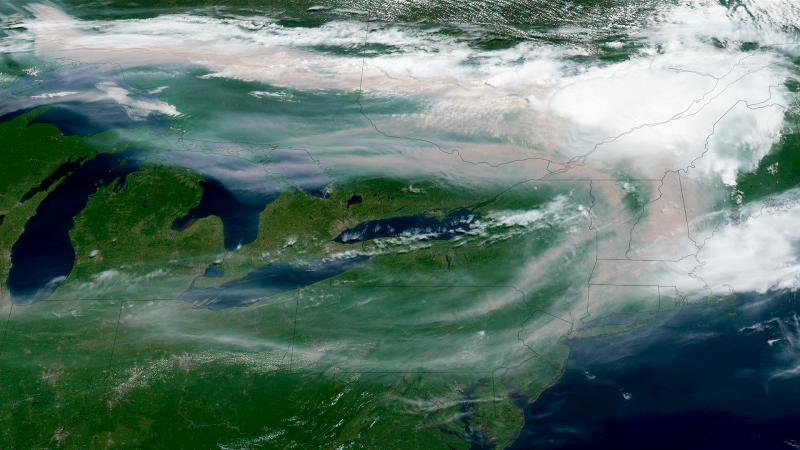
Dangerous Smoke from Canadian Wildfires Heads to U.S. Cities
Sandego.net – Dangerous smoke from Canadian wildfires is moving into the Great Lakes and Northeast, affecting millions of Americans. Thick clouds of smoke originating from fires in Canada are now cascading across the border, threatening air quality for over 100 million residents throughout the Midwest and Northeast regions. While smoke has already been problematic during this summer in western, plains, and midwestern states where domestic fires have consumed more than 3.6 million acres, the current situation involves different origins. The denser smoke heading toward eastern cities including New York and Washington, DC comes from fires burning to the north in Canada.
Record-Breaking Conditions Fuel the Smoke Migration
Canadian wildfire activity this season has not reached the extreme levels seen in 2023, yet the combination of Ontario blazes and a persistent heat dome across the central United States creates challenging conditions. A record-breaking heat dome currently sits over the central portion of the country, with air flowing clockwise around these large, slow-moving high-pressure systems. The northern edge of this week’s dome is positioned perfectly over northern Minnesota and southern Ontario, where wildfires continue to rage. This strategic placement ensures smoke will travel eastward and southward, directly into populated areas of the Midwest and Northeast.
Until recently, similar heat domes have occurred from the West Coast to the Northeast, but none have been positioned correctly to transport Canadian smoke southward. The northern edge of this week’s heat dome is perfectly placed over northern Minnesota and southern Ontario, where wildfires rage. This placement means smoke will flow east and south, right into parts of the Midwest and Northeast.
Health Impacts and Air Quality Alerts
Wildfire smoke contains dangerous, tiny pollutants called PM2.5 that can travel deep into the lungs or enter the bloodstream when inhaled. The minuscule particles can lead to breathing problems like bronchitis and cause inflammation that aggravates diabetes, heart disease and other health conditions. Much of Michigan, Minnesota and Wisconsin are under air quality alerts due to smoke over the next few days, and the National Weather Service has warned that smoke could become an air quality concern in Chicago later this week.
A weather pattern change in coming days will cause lingering smoke and additional plumes to sink to the surface Wednesday and Thursday bringing unhealthy air quality from the Upper Midwest to New England. People with lung or heart disease, children and older adults are especially at risk for smoke-related illness. The NWS advises people avoid smoke by limiting outdoor activities and keeping windows closed overnight.
Historical Context and Future Outlook
This time three years ago, records were being broken as 4,300 fires had already burned 25 million acres across Canada. In June 2023, smoke consumed the New York City skyline as northerly winds pushed a wall of wildfire smoke from Quebec into the Big Apple. The culprits were a dominant high pressure system in the Hudson Bay and a storm system over Atlantic Canada. Together, they funneled smoke into the Midwest and Northeast. Both systems were stagnant, keeping the smoke in place for about four days.
2023’s smoke event was so far-reaching, a study from last year estimates more than 350 million people were exposed to daily wildfire smoke-induced air pollution. Fortunately, wildfire activity in Canada started later compared to that record-setting year, making it unlikely this year’s smoke will be as pervasive.
Smell smoke this morning? Its coming from a wildfire outbreak in Ontario. While it should not impact air quality much today, smoke at the surface could increase Wednesday into Thursday, potentially reducing visibilities and air quality. High temperatures may also be limited.
The only silver lining the smoke brings is that it could dampen some of the heat. Smoke blocks sunlight, which would be welcome news for many parts of the Northeast expected to see high temperatures in the coming days. With several months left in wildfire season, the door will remain open for more Canadian smoke plumes to migrate south.
Planet-heating fossil fuel pollution is increasing the chance of prolonged smoke seasons as it tips the odds that extreme wildfire seasons like 2023’s — Canada’s worst season on record — won’t remain an outlier for long. In Canada, more than 3,000 fires have burned nearly 4.5 million acres this summer, with a dozen blazes flaring up in Ontario in recent weeks, filling the skies with smoke that is starting to drift south, like it did in an extreme way in 2023.
A first round of smoke is already floating over a large area from Chicago to Boston. This smoke has largely stayed higher