Consumer Sentiment Rises for the First Time in Three Months
Sandego.net – Consumer confidence appears to be on the mend after hitting a historic low driven by wartime price surges. The University of Michigan’s latest survey of American households, released on Friday, revealed a notable uptick in sentiment, climbing 9% to a preliminary reading of 48.9 early this month. This marks the first positive shift since February, when the United States and Israel’s conflict with Iran triggered a spike in global energy costs, sending sentiment plummeting to unprecedented levels. The recent recovery, however, seems tied to a decline in gasoline prices over the past weeks, offering a glimmer of hope amid ongoing economic turbulence.
A Surge in Optimism Amid Volatile Times
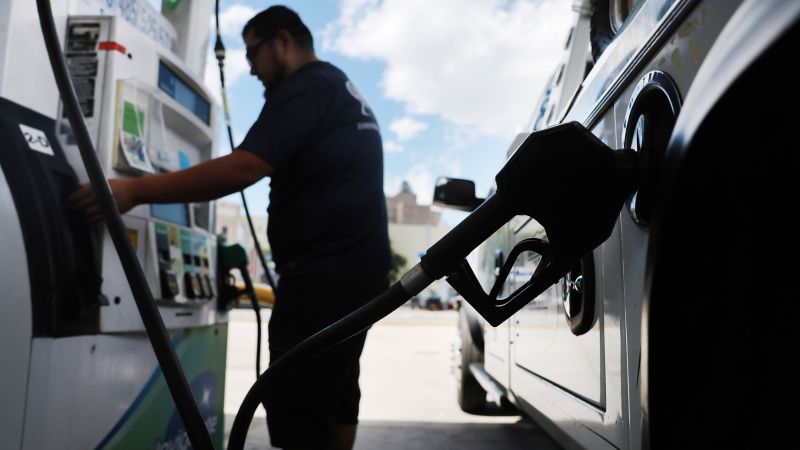
Joanne Hsu, director of the surveys, highlighted the relief consumers are feeling as fuel costs eased. “This month, consumer sentiment ticked up… with consumers experiencing some relief due to the early-month easing in gasoline prices,” she noted in a statement. The drop in gas prices has played a pivotal role in stabilizing perceptions of the economy, which had been heavily influenced by the sharp rise in energy costs following the war. For lower-income households, this change is especially significant, as fuel expenses represent a larger portion of their budgets.
“We see a lot of resilience in consumers that maybe have gotten a little bit more accustomed to the volatile times that we live in, and a lot of price uncertainty,” Charlie Wise, head of global research and consulting at TransUnion, explained in an interview with CNN.
TransUnion’s quarterly Consumer Pulse Survey, published earlier this week, further underscores this trend. While optimism has remained largely unchanged compared to a year ago—when President Donald Trump’s sweeping “Liberation Day” tariffs sparked widespread concern—pessimism has seen a slight reduction. The data suggests that consumers are adapting to prolonged periods of economic instability, even as inflation remains their primary worry. This resilience, according to Wise, reflects a growing familiarity with the unpredictable nature of recent years.
Historical Context of Downturns
Consumer sentiment has been in a prolonged slump, with the latest uptick breaking a streak of declines spanning over a year. The downward spiral began in late 2020, when the pandemic-induced recession disrupted the economy after a record-breaking expansion. Since then, successive shocks—such as post-pandemic inflation, which reached a peak of 9.1% in June 2022, and the standoff over the debt ceiling in 2023—have compounded the strain. The most recent setback came in 2025 with Trump’s announcement of broad tariffs, reigniting fears about rising costs and eroding consumer confidence.
Historically, major economic events have left deep marks on sentiment. The 2008 Great Recession, the 9/11 attacks, and the pandemic all contributed to record lows in consumer morale. Even the inflationary pressures of the post-World War II era paled in comparison to the current levels. The recent surge in sentiment, though encouraging, is still modest and may not signal a full rebound unless price stability is maintained for an extended period.
The Role of Gas Prices in Shaping Perception
Gasoline prices have been a central factor in shaping consumer attitudes, with their fluctuations directly impacting daily expenses and overall economic outlook. The war with Iran intensified this pressure, causing energy prices to soar and pushing sentiment to a historic low. However, as prices have gradually declined in recent weeks, the burden on households has eased, allowing for a tentative recovery. The University of Michigan’s findings align with this observation, though the improvement remains fragile.
The recovery is also linked to the easing of supply chain bottlenecks, which have long contributed to inflationary pressures. While the immediate effects of the Iran conflict were severe, the stabilization of gas prices suggests that consumers are beginning to see a path forward. Nevertheless, the survey’s director warned that the rebound may not be sustained without further declines in energy costs. This could require oil tankers to navigate the Strait of Hormuz without disruptions, a critical bottleneck where one-fifth of the world’s oil flows.
Long-Term Impacts of Persistent Inflation
Inflation, currently at its highest level in three years, continues to dominate consumer concerns. According to the TransUnion survey, 50% of respondents identified inflation as their top financial worry, a slight increase from 47% in the previous quarter. Despite this, the data indicates that people are increasingly accepting of price volatility as a normal part of the economic landscape. Kevin Warsh, an economic commentator, noted that this shift may not be due to complacency but rather a growing awareness of the realities of modern economic challenges.
“A cynic might say they’re getting numb to it, but I think more realistically they’re getting used to the realities that price stability is going to be a little out of normal balance for a continuing amount of time,” Warsh said.
The pandemic marked the beginning of a new era of economic uncertainty, setting the stage for a series of shocks. The subsequent surge in inflation, coupled with the war in Ukraine, the debt ceiling crisis, and Trump’s tariffs, created a perfect storm that eroded consumer confidence. However, the recent uptick suggests that the public is beginning to adapt. As Warsh pointed out, the 2022 inflation spike—reaching its highest level in four decades—has conditioned people to expect rising prices, reducing the psychological impact of sudden increases.
Pathways to Sustained Recovery
For consumer sentiment to sustain its upward trajectory, the economy must remain stable with low inflation for a prolonged period. This would require consistent reductions in energy costs, which, as of now, are still fluctuating. The success of the latest recovery hinges on whether the price shocks of recent years can be mitigated. If gas prices continue to decline, it could signal broader economic stability, giving consumers the confidence to invest and spend more freely.
Yet, the road to recovery is not without challenges. The United States faces ongoing pressures from global conflicts, domestic policy debates, and supply chain disruptions. While the immediate effects of the war with Iran have eased, the broader implications of geopolitical tensions could resurface. Additionally, the lingering effects of the pandemic and inflationary pressures mean that the market’s confidence may remain cautious. Nonetheless, the slight increase in sentiment offers a sign that consumers are gradually regaining their footing after years of economic upheaval.
Looking ahead, the balance between inflation and economic growth will determine the long-term health of consumer morale. If the Federal Reserve can maintain its current rate-hiking strategy without triggering another recession, and if global conflicts continue to ease, the trend of improving sentiment may persist. However, any new shocks—whether geopolitical or fiscal—could once again disrupt this fragile recovery. For now, though, the data suggests that Americans are starting to see the light at the end of a long tunnel of uncertainty.