A Deep-Sea Discovery of Historic Proportions
Sandego.net – During a recent deep-sea expedition, a team of researchers uncovered a massive graveyard of whales, where bones are not the only remnants. The site, located in the Diamantina Fracture Zone of the southeastern Indian Ocean, is one of the largest known accumulations of whale remains, with hundreds of fossilized skeletons spread across a stretch of approximately 746 miles (1,200 kilometers). This discovery, reported in the journal *Nature*, challenges previous assumptions about the scale and continuity of whale burial sites in the deep ocean.
The Mechanics of a Whale Fall Ecosystem
While the graveyard is teeming with ancient remains, it is far from lifeless. In fact, the site is home to a thriving community of deep-sea organisms that rely on whale carcasses for sustenance. Known as “whale falls,” these decaying bodies create microhabitats that sustain unique ecosystems, including chemosynthesis-based life forms. Chemosynthesis allows certain species to convert chemical energy from the seafloor into food, a process critical for survival in the crushing darkness of the abyss.
“Until now, whale falls were mostly based on large cetacean carcasses, mostly baleen whales,” said Olivier Lambert, a vertebrate paleontologist at the Royal Belgian Institute of Natural Sciences. “Here the authors show that beaked whale carcasses can play a similar role in some specific deep oceanic regions.”
These ecosystems are further enriched by scavengers such as bone-eating worms, snails, and long-armed brittle stars. In some areas, scientists observed recent carcasses still clinging to living organisms, indicating that the process of decomposition and nutrient cycling is ongoing. The presence of both modern and ancient remains suggests a continuous cycle of whale death and burial spanning millions of years.
The Expedition That Unveiled the Necropolis
The discovery was made possible through the use of advanced submersibles, including the robotic vessel *Fendouzhe* (“Striver” in Chinese). This technology, part of the Global Hadal Trench Exploration Program, allowed researchers to explore regions of the ocean floor that are otherwise inaccessible. The submersible’s robotic arm was used to collect 43 fossil specimens, alongside samples of scavengers, using a specialized device called a slurp sampler.
Dr. Peng Zhou, co-lead author of the study and a researcher at the Institute of Deep-Sea Science and Engineering in Beijing, described the initial findings as a “complete surprise.” The team’s dives, conducted between February and March 2023, revealed an astonishing density of remains—some areas holding roughly 760 skeletons per square kilometer. “Far higher than anything previously documented,” Zhou noted, highlighting the significance of the site’s scale.
According to estimates, the graveyard could contain over 10 million whale remains, with even more likely buried beneath layers of sediment. The sheer volume of bones, combined with their age, provides a window into the evolutionary history of marine life in this region. Fossils from the site date back at least 5 million years, indicating that the same location has been a resting place for whales for an extended period.
Geological Origins of the Diamantina Zone
The Diamantina Fracture Zone, situated southwest of Australia, is a geological formation that emerged during the separation of the Australian and Antarctic landmasses, a process that began around 30 to 40 million years ago. This tectonic activity created a network of ridges and trenches, now home to some of the deepest parts of the ocean. The region’s depth ranges from 15,000 to 23,000 feet (5,000 to 7,000 meters), making it a challenging environment for exploration.
Despite these challenges, the site’s significance justifies the effort. The team’s 32 dives provided unprecedented access to this hidden world, revealing not only the graveyard’s vastness but also its ecological complexity. The presence of modern whale falls, such as the five recently observed carcasses, underscores the site’s dual role as a historical archive and a living ecosystem.
The Mystery of Beaked Whales
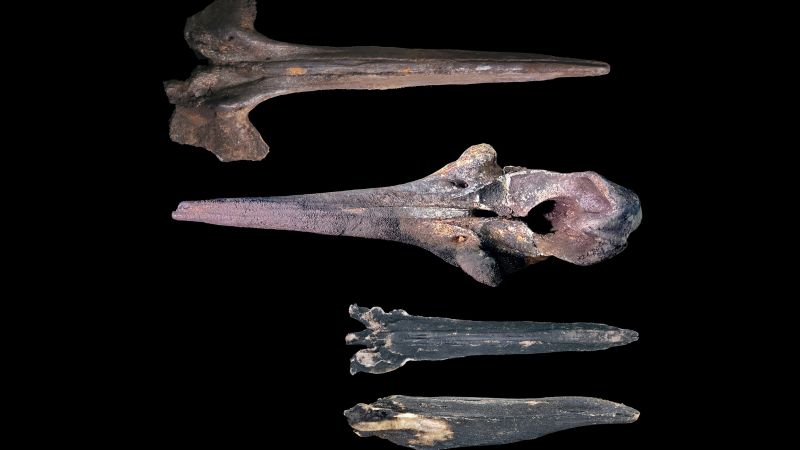
Most of the fossils in the graveyard belong to beaked whales, a group of deep-diving cetaceans with elongated, dolphin-like skulls. These creatures rarely surface, making their behavior and life cycles poorly understood. Their deep-sea habits mean that their remains are more likely to sink into the abyss, contributing to the graveyard’s accumulation over time. The discovery of a previously unknown species among the fossils adds to the intrigue of the site, suggesting that the Diamantina Zone has been a significant habitat for these enigmatic animals.
Beaked whales are known for their ability to dive to extreme depths, often exceeding 3,000 feet (900 meters). This behavior, combined with their elusive nature, has led to gaps in scientific knowledge. The graveyard’s location in a region with high beaked whale populations provides a rare opportunity to study their history and ecological impact. “It isn’t entirely surprising to learn that a graveyard full of whale bones has been accumulating for millions of years,” Lambert remarked, noting the area’s natural suitability for such a phenomenon.
Broader Implications for Marine Research
The findings from the Diamantina Zone may reshape our understanding of deep-ocean ecosystems and their role in carbon cycling. Whale falls are believed to contribute significantly to nutrient distribution in the abyss, supporting life in otherwise barren environments. The discovery of new species within these ecosystems emphasizes the need for further exploration of the hadal depths, where life persists in conditions that remain largely uncharted.
Moreover, the site’s continuity over millions of years raises questions about the long-term stability of marine habitats. As climate change and human activity alter ocean conditions, studying such ancient sites could provide insights into the resilience of deep-sea ecosystems. The collaboration between international teams, such as the one involving the Chinese Academy of Sciences, highlights the growing importance of global partnerships in uncovering Earth’s hidden corners.
“Although this is a truly massive whale graveyard, reaching it is extremely difficult due to the great depth,” Zhou explained. “Yet the sight of the fossilized remains and the living organisms surrounding them was nothing short of astonishing.”
The expedition also shed light on the technological advancements enabling such discoveries. The *Fendouzhe* submersible, which previously reached the Challenger Deep in the Mariana Trench, demonstrated the capability to navigate extreme depths. Its use in the Diamantina Zone underscores the importance of innovation in marine science, allowing researchers to access environments once thought impenetrable.
As the study authors emphasize, the graveyard is more than a repository of bones—it is a dynamic ecosystem that has sustained life for millennia. The combination of ancient fossils and modern scavengers suggests that the deep ocean is a critical player in the Earth’s biological and geological processes. This discovery not only expands our knowledge of whale biology but also underscores the importance of protecting these fragile habitats for future research.
The Diamantina Zone’s significance extends beyond its immediate findings. It serves as a testament to the interconnectedness of tectonic activity, marine life, and sedimentation processes. By studying such sites, scientists can piece together the environmental changes that have shaped the oceans over time. The graveyard’s role in nurturing deep-sea communities also highlights the adaptability of life in extreme conditions, offering clues about the potential for ecosystems on other planets.
For now, the site remains a mystery, with more than 10 million remains yet to be cataloged. The expedition’s success in uncovering this hidden world marks a pivotal moment in deep-sea exploration, proving that even the most remote corners of the ocean hold secrets waiting to be revealed. As technology continues to advance,