A Japanese mayor is making history — by taking maternity leave for the first time
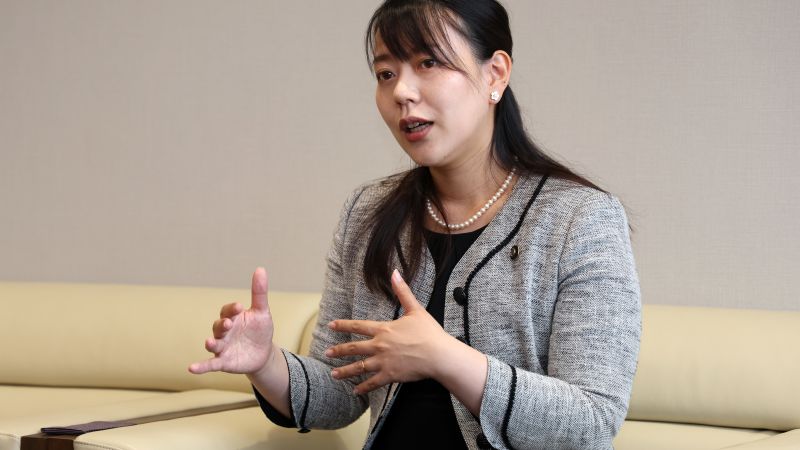
Sandego.net – Shoko Kawata, the 35-year-old mayor of Yawata in Kyoto Prefecture, has become the first incumbent mayor in Japan to publicly announce her intention to take maternity leave, marking a significant shift in the nation’s approach to gender equality in political roles. Her decision, set to begin around mid-September, involves 16 weeks of time off—eight weeks before and eight weeks after childbirth—highlighting a growing movement to redefine traditional expectations for women in leadership positions. Kawata’s action has sparked a national conversation about the rigid structures within Japan’s labor and political systems, which have long prioritized career over family.
A Break from Tradition
While maternity leave is a standard benefit for public employees, elected officials like Kawata have historically been exempt from such protections. This lack of legal guarantees has created a cultural norm where female leaders are often expected to work through pregnancy and childbirth. Kawata’s choice to step away from her duties during this critical period challenges that convention, positioning her as a trailblazer in a country where women occupy less than 15% of the House of Representatives. Her announcement, made in the wake of Japan’s recent election of its first female prime minister, underscores the slow but steady progress toward gender parity in public life.
“Through this, I hope to encourage not only workers, but also business owners and managers, all those involved in various types of work to embrace these life events, child-rearing and childbirth … while striking a proper balance with their work,” Kawata told CNN.
Kawata plans to appoint a deputy mayor to manage city operations during her absence, ensuring continuity for the 70,000 residents of Yawata. Despite her commitment to staying connected via email, her decision has drawn both praise and scrutiny, with critics on Japanese social media questioning whether a public official’s time off is justified in a time of financial constraints. However, she has received strong support from colleagues and citizens, who have emphasized the importance of work-life balance in sustaining long-term leadership.
Systemic Shifts and Social Change
Sociology professor Sawako Shirahase of the University of Tokyo noted that Japan’s political culture is rooted in “very old-fashioned assumptions” that undervalue the roles of women in the workforce. “The legal framework itself doesn’t assume that mayors or the head of the public office would take maternity leave,” Shirahase explained to CNN. “But at the same time, no one can prohibit (someone) from taking the leave … so it’s quite a gray zone.” Her insights reflect a broader challenge: how to reconcile Japan’s patriarchal traditions with the realities of modern gender roles.
Stefanie Schwarte, a researcher at the Japan Center of Ludwig-Maximilians-Universität, pointed to the increasing number of female mayors as a sign of progress. In the past five years, the count has risen from approximately 50 to nearly 80 out of over 1,700 municipalities as of early 2026. “We can also see more and more female mayors who stay on for a second, third, fourth term,” Schwarte said, highlighting their ability to inspire a new generation of leaders. These women are not just filling roles; they are reshaping the narrative around leadership and responsibility.
A Nation at a Crossroads
Kawata’s maternity leave comes at a pivotal moment for Japan, which has been battling a steep decline in birth rates for over a decade. In 2025, the country recorded 671,236 births, a record low that underscores the urgency of addressing demographic challenges. To combat this, the government has introduced policies such as childcare subsidies and incentives for fathers to take paternity leave. Yet, experts argue that the root of the issue lies in Japan’s relentless work culture and rising living costs.
Young professionals, in particular, face immense pressure to prioritize careers over family life. Employees across industries report grueling work hours, high expectations from supervisors, and even cases of “karoshi”—a term meaning “death by overwork” that describes fatal heart or brain conditions caused by excessive labor. These conditions, combined with the financial burden of raising children, have discouraged many from starting families. Kawata’s example offers a potential solution: integrating family responsibilities into professional roles without compromising effectiveness.
“In fact, they’ve been telling me to go ahead and take it. The staff at the government office, as well as members of the public, have been telling me without hesitation that I should just take a break,” Kawata said.
Her decision also aligns with Japan’s broader push to modernize its societal norms. As the first mayor to openly embrace maternity leave, Kawata is symbolically breaking a cycle that has kept women in secondary roles for decades. While her action may seem small, it carries substantial weight in a nation where public officials are often seen as the backbone of community service. By prioritizing her role as a mother, she challenges the notion that leadership requires constant availability, regardless of personal circumstances.
Legacy and Leadership
Although Kawata’s leave is not yet official, it has already ignited discussions about the future of Japanese politics. Her leadership style, which balances empathy with authority, could serve as a blueprint for other mayors seeking to address gender gaps. “This is a catalyst for changing the system,” she stated, aiming to prove that work-life balance is not only possible but essential for sustained productivity and societal well-being.
Japan’s political landscape is slowly evolving, but the pace of change remains uneven. While the number of female mayors has grown, their influence is often limited by structural barriers. Kawata’s tenure, however, represents a step toward a more inclusive model where women can lead without sacrificing personal milestones. Her journey from a first-time mother to a municipal leader mirrors the challenges faced by countless women in Japan, who navigate careers, parenthood, and societal expectations simultaneously.
As the debate over her maternity leave continues, it is clear that Kawata’s choice reflects a deeper shift in values. By embracing a more flexible approach to leadership, she may help pave the way for a future where public service and family life are no longer at odds. In a country where the population is shrinking and the need for innovation is urgent, her example could prove invaluable in fostering a culture that supports both individual and collective growth.
Meanwhile, the broader implications of her decision extend beyond Yawata. With 80 female mayors now serving across the nation, Kawata’s actions may inspire a new wave of leaders to advocate for policies that recognize the importance of maternal leave. As Japan seeks to reverse its declining birth rate, the question remains: will the political system adapt to support women in their roles as leaders and caregivers, or will it continue to resist change?