
Explainer: Who is Mojtaba Khamenei and how did he succeed his father?
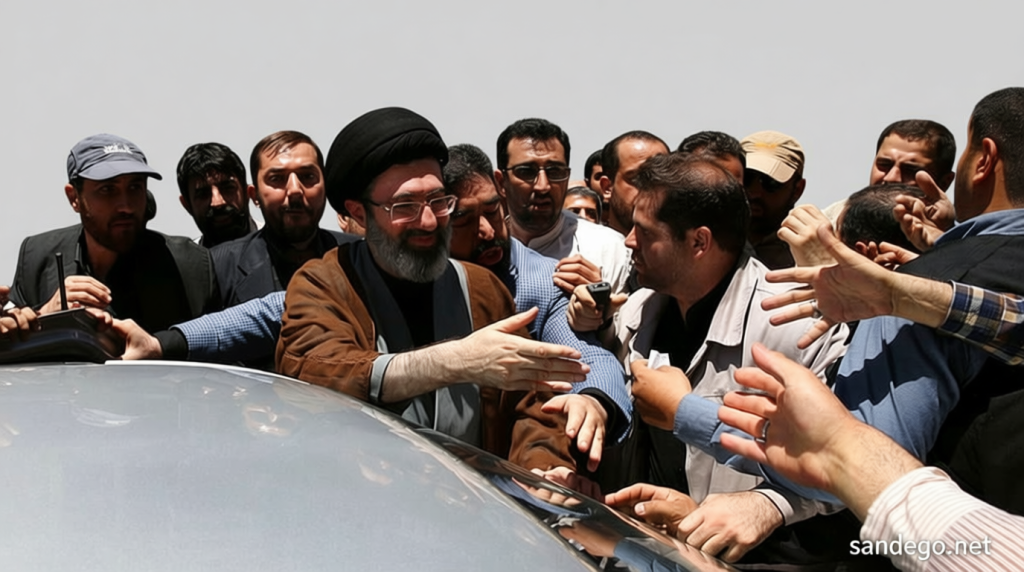
Explainer: Who is Mojtaba Khamenei and how did he succeed his father?
On March 8, 2026, Iran’s Assembly of Experts confirmed Mojtaba Khamenei as the new Supreme Leader, succeeding his 86-year-old father, Ali Khamenei. This transition occurred amid heightened tensions in the Iran-Israel conflict, with the appointment following an Israeli airstrike that killed the former leader’s family. Mojtaba’s mother and younger sibling, Zahra Haddad Adel, were also among the casualties.
Mojtaba Khamenei, born in 1969 in Mashhad, has long been a shadowy presence within Iran’s theocracy. His public debut came after the attack, which marked his ascension to the top of the Islamic Republic’s leadership. While his brothers, Mostafa, Masoud, and Meysam, have typically occupied roles in cultural or administrative sectors tied to their father’s legacy, Mojtaba’s rise has been linked to more clandestine influence within Iran’s security apparatus.
From Frontlines to Power
During the Iran-Iraq War, Mojtaba—then a teenager—was deployed to the frontlines, a move analysts say was part of a calculated strategy. He served in the Habib ibn Mazaher Battalion, part of the 27th Mohammad Rasulullah Division, which became a training ground for future military and security leaders. Notable figures such as Qasem Soleimani, Hossein Hamedani, and Ahmad Kazemi later emerged from this unit, cementing Mojtaba’s ties to the Islamic Revolutionary Guard Corps (IRGC).
His brief wartime experience, though limited in duration, helped solidify relationships with key military personnel. These connections would prove vital in his climb to power. The Iran-Iraq conflict remains a central theme in the political identity of Iran’s leadership, with many officials drawing authority from their wartime contributions. Mojtaba’s participation in the conflict aligned him with this tradition, enhancing his credibility within the regime.
Education and Clerical Background
After his military service, Mojtaba pursued religious studies at Qom seminary, following his father’s guidance and that of prominent clerics like Mohammad-Taghi Mesbah-Yazdi and Mahmoud Hashemi Shahroudi. His education emphasized theological foundations, preparing him for the role of Supreme Leader. Unlike his older brother Mostafa, who remained in more traditional clerical roles, Mojtaba’s path diverged into strategic positions within the Islamic Republic’s power structure.
His father’s influence was evident in his early career, but Mojtaba’s own reputation began to take shape through his association with the IRGC. This network allowed him to bypass conventional bureaucratic channels, positioning him as a key player in Iran’s political and security hierarchy.
Financial Influence and Uncertainty
Recent Western media reports have highlighted Mojtaba’s financial standing, labeling him a “billionaire” with extensive assets in cities like London and Vienna. However, the exact control or ownership of these resources remains unclear due to the opaque nature of Iran’s economic systems. Locally, he is not commonly referred to as a businessman or wealthy individual, with analysts attributing his influence to political connections rather than private enterprise.
Mojtaba’s political stance remains a subject of debate.
“His near-complete silence on major policy issues has divided analysts: some see him as a guiding force for security-sector hardliners, while others argue that the absence of an executive record and public positions makes it impossible, for now, to judge his true ideological direction.”
This ambiguity underscores the challenges in assessing his leadership style and priorities.
