Famed Magritte Painting Damaged by Child with Pine Cone
Sandego.net – René Magritte, the celebrated Belgian surrealist, has seen one of his iconic works suffer light damage due to a playful five-year-old boy. The incident occurred at the Israel Museum in Jerusalem, where conservators are now working diligently to restore the painting, titled “Castle of the Pyrenees.” According to the museum, the damage caused by the child using a pine cone was described as “minor” and “unintentional,” though it has sparked discussions about the delicate balance between public engagement and artwork preservation.
Historical Significance of the Work
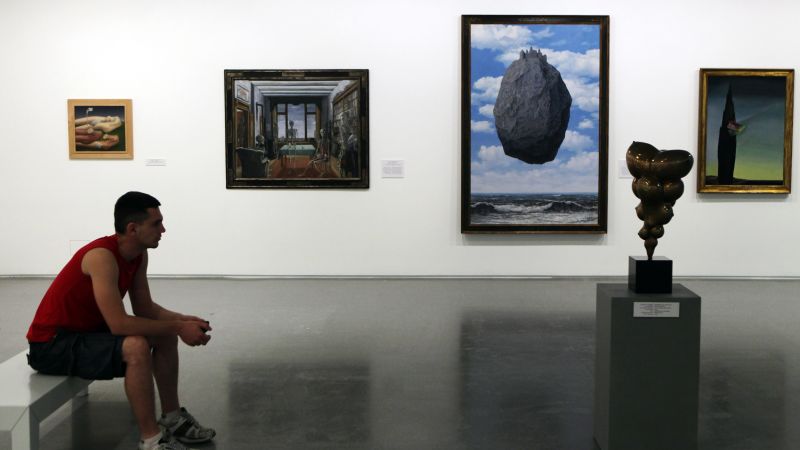
“Castle of the Pyrenees,” created in 1959, is a cherished piece in the museum’s collection, known for its ethereal depiction of a castle perched atop an immense rock, suspended above turbulent waters. The artwork has long been a focal point for visitors, drawing significant attention even before it was donated to the institution in 1985. This donation was a milestone, marking the museum’s 20th anniversary and honoring its patron Harry Torczyner, who had been a steadfast supporter of the surrealist movement.
Torczyner, a prominent Belgian art enthusiast, commissioned the painting as part of a broader effort to enhance his office space. The story behind the artwork was unveiled during a 2022 exhibition, which delved into its provenance and the circumstances of its creation. The exhibition highlighted how Magritte was tasked with covering an “ugly view” from a large window in Torczyner’s office, blending the artist’s signature dreamlike imagery with a practical purpose. The audio recordings from that exhibition remain accessible on the museum’s website, offering insights into the painting’s journey from private commission to public treasure.
Incident Details and Museum Response
The damage to “Castle of the Pyrenees” was reported a few weeks ago when a young boy and his grandmother visited the museum’s modern art galleries. The child, who was holding a pine cone, inadvertently caused the incident. A museum spokesperson shared the details with CNN, emphasizing that the event was “an unfortunate incident that occasionally happens worldwide.” The statement noted that the child’s actions were unintentional, and the conservation team is currently analyzing the extent of the damage to ensure a thorough restoration.
“Our expert conservation team is already studying and repairing the work, and we look forward to returning this beloved collection highlight to the galleries as soon as possible,” said the spokesperson. “It is always evaluating this equilibrium between visitor experience and artwork protection.”
This incident echoes similar occurrences in other prestigious museums. Last year, a Mark Rothko painting, “Grey, Orange on Maroon, No. 8,” was removed from the Museum Boijmans Van Beuningen in Rotterdam after a visitor scratched it. The damaged piece has since been fully restored and is now on display in a major Rothko exhibition in Florence, Italy. Such events underscore the challenges museums face in safeguarding high-value art while ensuring it remains accessible to the public.
Magritte’s Legacy and Market Value
Magritte’s works, known for their whimsical and enigmatic qualities, often fetch astronomical sums at auction. In 2024, his 1954 painting “L’empire des lumières” sold for a record $121 million at Christie’s in New York, showcasing the enduring appeal of his surreal style. The Israel Museum’s “Castle of the Pyrenees” is no exception, having been a standout in the institution’s collection and a frequent subject of visitor fascination. Its 2022 exhibition further cemented its status as a cultural icon, inviting deeper exploration of its artistic and historical significance.
The museum’s spokesperson added that the incident highlights the importance of visitor education and the implementation of protective measures. While barriers are placed in front of sensitive artworks, the spokesperson acknowledged that “the museum balances the visitor experience with the need to place barriers in front of artworks,” noting that this process is continuously reviewed. The spokesperson also emphasized that the damage was “minor” and that the restoration efforts aim to preserve the painting’s original essence while addressing any visible imperfections.
Broader Implications for Art Conservation
Such incidents, though small in scale, raise questions about the vulnerabilities of even the most iconic works. The “Castle of the Pyrenees,” with its dramatic composition and symbolic elements, is a prime example of how art can transcend its physical form to evoke emotion and curiosity. However, its exposure to public interaction also makes it susceptible to unintentional harm. The museum’s statement suggests that these moments are not uncommon, reflecting the dynamic relationship between art and its audience.
Art conservators worldwide often deal with similar challenges, from accidental scratches to more severe damage. The restoration of “Castle of the Pyrenees” is expected to take several weeks, with specialists using advanced techniques to repair the affected areas. The museum has not yet disclosed the specific nature of the damage, but the spokesperson assured that the team is committed to restoring the piece to its former glory. This process will likely involve careful cleaning, structural reinforcement, and possibly the use of new materials to match the original pigments.
The child’s involvement in the incident has also sparked a conversation about the innocence of young visitors and their role in shaping art history. While the boy’s actions were unintentional, they have become a memorable moment for the museum, adding a layer of human connection to the artwork’s story. The museum plans to share updates on the restoration with the public, encouraging transparency and fostering a sense of shared responsibility in protecting cultural heritage.
Conclusion and Future Outlook
As the Israel Museum works to restore “Castle of the Pyrenees,” the event serves as a reminder of the fragile nature of artistic legacies. The painting’s journey from a private commission to a public masterpiece illustrates both the challenges and rewards of art conservation. While the damage may seem trivial in the grand scheme of things, it highlights the importance of vigilance and care in preserving works that hold immense cultural and monetary value.
Visitors to the museum are encouraged to continue exploring the galleries, with the understanding that occasional mishaps are part of the experience. The spokesperson’s comments suggest that such incidents are not only expected but also viewed as a testament to the enduring allure of art. As the restoration progresses, the museum will remain committed to showcasing Magritte’s work, ensuring that it continues to inspire and captivate audiences for years to come.