
Can stats help you find the Grand National winner?
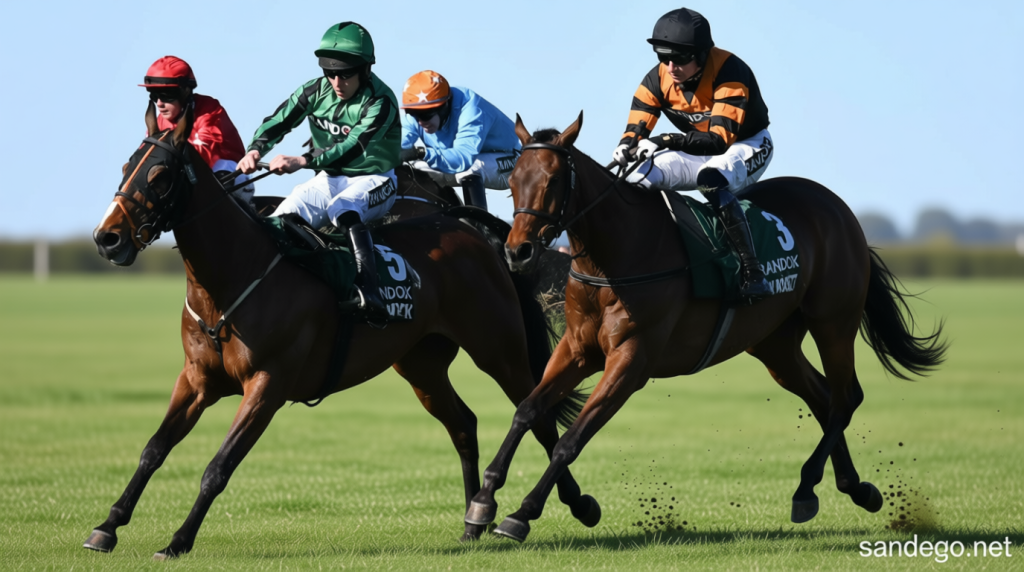
Using Statistics to Predict the Grand National Winner?
The Grand National at Aintree remains a cornerstone of the British horse racing calendar, but its 34 runners often make selecting the eventual victor feel like a shot in the dark. While historical winners might offer some clues, can they truly guide bettors toward success? BBC Sport examines the data to uncover patterns that might help forecast the 2026 race.
Historical Odds and Trends
Since 2000, the race has been contested 25 times, with no competition in 2020 due to the pandemic. The shortest-priced winner in this era was Tiger Roll at 4-1 in 2019, marking the first back-to-back triumph since Red Rum’s dominance in the 1970s. Conversely, Mon Mome in 2009 achieved victory at 100-1, while last year’s winner, Nick Rockett, started at 33-1. The century-long average for winners’ odds hovers just under 24-1, suggesting that higher prices shouldn’t deter bettors—eight past winners have been priced 33-1 or more.
Yet, the average price has dipped in recent years, with five of the last ten winners achieving odds of 11-1 or shorter. This trend aligns with the fact that six favorites (including joint favorites) have claimed the title since 2000, three of which occurred in the past six years—including I Am Maximus in 2024. Notably, the favorite or a joint-favorite has also finished within the top five on 12 additional occasions, highlighting their consistent presence in contention.
Weights and Performance
Winners’ weights have fluctuated between 10st 3lb and 11st 9lb over the last 25 runnings, with the average landing between 10st 12lb and 10st 13lb. Specific weights, such as 11st 6lb, have produced three victories, but the top six in this year’s field might be at a disadvantage if the pattern holds. I Am Maximus, a top-weight contender, seeks to break the streak of top-weight winners since Red Rum’s 12-stone triumph in 1974.
Of the past 11 winners, nine carried between 10st 5lb and 11st 8lb, reinforcing the idea that weight range could narrow the field. However, the race’s unique challenges mean that even this detail may not guarantee success.
Age and Experience
Since 2014, no horse aged 10 or older has claimed victory, suggesting younger contenders may hold an edge. Yet, this trend was disrupted in 2022 when Noble Yeats became the first seven-year-old winner since Bogskar in 1940. In the past decade, six eight-year-olds and three nine-year-olds have triumphed, with Tiger Roll returning to win again in 2019 at nine.
Experience isn’t a guaranteed factor either. The only previous winner in the last 15 runnings was Tiger Roll, who hadn’t competed in the Grand National before his 2018 win. Despite this, the current field includes horses trained by Willie Mullins, Gordon Elliott, and Henry de Bromhead—each with a track record of success. These three trainers are expected to guide 16 of the 34 runners in 2026.
Jockeys and Official Ratings
Paul Townend, who secured two top-five finishes in 2024, is targeting his first win with I Am Maximus. Jack Kennedy, Mark Walsh, and Danny Mullins have also achieved notable placements, though their records remain less dominant. The official rating system, assigned by handicappers based on performance levels, reveals that 14 of the last 16 winners were rated 146+—with 13 falling between 146 and 160. I Am Maximus and Nick Rockett are among the horses carrying these ratings this year.
While statistics provide insights, the Grand National’s unpredictable nature and demanding course make it a unique challenge. Unlike events such as Cheltenham, where stable connections often offer clear paths to success, this race rewards both luck and resilience in equal measure.
